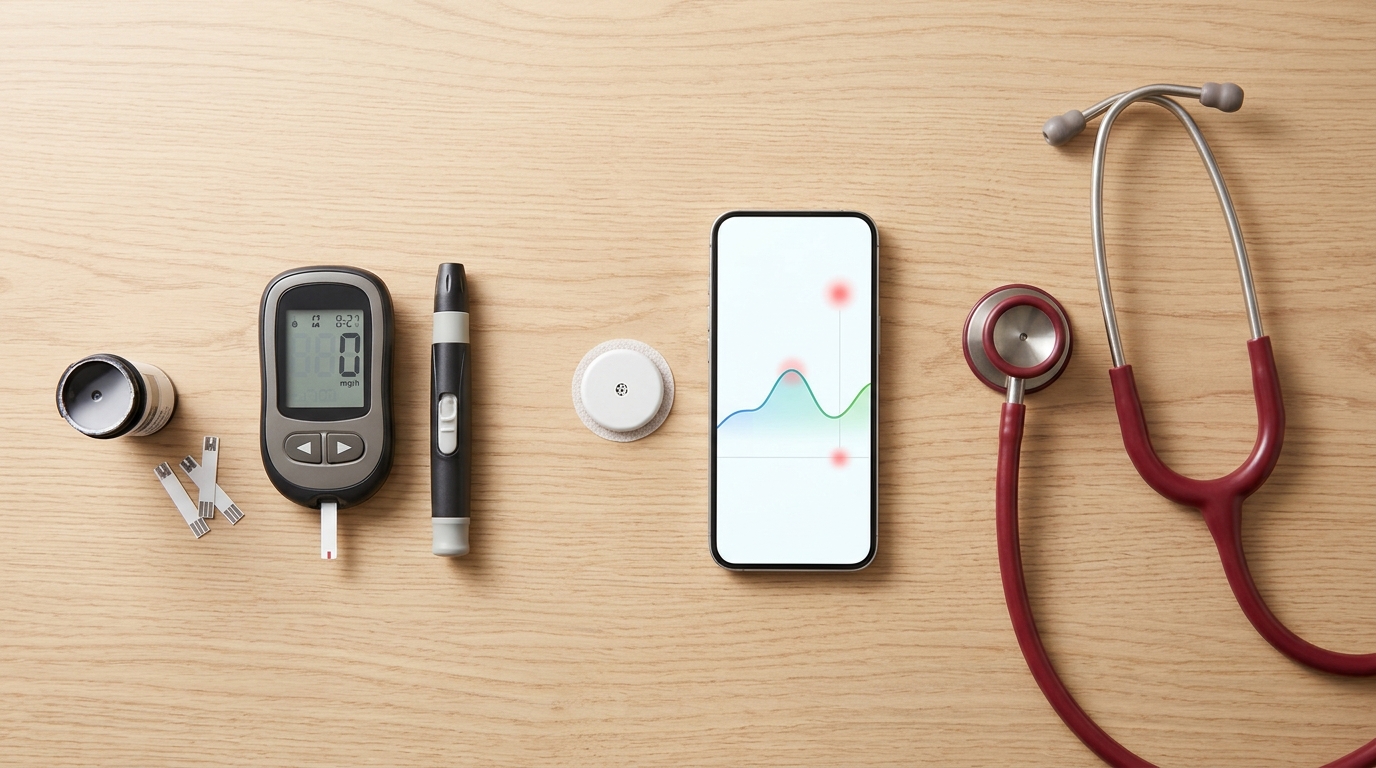
Glucose Monitoring Devices in Pakistan: Types, Accuracy and How to Choose the Right One
Ten years ago, most people with diabetes in Pakistan relied on a visit to the laboratory every few months and, if they were lucky, a basic meter at home. Today the choice of glucose monitoring devices is wider than ever: traditional fingerprick meters, flash systems that you scan, continuous glucose monitors that stream readings to your phone, and smart insulin pumps that talk to sensors. With so many options, it is easy to feel confused about what to buy, what each device actually does and which one suits your life and your budget.
The question matters because the need is huge. According to the IDF Diabetes Atlas 2025, about 34.5 million adults in Pakistan were living with diabetes in 2024, and a significant share are undiagnosed or struggling to reach their targets. Good monitoring is the foundation of good control, and choosing the right glucose monitoring devices can mean fewer emergencies, better HbA1c and a calmer daily life. A continuous glucose monitor in Pakistan is no longer a luxury item for a few, and understanding how it compares with other options helps you decide wisely.
In this guide we explain every major type of glucose monitoring devices, how they work, how accurate they are, what features matter, what to look for when buying in Pakistan and how to use them well. This article is educational and does not replace the advice of your doctor.
Why Monitoring Matters
Diabetes is a condition of constant change. Food, medicine, exercise, sleep, stress and illness all move your glucose up or down, and without measurement you cannot see these changes. Monitoring turns invisible patterns into visible information that you and your doctor can act on.
Preventing Emergencies
Low blood sugar can cause confusion, seizures and loss of consciousness, while very high blood sugar can lead to dehydration and ketoacidosis. Regular monitoring helps you detect problems early, and the right glucose monitoring devices can even warn you before a problem becomes serious.
Guiding Treatment
Doctors adjust medicines according to your readings. A handful of numbers per week provides limited guidance, whereas richer data allow more precise changes and sometimes allow simpler treatment over time.
Building Understanding
Seeing how a plate of biryani, a walk after dinner or a stressful day affects your glucose is one of the most powerful learning tools available. Many people say that numbers they could see changed their behavior more than any lecture.
Laboratory Tests: HbA1c and Fasting Glucose
Before we discuss home devices, it helps to understand laboratory tests, because they remain the standard for diagnosis.
HbA1c
HbA1c reflects average glucose over roughly two to three months. It is useful for diagnosis and long-term assessment but tells you nothing about daily swings, lows or the effect of individual meals.
Fasting and Post-Meal Glucose, and OGTT
A fasting plasma glucose test shows your level after at least eight hours without food, and a post-meal test shows your response to eating. The oral glucose tolerance test measures how your body handles a standard sugar load. These tests are valuable but provide only snapshots, and they require lab visits.
Traditional Fingerprick Glucose Meters
The glucometer is the most familiar of all glucose monitoring devices. You prick your fingertip with a small lancet, place a drop of blood on a test strip and read the result on a handheld meter within seconds.
Advantages
Meters are inexpensive to buy, widely available in pharmacies across Pakistan, and simple to use. They measure glucose in capillary blood, which is the traditional reference for day-to-day decisions, and they remain essential as a backup even if you use a sensor.
Limitations
Each test gives only one number at one moment, so you do not know whether glucose is rising or falling. You only see the times you test, which means nighttime lows and between-meal swings are often missed. The cost of strips adds up over months, and repeated pricking is painful and discouraging, which is why many people test far less often than advised. Accuracy also depends on technique, strip quality, storage and expiry dates.
Tips for Better Meter Use
Wash and dry your hands before testing, since traces of sugar from fruit or sweets can give a falsely high reading. Use a fresh strip from a properly closed vial, check expiry dates, and store strips away from heat and moisture. Rotate fingertip sites, and use the side of the fingertip to reduce pain.
Flash Glucose Monitoring Systems
Flash glucose monitors use a small sensor worn on the arm that measures glucose in the fluid between cells, and you must scan the sensor with a reader or phone to see the number and trend.
How They Differ From Meters
Because the sensor measures continuously, a scan gives you the current value along with a trend arrow and the last several hours of data. This removes the need for routine fingerpricks, and it reveals patterns that meters cannot.
Limitations
You only see data when you scan, so a low at night may pass unnoticed unless you wake up and scan. Many flash systems do not give automatic alerts, although some newer versions can. This makes them less suitable for people who need protection against sudden lows, such as those on insulin who live alone.
Continuous Glucose Monitors
A continuous glucose monitor, or CGM, measures glucose in the interstitial fluid every few minutes and sends the readings automatically to a phone or receiver, with no scanning required. It is the most informative of all glucose monitoring devices for everyday use.
How a CGM Works
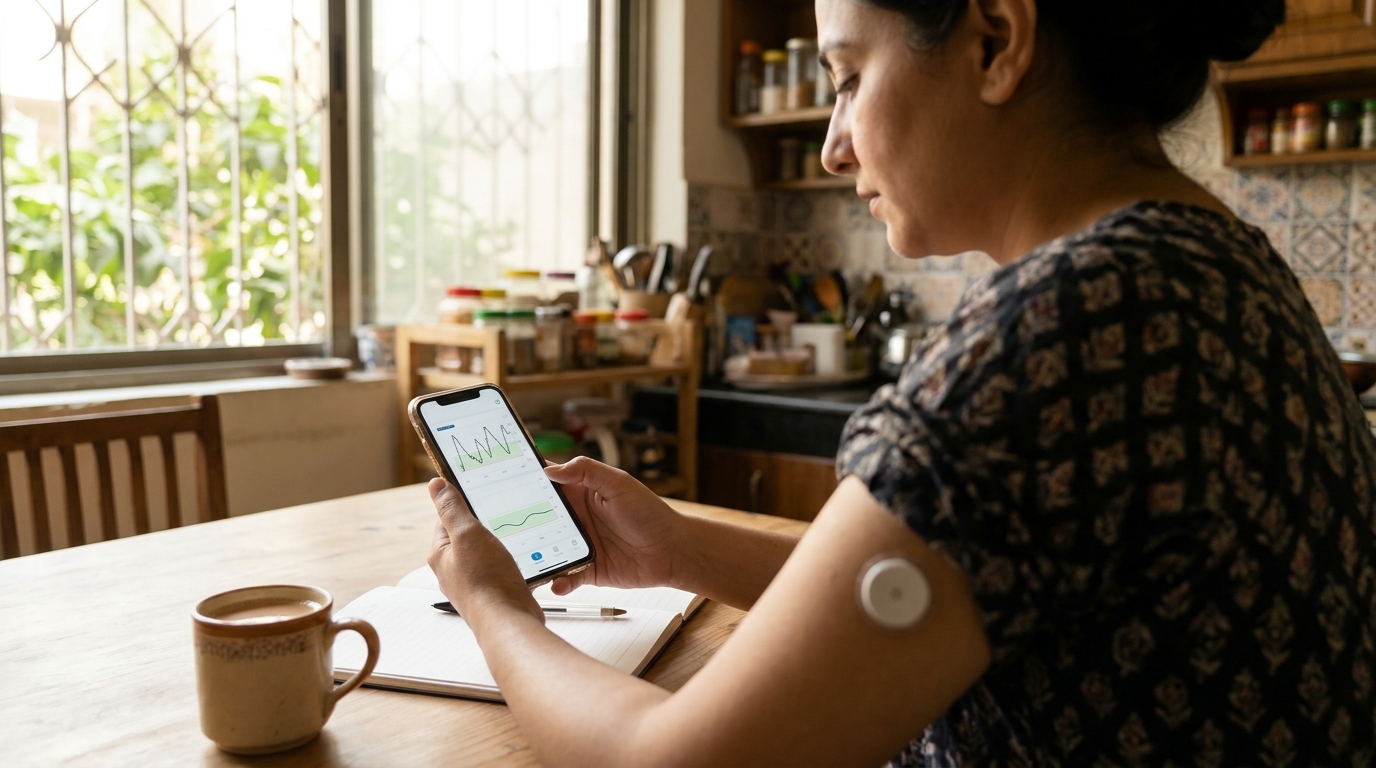
A tiny, flexible filament is inserted just under the skin, usually on the back of the upper arm, with a small applicator. The filament carries an enzyme that reacts with glucose in the fluid around your cells, producing a small electrical signal that a transmitter converts into a glucose value. The data travel by Bluetooth to an app, which displays the current value, the trend arrow and a graph. The sensor stays on the skin for several days, and in some products up to fifteen days.
Real-Time Alerts
Most CGMs let you set alarms for high and low glucose, and some offer urgent low alerts or predictive alerts that warn you before you reach a low. For people on insulin or sulfonylureas, for older adults and for anyone who worries about nighttime lows, alerts are the most valuable feature.
Data Sharing and Reports
Many systems let you share your data with family members and doctors, and generate reports showing time in range, averages and patterns. These reports make clinic visits far more productive.
Lag Time Between Blood and Fluid
Because the sensor measures interstitial fluid, its readings lag behind blood glucose by a few minutes, usually around five to fifteen minutes during rapid changes. This is normal and one reason why you should confirm unexpected readings with a fingerprick when your symptoms do not match the sensor.
Insulin Pumps and Automated Systems
Some people use insulin pumps that connect to a CGM and adjust insulin delivery automatically, sometimes called hybrid closed loop or automated insulin delivery. These systems are advanced and expensive, and they are mostly used by people with type 1 diabetes under specialist care. For most people in Pakistan, a standalone CGM paired with injections or tablets is the more practical choice.
Smartwatches and So-Called Non-Invasive Devices
You may see advertisements for watches, rings or wristbands that claim to measure glucose without any skin contact. Regulators and medical bodies have warned that no smartwatch or smart ring has been approved as a reliable way to measure blood glucose without piercing the skin, and relying on such products for diabetes decisions can be dangerous. Treat these claims with caution, and use devices with proper clinical validation and product support.
Understanding Accuracy: What MARD Means
Accuracy is one of the most important features of glucose monitoring devices, and it is often described by a number called MARD, or mean absolute relative difference. It measures the average percentage difference between the device reading and a reference value. A lower MARD means closer agreement with the reference, so a MARD of 8.71 percent indicates a smaller average difference than a MARD of 12 or 15 percent.
What MARD Does Not Tell You
MARD is an average, so it does not show how the device behaves during rapid changes, at very low glucose or in unusual conditions. Accuracy can also vary between individuals and with sensor wear day, hydration, temperature and placement. Always consider MARD along with other factors, such as alerts, reliability, comfort, wear time and support.
Confirming With a Fingerprick
If your symptoms do not match your sensor reading, or if you are about to make a major treatment decision such as taking a large insulin dose, confirm with a fingerprick. Your doctor can advise when this is necessary for your device.
Key Features to Compare
When you compare glucose monitoring devices, look beyond price and consider how each feature fits your daily life.
Wear Time
Wear time refers to the number of days a sensor stays on. Longer wear time means fewer applications and often a lower cost per day. A 15-day sensor, for example, needs far fewer changes than a sensor that lasts seven or ten days.
Reading Frequency
More frequent readings give a more detailed curve. A reading every three minutes provides a very fine view of your day and night.
Scanning Versus Automatic Streaming
Automatic streaming means you do not need to scan, and it allows alerts to reach you even while you sleep. Scanning-based systems depend on your action to see the data.
Alerts and Alarms
Check whether the device provides high, low and urgent low alerts, whether you can customize thresholds and whether a caregiver can receive them.
App Quality and Phone Compatibility
A good app is easy to read, supports your language and phone model, and provides clear reports. Check whether it works on Android and iOS and how it handles Bluetooth connection.
Water Resistance and Comfort
If you swim, sweat heavily or shower daily, water resistance matters. An IP rating tells you the level of protection, and a comfortable patch that stays on in the Pakistani summer is essential.
Support and Supply
A device is only as good as the support behind it. Reliable supply of sensors, clear instructions, accessible customer service and a straightforward return policy are crucial, especially if you plan to use the device for months or years.
Cost Per Day
Compare the total cost across the sensor’s wear time rather than just the price of one box. For meters, include the ongoing cost of strips and lancets, and consider how many tests you would realistically perform each day.
Which Device Suits Which Person
No single device is best for everyone. Matching the device to your needs gives the best results.
People Using Insulin
People on multiple daily insulin injections or pumps benefit most from continuous monitoring, because alerts, trend arrows and complete data help with dosing decisions and prevent lows. A meter remains useful as a backup.
People on Tablets
People with type 2 diabetes who take tablets can benefit from a sensor for a limited period to learn how food and activity affect their glucose, and many continue to use it regularly if it helps them stay motivated. A meter may be enough for those with stable control and a low risk of lows.
People With Prediabetes
For people with prediabetes, a short period of continuous monitoring can reveal post-meal spikes that fasting tests miss and can support early lifestyle changes.
Older Adults and People Living Alone
Because lows can be silent and dangerous, devices with alerts and caregiver sharing offer a major safety advantage. A child or relative in another city can follow data remotely if the older person agrees.
Children and Teenagers
Parents of children with type 1 diabetes often value continuous monitoring for school, sports and sleepovers, because it allows safer independence and fewer disruptions at night.
Pregnant Women
Pregnancy requires tight, safe control. Continuous data can help doctors adjust therapy, but the choice of device should be made with the obstetric and diabetes team.
Buying Glucose Monitoring Devices in Pakistan
The market has many sellers, and not all offer the same quality. A few practical checks can protect you.
Check Authenticity and Packaging
Buy from reputable sellers who can show original packaging, batch information and clear expiry dates. Be cautious of prices that seem unrealistically low, damaged packaging and sellers who cannot answer basic questions about the product.
Ask About After-Sales Support
Find out how to get help if a sensor fails, an app does not connect or you have questions. The iCan CGM Pakistan store lists a WhatsApp support line and a support page, and the store FAQ page covers common questions about ordering and use. You can also read about the company on the about page.
Consider Bundles for Longer Use
If you plan to use a sensor for several cycles, bundles can reduce the cost per day. Check the bundle options to see what fits your needs.
Learn Before You Buy
Read the how to use guide so that you know what application and daily use involve. Talk to your doctor about whether continuous monitoring suits your situation and how to use the data.
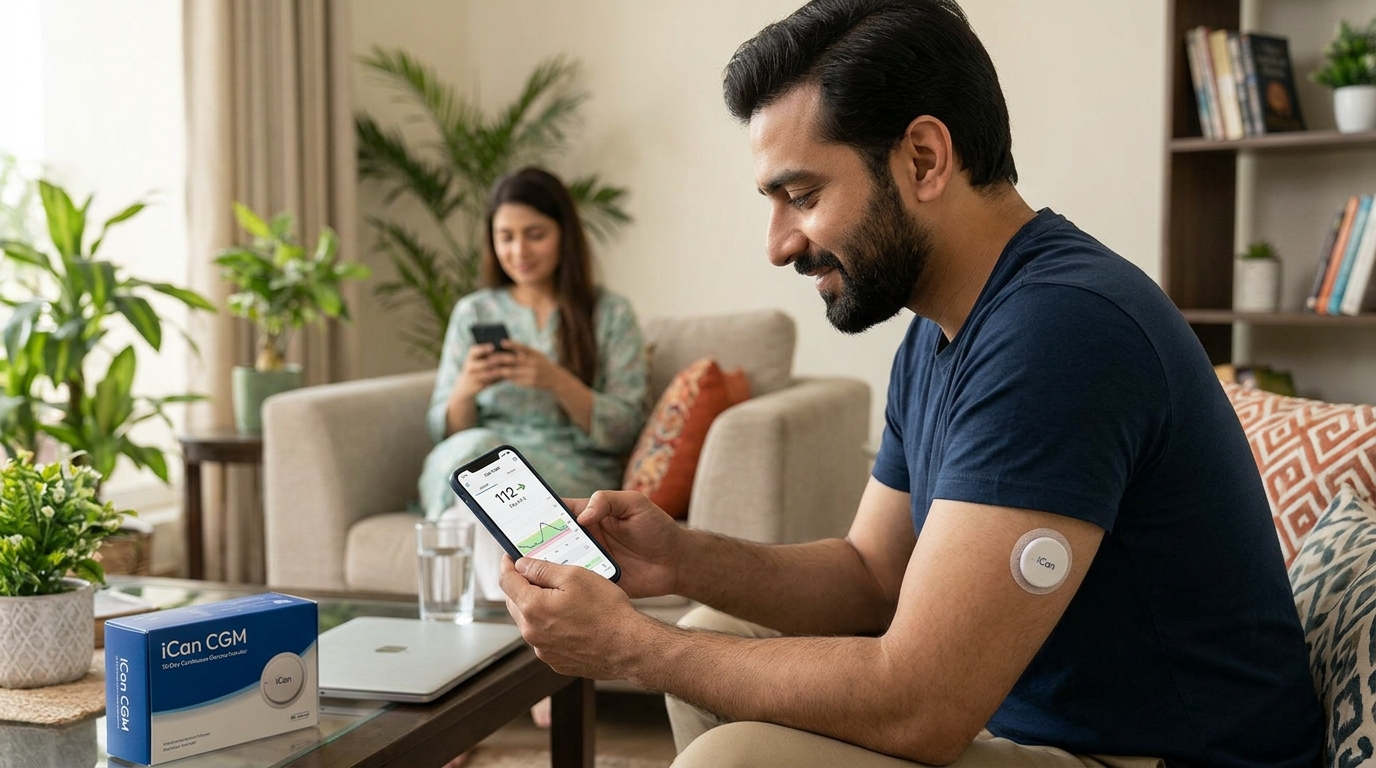
The iCan CGM Among Glucose Monitoring Devices
According to the information on the iCan CGM Pakistan store, the iCan CGM is described as the world’s first 15-day continuous glucose monitor, with no scanning and no fingerpricks, real-time alerts, a reading every three minutes and up to 7,160 readings per sensor. The listed accuracy is an adult MARD of 8.71 percent, and the sensor carries an IP28 water-resistance rating. It works with the iCan CGM app for viewing trends and reports, and with the iCan Reach app that lets a caregiver follow your readings and receive alerts when you share your data. The store also describes the product as affordable even without insurance coverage, with a 15-day wear life.
Why These Features Matter in Daily Life
A 15-day wear time means fewer applications and a longer uninterrupted record. A reading every three minutes gives a detailed picture of meals, walks and nights. No scanning means you can sleep while the sensor works, and alerts can reach you or your caregiver when needed. Water resistance supports showers and sweat in the Pakistani heat, and the apps give you and your doctor a clear view of patterns.
Using It Alongside a Meter
Even with a continuous sensor, keep a fingerprick meter at home for backup. Use it when your symptoms do not match the sensor, when you are very unwell or when you need to confirm a reading before a major decision.
Getting the Most From Any Device
The best device is the one you use consistently and understand well.
Learn the Basics
Read the instructions carefully, practice application and know what each alert means. Ask your doctor or diabetes educator to review your first reports with you.
Set Sensible Alerts
Setting alerts too sensitively can cause alarm fatigue, while setting them too loosely can miss important events. Work with your doctor to choose thresholds that fit your risk and lifestyle.
Review Your Data Regularly
Look at your graph daily and your report weekly. Notice patterns, test changes and celebrate improvement. Share the data with your doctor before appointments.
Keep Supplies and Backups
Keep spare sensors or strips, a power bank for your phone and a backup meter. Store supplies as directed and check expiry dates.
Protect Your Skin
Rotate application sites according to the instructions and keep the area clean and dry. Contact your doctor if you notice persistent redness, itching or irritation.
Limits and Safety Notes
No device is perfect. Sensors can occasionally fall off, lose signal or give unexpected readings, especially in the first hours after application or during rapid changes. Dehydration, pressure on the sensor while sleeping and some medicines can affect readings, and the manufacturer’s instructions will list known interferences. Never ignore symptoms because a device shows a normal number, and never make major treatment changes without consulting your doctor.
When to Speak to a Doctor
Speak to your doctor before choosing a device if you use insulin, have frequent lows, are pregnant, have kidney disease or have difficulty interpreting numbers. Ask how often you should monitor, what targets you should aim for, which alerts to set and how to use the data to adjust treatment. This article is educational and does not replace personal medical advice.
Questions About Choosing a Monitor
What is the difference between a glucometer and a CGM?
A glucometer measures glucose from a drop of blood at one moment, while a CGM measures glucose in the fluid under the skin every few minutes and shows trends and alerts. A CGM gives a continuous picture, whereas a meter gives isolated snapshots.
Is a CGM better than a fingerprick meter?
For many people, especially those using insulin, a CGM provides far more information and safety features. However, a meter remains useful as a backup and for confirming readings, so many people use both.
How accurate are glucose monitoring devices?
Accuracy varies by device and situation. Meters and sensors are both designed to be accurate enough for daily decisions, and a lower MARD generally means closer agreement with reference measurements. Confirm unexpected sensor readings with a fingerprick.
Can smartwatches measure my glucose?
Medical and regulatory bodies have cautioned that no smartwatch or ring has been proven as a reliable non-invasive glucose meter. Use clinically validated devices for medical decisions.
How do I know a seller is trustworthy?
Look for original packaging, clear product information, visible contact details, responsive support and transparent policies. You can review the iCan CGM store’s about page, FAQ and support options before ordering.
Final Thoughts
The right glucose monitoring devices turn diabetes care from guesswork into a clear, data-driven routine. Laboratory tests remain essential for diagnosis, fingerprick meters remain a reliable backup, and continuous monitors offer unmatched detail, alerts and sharing for daily life. When choosing, think about your treatment, your risk of lows, your lifestyle, your budget and the support you can count on. If you are ready to see your glucose around the clock, explore the iCan CGM at icancgm.pk and take a confident step towards better control.