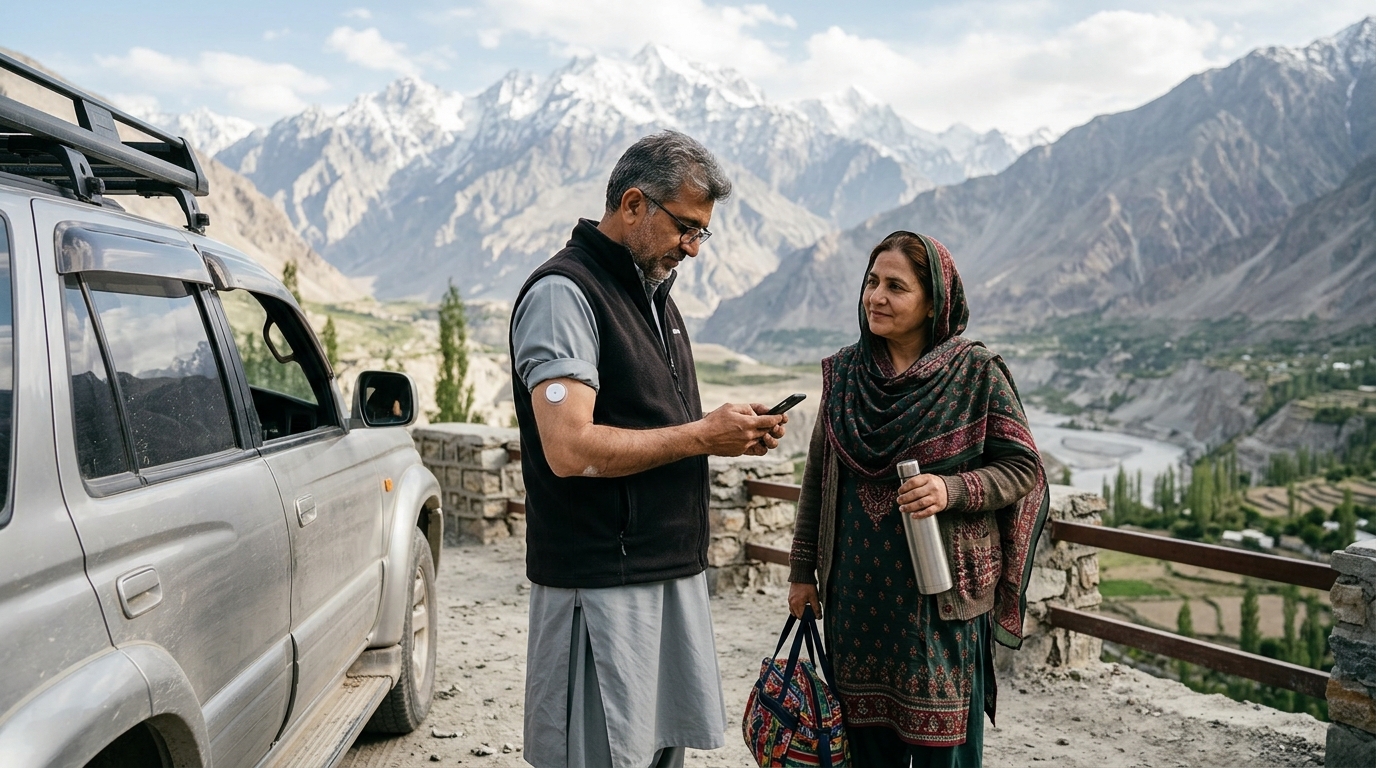
Blood Sugar Fluctuations During Travel: How to Stay Safe on Every Journey in Pakistan
Travel is one of life’s great pleasures. A family trip to Murree or Naran, a road journey from Lahore to Karachi, a flight to see relatives abroad, an Umrah visit, or a wedding in another city all create memories we treasure. For a person with diabetes, however, a journey can also bring something unwelcome: blood sugar fluctuations during travel that appear without warning, even when the person has been careful at home. A reading that stays steady for weeks can suddenly swing high on a long drive or fall low after a day of sightseeing on foot.
This matters in Pakistan because diabetes is so common. According to the IDF Diabetes Atlas 2025, around 34.5 million adults in Pakistan were living with diabetes in 2024, and many more have prediabetes. Because our families travel often, for weddings, Eid visits, religious journeys and holidays in the north, millions of people face the challenge of blood sugar fluctuations during travel every year. The good news is that most problems can be prevented with planning, and modern tools such as a continuous glucose monitor in Pakistan make it much easier to see trouble coming.
In this guide we explain why blood sugar fluctuations during travel happen, how flights, time zones, long drives, altitude, heat and unfamiliar food each play a part, how to prepare for Umrah, Hajj and Ramadan journeys, what to pack, and how a sensor helps. This article is educational and does not replace the advice of your own doctor.
Why Blood Sugar Fluctuations During Travel Are So Common
Your body loves routine. Glucose control depends on a delicate balance between meals, medicines, activity, sleep and stress, and when you travel almost every one of these changes at the same moment. That is the simple reason blood sugar fluctuations during travel are so common.
Disrupted Meal and Medicine Timing
At home you probably eat at roughly the same times, take your tablets or insulin on a schedule and sleep in your own bed. On the road, breakfast might be skipped because the bus leaves early, lunch might be delayed until a roadside stop, and dinner might arrive at midnight at a relative’s house. When meals shift but medicines stay the same, the result can be a low, and when medicines are forgotten or delayed, the result can be a high.
Stress Hormones and Excitement
Travel is exciting but also stressful. Packing, traffic, airport queues, noise, unfamiliar places and worry about missing a flight or a connection all release cortisol and adrenaline, which push glucose upward. Many people see their numbers rise on departure day even when they have eaten very little. Understanding this effect helps you avoid panic when you see a higher reading at the airport.
Changes in Activity
A day of sightseeing on foot can cause a drop in glucose that you never experience at your desk job, while a long road journey where you sit for ten hours can cause a rise, because muscles are barely using glucose. These swings are a major source of blood sugar fluctuations during travel, and they can happen on the same trip, sometimes on the same day.
Sleep Disruption
Poor sleep in a strange bed, noisy hotels, early flights and long overnight journeys increase insulin resistance. Even one bad night can raise glucose the next day, and several in a row can make control noticeably worse.
Time Zones, Flights and Insulin Timing
Air travel is where blood sugar fluctuations during travel can become most confusing, because the clock changes while your body clock does not.
Before You Fly
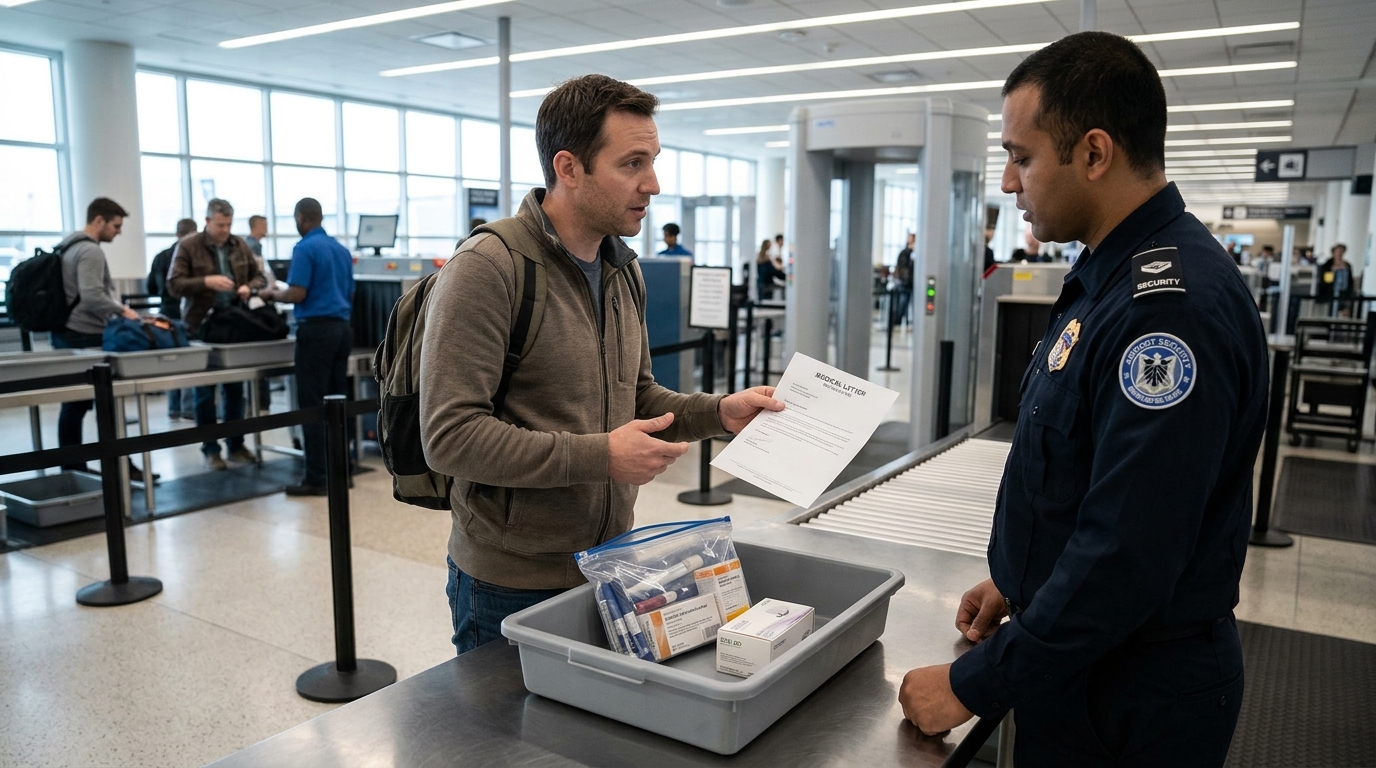
Visit your doctor a few weeks before a long trip, especially if you use insulin or take several medicines. Ask for a letter that lists your diagnosis, medicines, doses and any devices such as sensors or insulin pens, since this helps at security and customs. Ask how to adjust medicine timing if you will cross several time zones, and carry extra supplies, at least double what you expect to need. Keep everything in your hand luggage, never in checked baggage, because luggage can be lost or delayed, and the cargo hold can be too cold for insulin.
During the Flight
Cabin pressure, dry air and long sitting can influence how you feel. Drink water regularly, avoid too much sugary juice, and get up to walk the aisle when you can. Airline meals may arrive at odd times, so carry your own snack and fast-acting sugar. If you use insulin, check with your doctor about whether to dose according to the time at home, at the destination, or a gradual mix, since the answer depends on your regimen. Watching your sensor trend through the flight tells you whether your glucose is rising or falling, which is far more useful than a single fingerprick at the airport.
After Landing
Jet lag can leave you tired and hungry at strange hours. Move your meals to local time gradually, expect that glucose may be unpredictable for a day or two, and be extra careful with night-time lows. Many travelers overlook that their first night abroad is a high-risk period, because they are exhausted, sleeping deeply and in an unfamiliar environment. A sensor with alerts offers a safety net during that time.
Long Road Trips and Bus Journeys in Pakistan
Many of our journeys happen on the road, whether in a family car, a coach on the motorway or a train. Distances such as Lahore to Karachi, Islamabad to Skardu or Quetta to Karachi can take many hours, and the challenges are different from air travel.
Sitting for Hours
Staying seated for long periods reduces glucose use by muscles and can push readings higher, particularly after a heavy meal at a roadside restaurant. Plan stops every two hours to walk for five to ten minutes. This small habit lowers the peak of post-meal glucose and also reduces the risk of blood clots in the legs.
Driving Safely With Diabetes
If you are the driver, safety comes first. Low sugar can cause confusion, blurred vision and slow reactions, which is dangerous on a highway. Check your glucose before you start, and do not drive if it is low or falling. Keep fast-acting sugar within reach, and if you feel any warning symptom, pull over safely and treat it before continuing. A sensor that alerts you to a falling trend before symptoms begin can give you valuable minutes to stop in time, which is a major reason many drivers value continuous monitoring.
Roadside Food Stops
Dhabas and rest areas serve delicious food, but portions are large and the menu is heavy in naan, rice, fried items and sweet tea. Choose grilled or boiled options, share a plate, ask for daal and vegetables, and keep dessert small. Eating at regular times, even if you must carry some homemade food, makes blood sugar fluctuations during travel less severe.
Altitude, Cold and Heat
Pakistan’s geography means that a single trip can take you from plains with scorching summers to mountains with freezing winters. These environments influence glucose and diabetes supplies.
Mountains and Altitude
Trips to Naran, Hunza, Skardu, Swat or Murree involve higher altitude and often more physical activity, such as trekking and walking uphill. Exertion at altitude can lower glucose, while cold, stress and altitude sickness can sometimes raise it. Appetite may fall at height, which increases the chance of lows for people on insulin or sulfonylureas. Some glucose meters can read inaccurately at high altitude or in extreme cold, so check the manufacturer’s instructions for your device and confirm unusual readings.
Cold Weather
Insulin should not freeze, and meter strips and sensors have working temperature limits. Keep insulin close to your body, not in a bag exposed to freezing air. Cold hands also make fingerpricks harder and less accurate, which is another reason continuous monitoring is convenient on winter trips.
Summer Heat
On the plains in summer, heat and dehydration raise glucose and strain the body. Carry plenty of water, avoid the midday sun, and never leave insulin in a parked car. Sweat and humidity can affect how well adhesive patches stay on the skin, so follow the instructions in the how to use guide for correct placement and care.
Food and Water on the Road
Unfamiliar food is a major driver of blood sugar fluctuations during travel, because you cannot easily measure portions, hidden sugars or cooking methods.
Restaurant and Dhaba Food
When you cannot weigh or count carbohydrates, use simple rules. Fill half your plate with vegetables or salad, choose one portion of roti or rice instead of both, add protein such as chicken, fish, eggs or daal, and avoid sugary drinks. If you cannot judge a meal, a sensor lets you see the effect and adjust the next one.
Street Food and Sweets
Samosas, pakoras, chaat, golgappay, jalebi and sugarcane juice are tempting at every stop. A small portion once in a while may be fine for some people, but a sensor shows how your body responds, so you can decide with real information instead of guilt. Pair treats with a short walk to blunt the spike.
Food Safety and Travel Diarrhea
Stomach infections are common on trips and can disturb glucose control significantly. Diarrhea and vomiting lead to dehydration and may cause lows if you cannot eat but continue medicines. Drink bottled or boiled water, avoid ice of unknown origin, eat freshly cooked food and wash your hands often. Carry oral rehydration salts, and call a doctor early if you cannot keep fluids down. Tell the doctor you have diabetes, since some illnesses and medicines need adjustment.
Umrah, Hajj and Religious Travel
Thousands of Pakistanis with diabetes travel for Umrah and Hajj every year, and these journeys involve all the major causes of blood sugar fluctuations during travel at once: long flights, time zone changes, intense heat, crowds, hours of walking, irregular meals and emotional intensity.
Walking and Heat
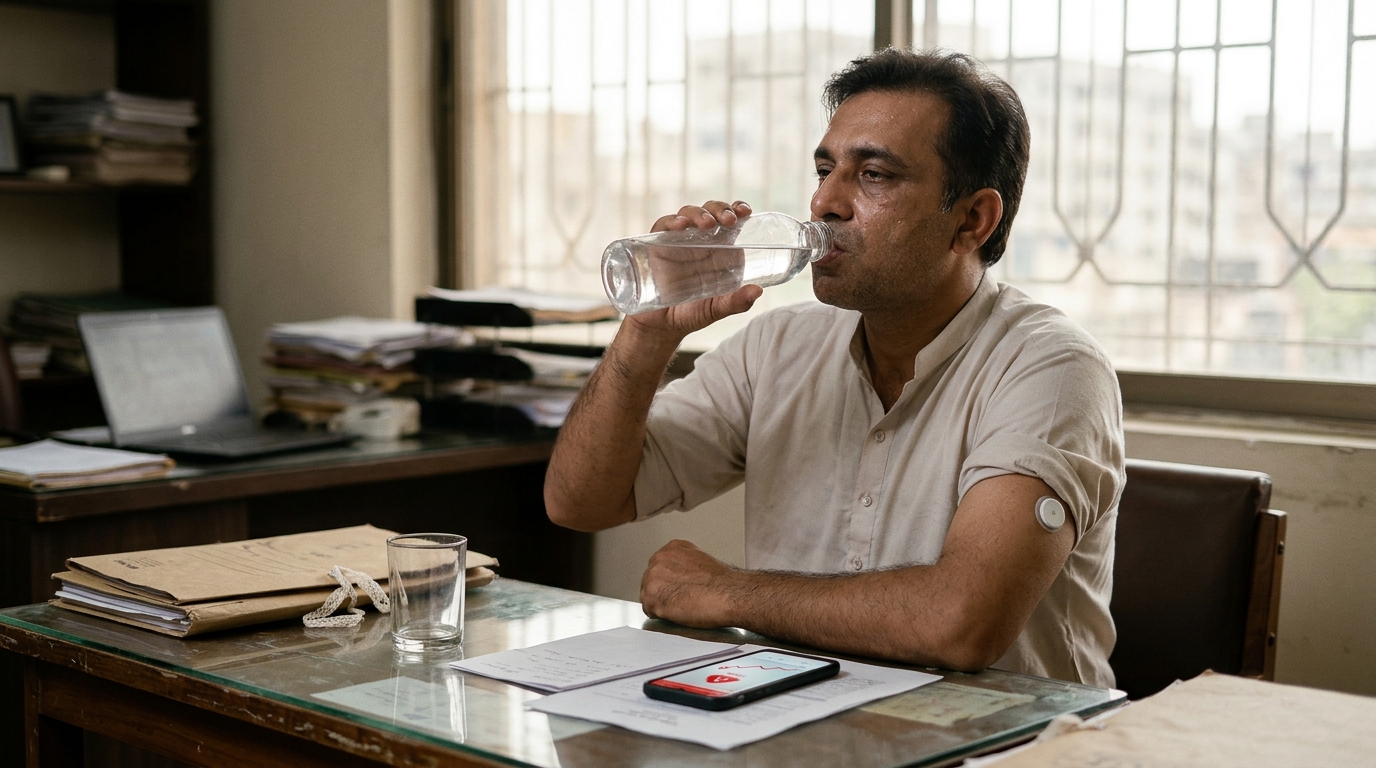
Tawaf, sai and long walks between sites can lower glucose significantly, especially in older pilgrims who also take insulin or sulfonylureas. Carry dates or glucose tablets, drink water frequently, rest in shade, and use wheelchairs or transport where needed. Heat exhaustion and dehydration are serious risks, and they raise glucose too.
Medicines, Documents and Storage
Carry medicines in original packaging with a doctor’s letter and a copy of your prescription. Keep insulin cool using an insulated pouch, not direct ice contact, and follow the storage instructions on your insulin label. Pack extra supplies and ask a companion to know where they are and what to do in an emergency.
Companions and Remote Monitoring
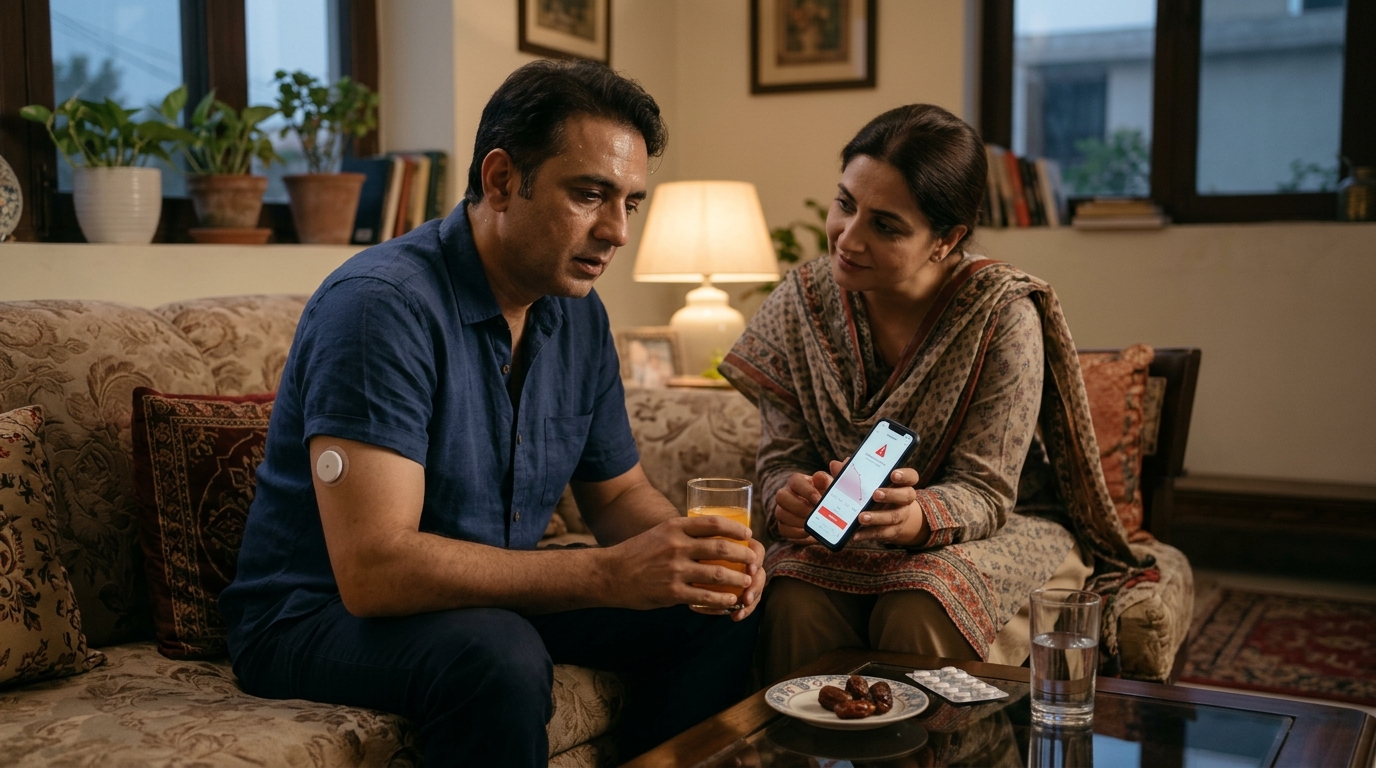
Many pilgrims travel with spouses, siblings or group members who are not familiar with diabetes care. A sensor with real-time alerts allows you to catch a falling trend early, and through the iCan Reach app a family member back home or a travel partner can follow your readings if you choose to share your data. This brings peace of mind to children who worry about an elderly parent traveling far from home.
Ramadan and Eid Travel
When travel falls in Ramadan, fasting adds another layer. Hours of driving or flying without food or water, a changed schedule for sehri and iftar, and possible heat increase the risk of both lows and highs. If you plan to fast, talk to your doctor well in advance, because some people with diabetes, particularly those with frequent lows, insulin use or other complications, are advised not to fast while traveling. Under Islamic guidance, travelers are permitted to postpone fasting, and many scholars and doctors consider this a sensible option for people with diabetes on long journeys. If you do fast, monitor closely and break the fast if glucose falls below the thresholds your doctor has given you.
Eid travel brings its own challenge: heavy meals, sweets and late nights at relatives’ houses. Eat slowly, take small portions, walk after meals and keep an eye on your sensor trend.
What to Pack: A Practical Diabetes Travel Kit
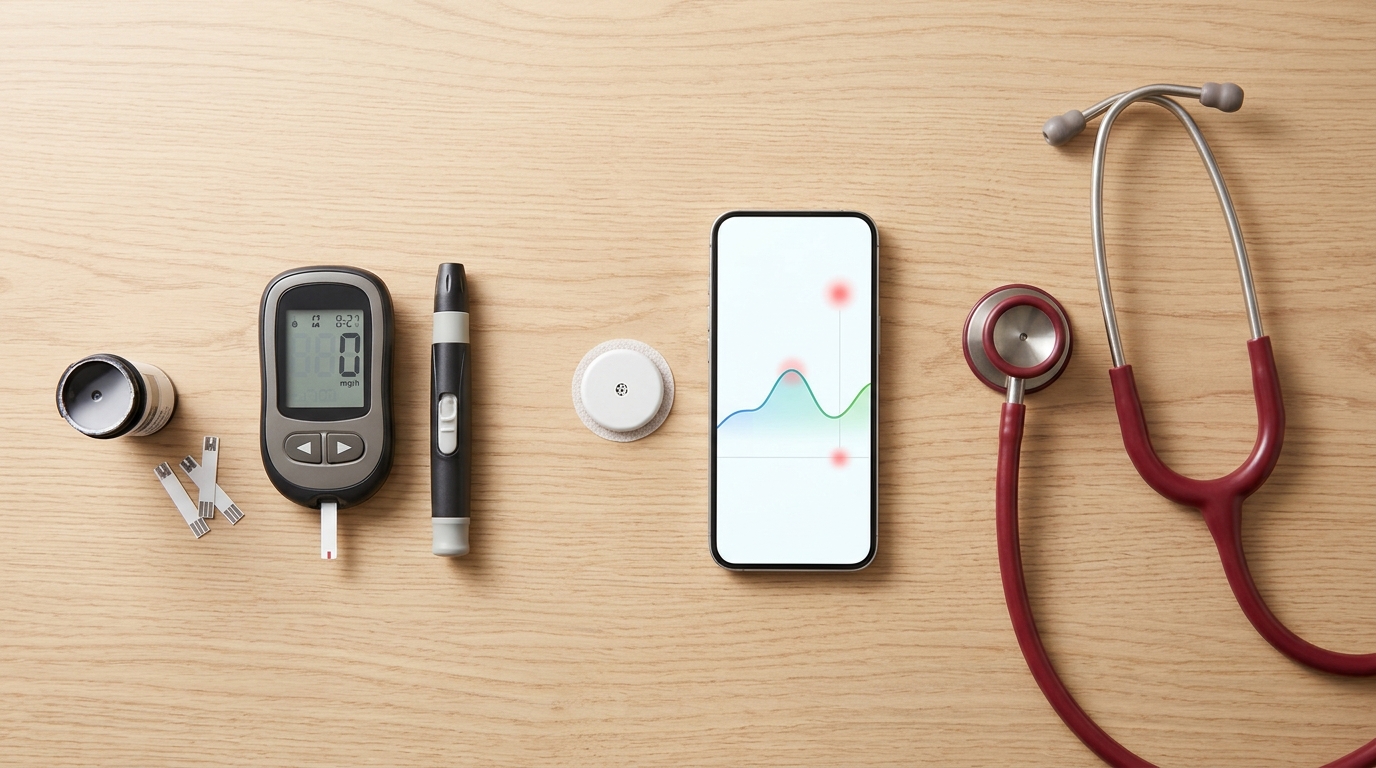
A good kit prevents most emergencies. Pack your regular medicines and insulin with at least double the quantity you expect to use, a doctor’s letter, a copy of your prescriptions and a list of your medicines in generic names. Include a glucose meter with strips as a backup, a few spare sensors if you wear a continuous monitor, a power bank to keep your phone charged for the app, and a small insulated pouch if you use insulin. Add fast-acting sugar such as glucose tablets or sachets, plus snacks with protein and complex carbohydrates such as nuts, roasted chana or whole wheat biscuits. Bring oral rehydration salts, a thermometer, basic first aid supplies, comfortable footwear and clean socks, because foot injuries are a serious risk for people with diabetes. Finally, wear or carry something that identifies you as having diabetes, and share your emergency contact details with your travel companions.
Storing Insulin, Medicines and Sensors on the Move
Insulin loses its strength if it overheats or freezes. Follow the storage instructions on your product label, avoid leaving it in a hot car, a sunny window or a cold cargo hold, and carry it in your hand luggage. Do not place insulin directly against ice packs. For sensors, keep spare units in a cool, dry place and follow the manufacturer’s guidance on temperature and handling. Always check the expiry date before you leave home.
Airport Security and Documents
Many travelers worry about X-ray machines and body scanners. Manufacturers of sensors and insulin pumps usually provide specific instructions on whether to remove the device or request a manual check, and these instructions can differ between products, so check the guidance for your device before you travel and carry your doctor’s letter. Tell security staff that you have diabetes and carry medical supplies. Keep medicines in original packaging, and keep your sensor and supplies accessible. If you are unsure, ask the airline and the airport in advance.
Why Fingerprick Testing Alone Falls Short on the Road
A fingerprick meter gives you one number at one moment. On a trip, that single number may be taken at the worst possible time, in a moving car, on a crowded platform or in a dark hotel room, and it will not show whether your glucose is climbing or dropping. Because blood sugar fluctuations during travel change quickly with food, movement, stress and sleep, a trend arrow and a continuous graph are far more useful.
The Value of Trends and Alerts
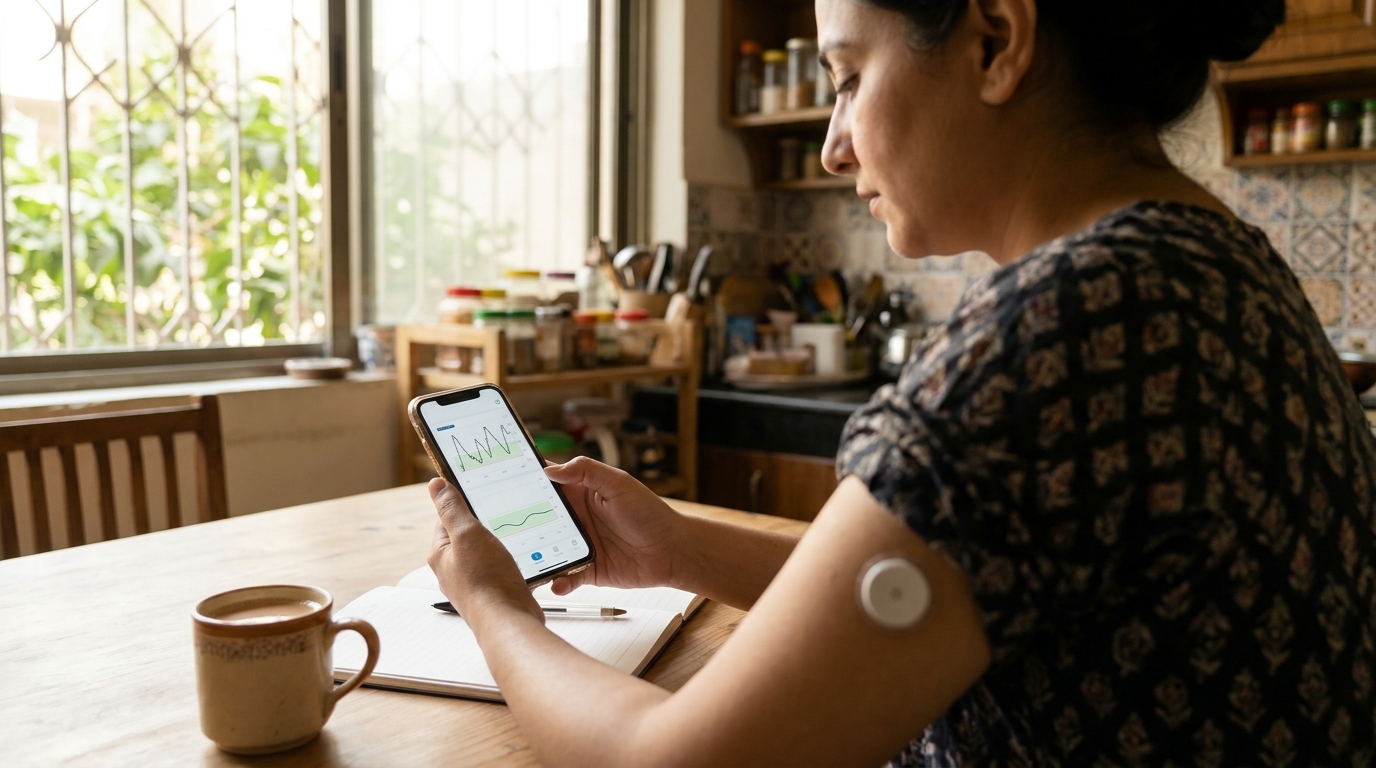
With a continuous sensor you can see that your glucose is rising after a roadside meal and take a short walk, or notice that it is falling after a long day of sightseeing and eat a snack before a low occurs. Real-time alerts can warn you while you are driving, walking in a crowd or sleeping in a new place.
How the iCan CGM Fits Travel
The iCan CGM, according to the information on the iCan CGM Pakistan store, is a 15-day continuous glucose monitor with no scanning and no fingerpricks, real-time alerts and a reading every three minutes. It offers up to 7,160 readings per sensor, an adult MARD of 8.71 percent and IP28 water resistance, which suits swimming-pool edges, rain, sweat and showers during travel. The 15-day wear time means a single sensor can cover a typical two-week holiday or Umrah trip, and you can share your data with your doctor or family. If you plan to monitor for longer than one cycle, look at the bundle options, and for ordering and usage questions, visit the store FAQ page. You can read more about the company on the about page.
A note on interpretation: sensor readings may differ from fingerprick results during rapid changes, extreme temperatures, dehydration or heavy sweating. If your symptoms do not match the sensor value, confirm with a fingerprick and treat according to how you feel.
A Simple Day-by-Day Strategy
Before departure, check your glucose trend, eat a balanced meal and pack your kit. On the way, check your trend at regular intervals, sip water, and move whenever you can. On arrival, rest, eat at a sensible time, and check how your glucose behaves overnight. During the trip, aim for regular meals, take medicines on schedule and review your sensor graph each evening to see what worked. If you notice a pattern, such as a high after a particular meal or a low after a long walk, you can adjust the next day. Learning from your own data is the best way to reduce blood sugar fluctuations during travel on future trips.
When to Seek Medical Help While Traveling
Find medical help promptly if you have repeated lows, persistent high readings with thirst and vomiting, signs of ketoacidosis such as fruity breath and rapid breathing, confusion, severe abdominal pain or fainting. Know where the nearest hospital is, carry your doctor’s contact details and keep your travel insurance information handy. In Pakistan, emergency services such as Edhi ambulance (115) or Rescue 1122 in areas where it operates can help, and abroad you should learn the local emergency number before you go. This article is educational and does not replace personal medical advice.
Common Questions About Traveling With Diabetes
Why does my sugar go up when I travel even if I eat less?
Stress hormones released during travel, long periods of sitting, dehydration, poor sleep and missed medicines can all raise glucose even when you are eating less than usual. Many people see this pattern on travel days. Watching a sensor trend helps you separate stress-related rises from meal-related rises.
Can I take insulin in my hand luggage?
In general, yes, and you should. Insulin and other medical supplies are normally allowed in hand luggage with a doctor’s letter and original packaging, and keeping them with you protects them from loss and from freezing in the cargo hold. Check the rules of your airline and destination before you travel.
How do I adjust insulin when crossing time zones?
The answer depends on your type of insulin and the number of time zones crossed. Some regimens can be shifted gradually, while others need a specific plan. Ask your doctor for a written schedule before you leave, and use your sensor trend to check how your body responds in the first few days.
Is it safe to fast in Ramadan while traveling with diabetes?
Many doctors advise caution, and some people are advised not to fast at all, especially if they use insulin or have frequent lows. Religious guidance also allows travelers to postpone fasting. Discuss your situation with your doctor before Ramadan and monitor closely if you do fast.
Will a sensor work during a long trip with sweating and swimming?
The iCan CGM is listed with IP28 water resistance, which supports daily activities such as showers and sweat, and a 15-day wear time that suits most holidays. Follow the instructions for application and care, and carry a backup meter in case you need to confirm a reading.
Final Thoughts
Blood sugar fluctuations during travel are common, but they are not inevitable. With preparation, steady routines, smart food choices, regular movement, careful storage of medicines and a clear plan for emergencies, you can enjoy your journey and protect your health. A continuous sensor adds a layer of confidence by showing trends and sounding alerts while you drive, walk, fly or sleep in a new place. If you are planning your next journey, explore the iCan CGM at icancgm.pk and travel with your glucose in view.