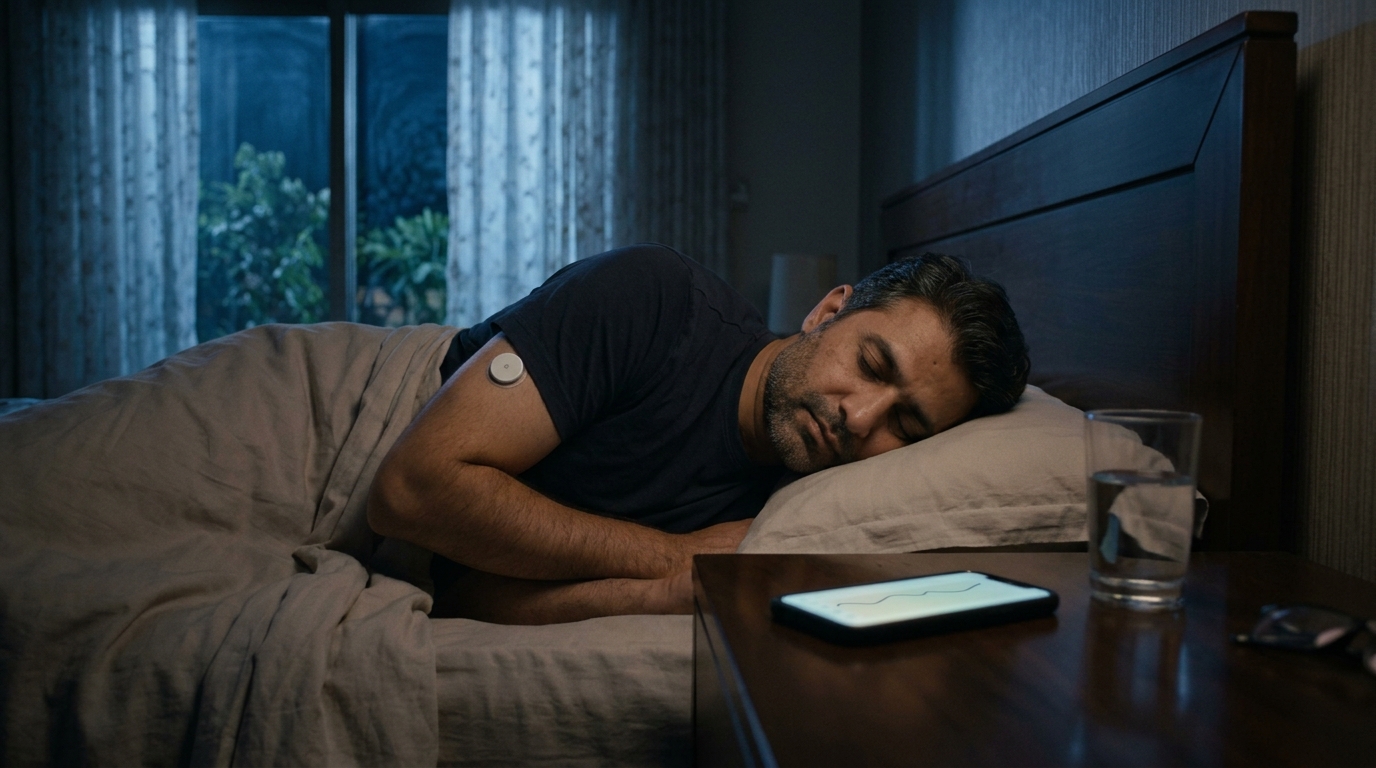
Blood Sugar Changes During Sleep: Why Your Glucose Moves Overnight and What to Do About It in Pakistan
Most people in Pakistan think of blood sugar as something that only matters when they are awake, eating, or visiting the clinic. In reality, some of the most important glucose activity of the whole day happens while you are fast asleep. Blood sugar changes during sleep follow a predictable pattern in healthy people, but in people with diabetes or prediabetes the pattern can become uneven, and that unevenness often explains why a morning fasting reading looks so different from what the previous evening promised. If you have ever gone to bed with a reasonable number and woken up with a much higher one, or woken up sweating, shaky and confused at three in the morning, you have already experienced blood sugar changes during sleep without knowing what was behind them.
The scale of this issue in our country is hard to ignore. According to the IDF Diabetes Atlas 2025, around 34.5 million adults in Pakistan were living with diabetes in 2024, which gives the country one of the highest diabetes prevalence rates in the world, and a large share of those adults do not even know they have it. When so many people are unaware of their numbers, nobody is watching what happens overnight. That is exactly why understanding blood sugar changes during sleep matters, and why modern tools such as a continuous glucose monitor in Pakistan are becoming so useful for families who want real answers instead of guesses.
In this guide we explain, in plain language, what your body does with glucose at night, why blood sugar changes during sleep happen, what the dawn phenomenon and nighttime lows really are, how Pakistani eating habits and Ramadan routines affect overnight readings, and what practical steps you can take. We also show how a 15-day sensor can reveal patterns that a handful of fingerprick tests will never catch. This article is for education only and does not replace advice from your doctor.
Understanding Blood Sugar Changes During Sleep
Sleep is not a long period of nothing. Your brain, liver, pancreas and hormone glands stay busy all night. Your body still needs fuel while you are not eating, so it has to release stored glucose in a careful, controlled way. When that control works well, blood sugar changes during sleep are small and smooth. When insulin is low, insulin resistance is high, or medicines push glucose in one direction, the curve can swing up or down by a large margin, and you may never feel it happen.
What Your Body Does While You Rest
After your last meal, usually dinner, your blood glucose rises, peaks, and then slowly returns toward your baseline as insulin moves sugar into muscle, fat and liver cells. By the time you are asleep, the food from dinner has mostly been absorbed, and your body switches to using stored energy. The liver breaks down glycogen and also makes new glucose from other materials, which keeps the brain supplied through the night. This is the basic engine behind blood sugar changes during sleep, and it is the reason your glucose does not simply drop to zero when you stop eating for eight or nine hours.
Insulin continues to be released in small amounts throughout the night in a person without diabetes, matching the liver’s glucose output almost perfectly. In a person with type 2 diabetes, the pancreas may release too little insulin, or the body may respond poorly to it, so the liver keeps pouring out glucose and the overnight level climbs. In a person with type 1 diabetes, there is almost no natural insulin, so the balance depends entirely on injected or pumped insulin, and a small mismatch can cause either a high or a low by morning.
Normal Overnight Glucose Ranges
In a person without diabetes, fasting glucose is generally between 70 and 99 mg/dL, and overnight values tend to stay in a narrow band with only a gentle drift. A fasting level from 100 to 125 mg/dL is usually classed as prediabetes, and a fasting level of 126 mg/dL or more on repeat testing points to diabetes. For people who already have diabetes, many clinicians use a time in range target between 70 and 180 mg/dL, and they like to see most of the night spent inside that window. Anything below 70 mg/dL is considered low, and anything below 54 mg/dL is considered a serious low that needs quick action.
The key point is that a single morning number tells you where you ended up, not how you got there. Two people can wake up with the same reading of 130 mg/dL, yet one of them may have had a calm, flat night and the other may have dropped to 55 at two in the morning and then bounced back. Only a continuous record can show the difference, and that is why blood sugar changes during sleep are so often missed in routine care.
Why Blood Sugar Changes During Sleep Happen Every Night
Blood sugar changes during sleep are not random. They are the result of three systems working together: hormones, the liver, and the sleep cycle itself. When you understand these three, the rest of this article becomes much easier to follow.
The Role of Hormones
Insulin is the hormone most people know, but it is only one voice in the conversation. Cortisol, growth hormone, glucagon and adrenaline all push glucose upward, while insulin pulls it down. During the first half of the night, growth hormone is released in pulses, which can raise glucose slightly and make cells a little less sensitive to insulin. As the night moves toward morning, cortisol begins to climb so that you can wake up with energy. This hormonal shift is the main cause of the early morning rise that many Pakistani patients notice when they check their sugar after fajr.
In a healthy body, the pancreas simply releases a little extra insulin to cover this hormone push, and the person never notices. In someone with insulin resistance, which is very common in South Asian adults, the pancreas cannot keep up, and blood sugar changes during sleep become larger and more visible in the morning reading.
The Liver Is the Night Shift Worker
The liver is the main source of glucose when you are not eating. It releases stored sugar and makes fresh sugar through a process called gluconeogenesis. If you have fatty liver, which is extremely common in Pakistan because of weight gain, sedentary jobs and diets heavy in refined flour and oil, the liver can become resistant to insulin’s stop signal. It keeps releasing glucose even when insulin is present, and that can lift fasting numbers even if you ate a light dinner. Many people are surprised to learn that a high fasting level can come from the liver rather than from what they ate the night before.
Sleep Stages and Glucose
Deep sleep tends to be a time of lower glucose use by the brain, while REM sleep, the stage linked with dreaming, is more metabolically active and can nudge glucose upward. Poor sleep, broken sleep, or short sleep disturbs this rhythm. Studies have repeatedly shown that even a few nights of restricted sleep can make the body less responsive to insulin the next day. So the relationship goes in both directions: blood sugar changes during sleep affect how you feel in the morning, and the quality of your sleep affects how your glucose behaves the next day.
The Dawn Phenomenon: The Early Morning Rise
The dawn phenomenon is a natural rise in blood glucose that usually begins somewhere between three and eight in the morning. It is driven by the surge of cortisol, growth hormone, glucagon and adrenaline that prepares the body to wake up. In a person without diabetes, insulin rises to match it and nothing unusual happens. In a person with diabetes, the insulin response is often too weak or too late, so the glucose line climbs and stays high until the first meal or the first dose of medicine.
How to Recognise It
The classic sign of the dawn phenomenon is a steady glucose level in the early part of the night followed by a clear upward slope in the last few hours before waking. This is one of the most typical blood sugar changes during sleep, and you cannot see it with a single fasting test. A person who checks only at bedtime and at wake-up time will see a low or normal number at night and a high number in the morning and may assume the evening meal was to blame. A continuous trace shows the truth: the rise began at four in the morning, long after dinner had been digested.
What Helps
Doctors may adjust the timing or type of long-acting insulin, change the dose of oral medicines, or advise a lighter, lower-carbohydrate evening meal. Regular evening walking, better sleep habits, and consistent bedtimes can also soften the rise. These changes must be made by your own doctor, because lowering the evening dose without proper guidance can create a different problem, which is nighttime hypoglycemia.
Nighttime Lows: When Blood Sugar Changes During Sleep Become Dangerous
Nocturnal hypoglycemia means a low blood sugar level during sleep. It is one of the most worrying forms of blood sugar changes during sleep because the sleeper may not wake up to treat it. The brain depends on glucose, and when levels fall too low, the person can have seizures, confusion, or loss of consciousness. Many nighttime lows pass quietly, and the only clue is a headache, damp sheets, unusual tiredness, or a high morning reading after the body’s emergency hormones push glucose back up.
Who Is at Higher Risk
People who use insulin or sulfonylurea tablets, such as glimepiride or gliclazide, which are widely prescribed in Pakistan, are at the highest risk. Skipped dinners, delayed meals, unusually hard exercise in the evening, alcohol, kidney problems and weight loss can all raise the chance of a low. Older adults and people living alone are especially vulnerable, because nobody is around to notice early warning signs. Families that care for an elderly parent with diabetes often tell us that the biggest fear is the unseen night, not the daytime.
Warning Signs You Should Not Ignore
Night sweats, vivid nightmares, restless sleep, a pounding heartbeat, waking up with a headache, or feeling strangely exhausted despite a full night in bed can all point to a nighttime low. A partner may also notice shaking, moaning, or unusual behavior in the sleeper. If this is happening repeatedly, it needs medical attention, since repeated lows can blunt the body’s warning system and make future lows even harder to detect.
Why Overnight Alerts Matter
A fingerprick meter cannot wake you up. A continuous sensor with real-time alerts can. Because blood sugar changes during sleep can turn dangerous silently, an alarm that sounds before the level becomes severe offers a safety net that was impossible with older testing methods. With the iCan CGM, readings are recorded every three minutes, and with the iCan Reach app a partner or caregiver can follow your data and receive alerts when you choose to share it with them.
The Somogyi Effect: A Debated Explanation
You may hear doctors or online sources mention the Somogyi effect, also called rebound hyperglycemia. The idea is that a low blood sugar at night triggers a strong release of stress hormones, which then push glucose to a high level by morning. In theory, the person wakes up with a high number even though the real problem was a low earlier in the night.
Research on this effect is mixed, and many experts believe it is much less common than once thought. What continuous monitoring has shown is that a high morning reading is far more often due to the dawn phenomenon or to insufficient overnight insulin than to a rebound from a low. Still, the only reliable way to separate these explanations is to look at the whole night. If you have been told to take less insulin because of a possible rebound, or to take more because of a high morning number, make sure the decision is based on overnight data and not on a single fasting reading. Guessing wrong in either direction is risky, and this is a clear example of how blood sugar changes during sleep can mislead both patients and clinicians when only one data point is available.
How Sleep Quality and Sleep Apnea Shape Overnight Glucose
Poor sleep is a quiet driver of high glucose. When you sleep less than six hours, or when your sleep is repeatedly interrupted, your body releases more stress hormones, your appetite hormones shift towards craving sweet and fried food, and your insulin sensitivity drops. For many Pakistanis, late-night television, mobile phone use, noisy streets, shift work, and long family gatherings cut sleep short, and the effect on blood sugar changes during sleep and the next day’s readings can be real.
Sleep Apnea and Snoring
Obstructive sleep apnea is a condition in which the airway repeatedly collapses during sleep, causing pauses in breathing and brief drops in oxygen. It is very common in people with obesity and type 2 diabetes, but it is rarely diagnosed in Pakistan. Each breathing pause triggers a stress response that pushes glucose upward and fragments sleep. If you snore loudly, wake up gasping, feel exhausted in the morning, or have a partner who notices pauses in your breathing, tell your doctor, because treating sleep apnea can improve glucose control and blood pressure together.
Sleep Timing and Shift Work
People who work night shifts, drive long distances, or run late-night shops and restaurants often have an irregular body clock. Eating a heavy meal at one or two in the morning and then sleeping soon after can cause a large, long-lasting glucose rise, because the body is least efficient at handling carbohydrates late at night. A regular schedule is not always possible, but even small improvements in meal timing can make blood sugar changes during sleep less dramatic.
Pakistani Food, Late Dinners and Blood Sugar Changes During Sleep
Our eating culture has many strengths, but it also makes overnight glucose control harder. Dinner in many homes is eaten late, often after ten at night, and it can be rich in rice, naan, fried items, sweets and sugary tea. A late, heavy meal means the body is still digesting and the glucose is still elevated when you lie down, so the first part of the night starts high and the rest of the night spends hours bringing it back down.
Biryani, Naan and the Slow Rise
A plate of biryani or pulao with raita, followed by a piece of kheer or gulab jamun, can deliver a very large carbohydrate load. Because fat and protein slow digestion, the glucose may keep rising for several hours after the meal, which means that the peak can occur while you are already sleeping. This delayed rise is one of the most overlooked causes of high blood sugar changes during sleep, and it is the reason a normal bedtime reading can be followed by a high reading at three in the morning.
Chai, Mithai and the Bedtime Snack
A cup of sweet chai with biscuits before bed feels harmless, yet it can add a substantial sugar load just as insulin sensitivity is starting to decline. The same applies to late-night desserts after weddings and gatherings, which are an important part of our social life. On the other hand, going to bed with no food at all after taking insulin or a sulfonylurea can lead to a low, so the answer is not to skip meals, but to choose them wisely with your doctor or dietitian.
Simple Pakistani-Friendly Adjustments
Eating dinner earlier, ideally at least two to three hours before bed, is the single most useful change. Choosing roti made from whole wheat or mixed grains in smaller portions, adding daal, vegetables, salad, yogurt and a moderate portion of protein such as chicken, fish or eggs, and reducing sugary tea and desserts can flatten the evening curve. A short walk of ten to fifteen minutes after dinner, which many families already do in parks and streets in the cooler evening hours, helps muscles take up glucose and often reduces the overnight rise. These are small habits, but over weeks they change the shape of blood sugar changes during sleep in a meaningful way.
Ramadan, Sehri and Overnight Glucose
Ramadan completely changes the rhythm of the day, and it changes blood sugar changes during sleep too. Many people sleep for shorter periods, wake for sehri, and then go back to bed for a short time before the day begins. A large iftar followed by a late taraweeh, a heavy sehri, and shifted medicine timings create a pattern that is very different from a normal month.
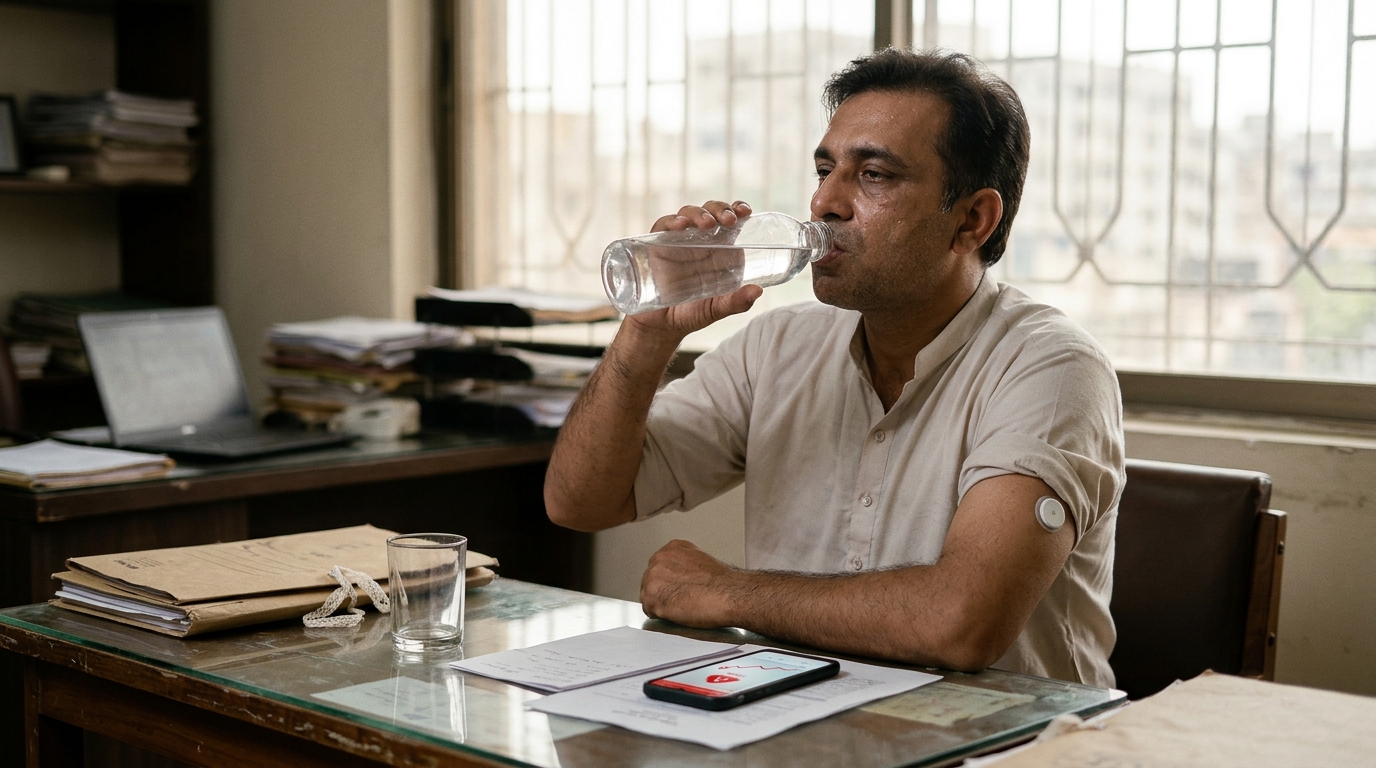
After a heavy iftar, glucose may remain elevated into the night, while a light or skipped sehri in someone on insulin or sulfonylureas can lead to a low later in the day or before the next meal. Dehydration from long summer fasts can also raise glucose readings and make the body more stressed. If you have diabetes and plan to fast, speak to your doctor well before Ramadan so that doses and timings can be adjusted safely. Wearing a sensor for the entire month allows you and your doctor to see how each night and each sehri affects your curve. Many families find this far more reassuring than a few fingerpricks, and it helps them decide when a fast should be broken for safety.
Heat, Stress and Load Shedding: Hidden Influences
Hot nights in cities such as Hyderabad, Karachi, Lahore and Multan are a reality for much of the year. When the power goes out and fans or air conditioners stop, the room becomes uncomfortable, sleep becomes broken, and the body releases stress hormones. Heat can also change how quickly insulin is absorbed from the skin, and dehydration can raise glucose concentration in the blood. These factors may seem unrelated to diabetes, yet they quietly shape blood sugar changes during sleep, especially in summer.
Emotional stress works in the same way. Worry about finances, family problems, exams and work pressure keep cortisol and adrenaline elevated, so the body continues to release glucose at night. Keeping a regular bedtime, avoiding screens in the last hour before sleep, drinking enough water through the day, keeping the room as cool and quiet as possible, and practicing slow breathing or a short evening prayer and reflection can all help the body settle.
Why Fingerprick Tests Miss Overnight Patterns
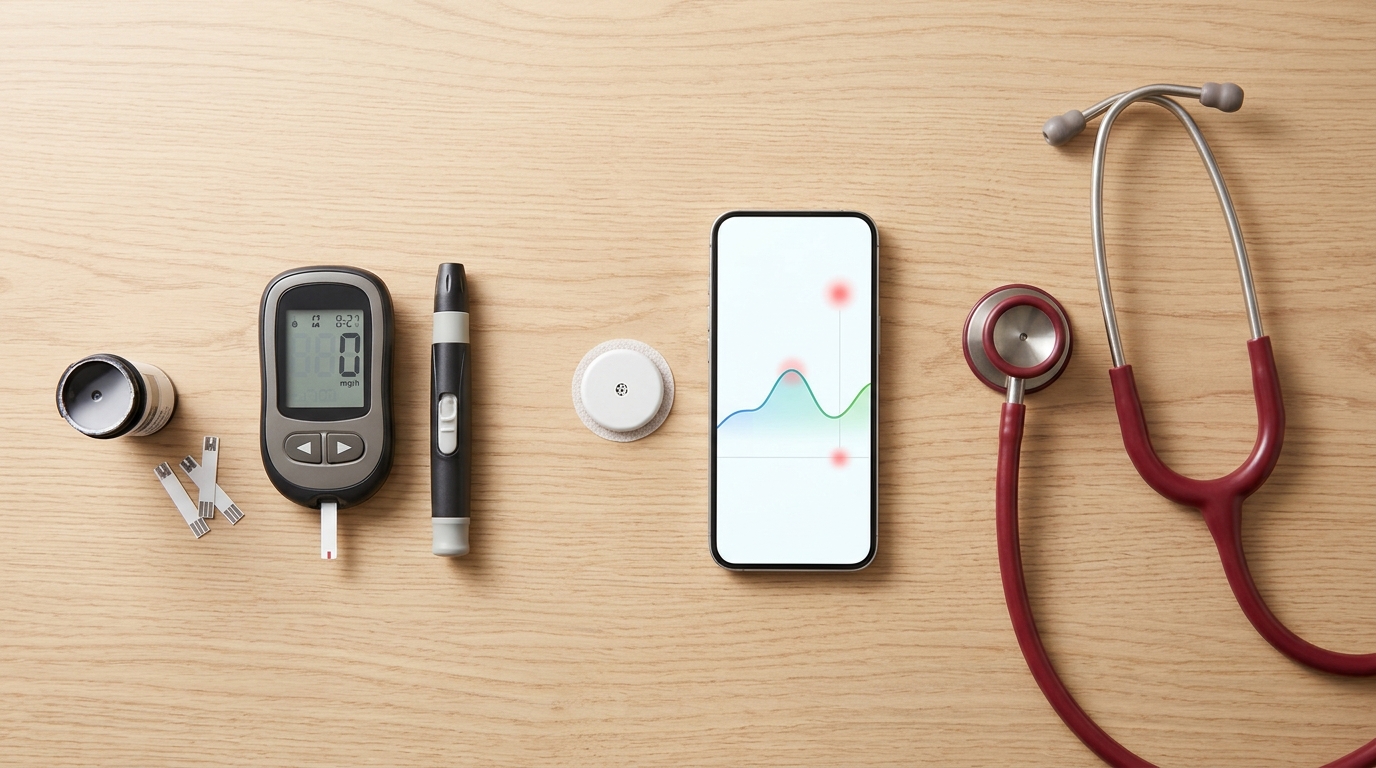
A fingerprick meter gives you one number at one moment. It is useful, but it is like looking at a single frame of a long film. To understand blood sugar changes during sleep you would have to wake yourself every hour to prick your finger, which is painful, disruptive and, ironically, bad for your glucose because broken sleep raises stress hormones. Most people check once before bed and once in the morning, and the eight hours in between remain a mystery.
The Problem with Isolated Numbers
Imagine a reading of 110 mg/dL at bedtime and 150 mg/dL at wake-up. That tells you almost nothing about what happened in between. Did glucose rise steadily because of the dawn phenomenon? Did it drop to 60 at two in the morning and then rebound? Did it climb after a late dinner and then stay flat? Each story leads to a different treatment decision, and a wrong guess can push the dose in the wrong direction. This is why many doctors now value continuous data, particularly for patients who use insulin, for older adults, and for people whose morning readings do not match their treatment.
The Value of Seeing the Whole Curve
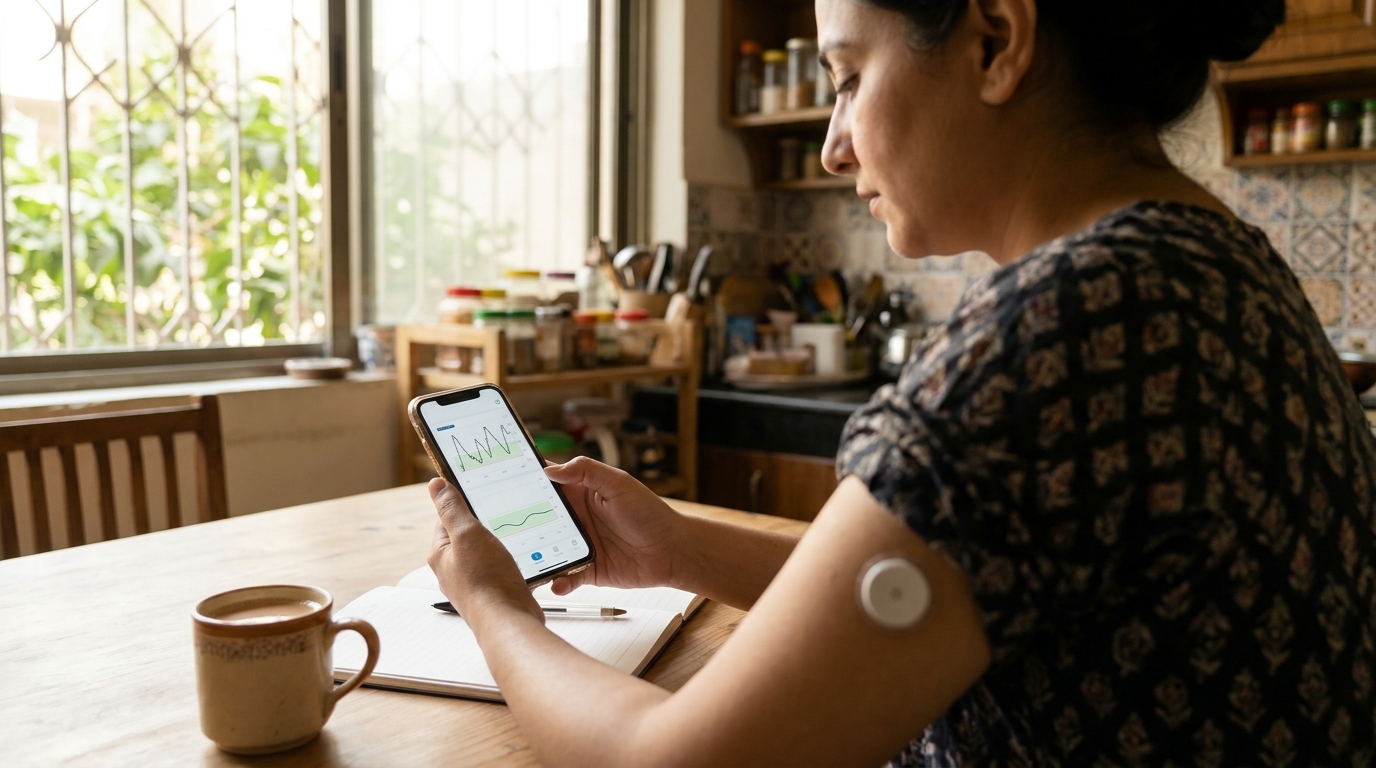
When you see an entire overnight line, you can notice patterns that no single number can show: how long you stayed in range, how steep the morning rise was, whether a particular dinner always caused a delayed peak, and whether a bedtime snack prevented or caused a problem. Over several nights, these patterns become clear, and they allow you and your doctor to make targeted, evidence-based changes.
How the iCan CGM Helps You Understand Blood Sugar Changes During Sleep
The iCan CGM is designed to make overnight tracking simple and comfortable. According to the information on the iCan CGM Pakistan store, it is a 15-day continuous glucose monitor with no scanning and no fingerpricks, real-time alerts, a reading every three minutes, and up to 7,160 readings per sensor. It is also rated IP28 for water resistance, so showering and normal daily activity are not a problem. The listed accuracy is an industry-leading MARD of 8.71 percent for adults, which is the figure the manufacturer reports for how closely the sensor readings follow lab-grade measurements.
No Scanning Means Uninterrupted Night Data
Because the sensor sends readings automatically to the iCan CGM app, you do not need to wake up and scan your arm to see a number. You simply sleep, and in the morning you open the app to review the full night. You can see exactly when the dawn phenomenon began, whether you spent time below 70 mg/dL, and how a late dinner affected the first half of the night. That detailed view of blood sugar changes during sleep is what turns a vague worry into a clear plan.
Alerts and Caregiver Sharing
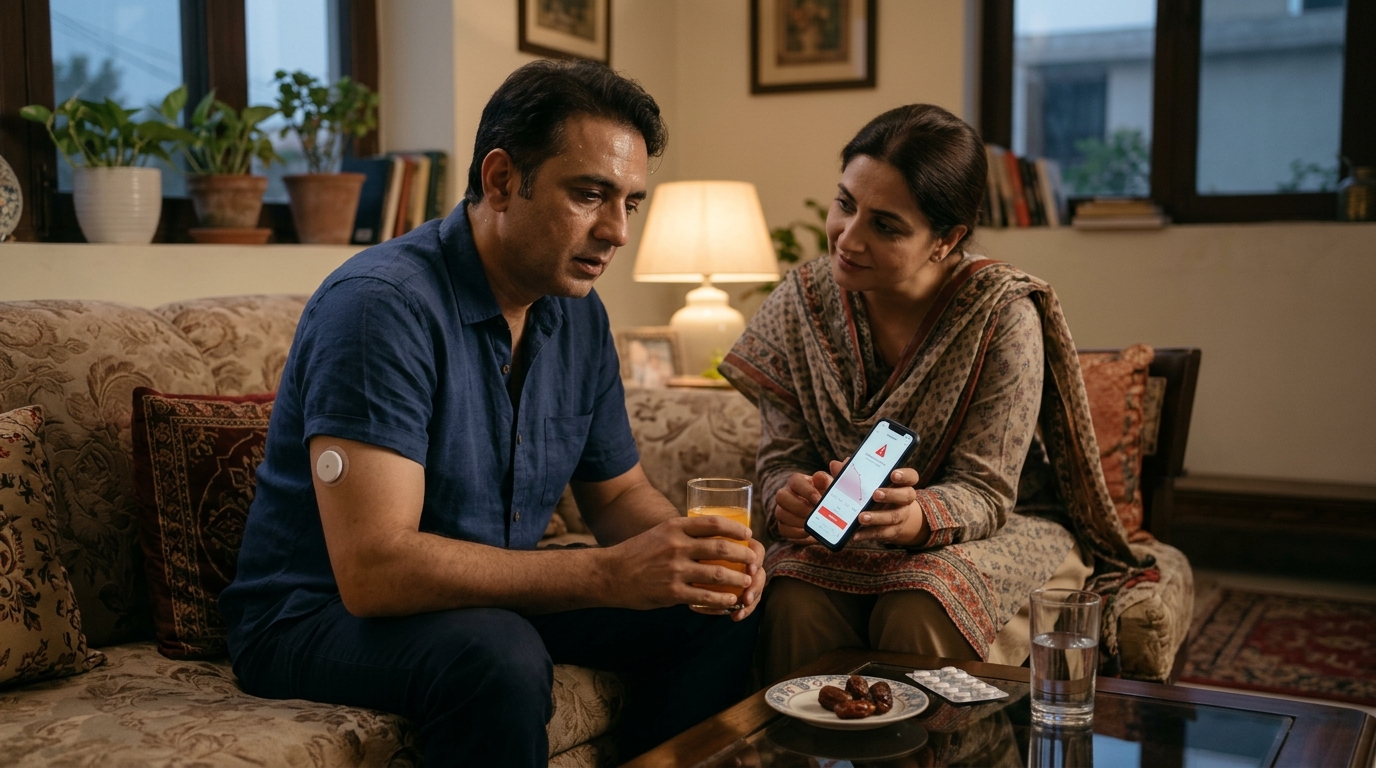
Real-time alerts are especially valuable for people on insulin, older adults and those who live alone. The iCan Reach app lets your spouse, son, daughter or another caregiver follow your readings and receive alerts when you share your data. For many Pakistani families, where adult children often live in a different city or country from their parents, this kind of remote peace of mind is a major benefit. You can also share reports with your doctor so that the next appointment is based on a full picture and not on guesses.
Getting Started
If you are new to sensors, the how to use guide explains application and daily use step by step, and the bundle options can help you save when you plan to monitor for longer than one sensor cycle. If you have questions about delivery, apps or ordering, the store FAQ page covers the most common points, and you can learn more about the company on the about page. For more educational articles about glucose, you can also browse the iCan CGM blog.
Practical Steps to Smooth Out Overnight Glucose
You cannot fully control hormones, but you can influence almost everything around them. The steps below are general lifestyle suggestions and should always be adapted with your doctor, especially if you take insulin or sulfonylureas.
Time Your Dinner and Choose It Wisely
Aim to eat at least two to three hours before bed, and make the plate balanced, with vegetables and protein taking up more space than rice or bread. Avoid combining a large portion of rice, naan and dessert in the same meal. If you tend to see a delayed rise, a smaller portion of carbohydrates at dinner and a short walk afterward can make a visible difference in your overnight curve.
Move After Meals and Stay Active in the Day
Regular physical activity improves insulin sensitivity for many hours, and that benefit carries into the night. A walk after dinner, a morning walk in the park, or a simple home routine of squats and stretching all count. Avoid unusually intense exercise very late in the evening if you use insulin, since it can increase the chance of a nighttime low. A sensor can show you how your own body responds to different types of activity.
Protect Your Sleep
Keep a consistent bedtime and wake-up time, limit caffeine in the evening, put the phone away well before bed, and make the bedroom as dark, cool and quiet as you can. If snoring or breathless nights are a problem, ask about a sleep evaluation. Better sleep improves insulin sensitivity, lowers stress hormones, and generally makes blood sugar changes during sleep much gentler.
Review Medicines with Your Doctor
If you see repeated nighttime lows or a consistent early morning rise, bring your overnight graph to your doctor. Do not change insulin or tablet doses on your own. Dose timing, type of insulin, and medicine combinations can all be adjusted safely when the full overnight pattern is visible. Having a clear record also helps your doctor decide whether a different treatment strategy would be more suitable for your lifestyle and your fasting pattern.
Prepare for Nighttime Lows
If you are at risk of lows, keep a fast-acting source of sugar, such as glucose tablets, juice or a few dates, near your bed, and make sure a family member knows what to do. Treat a confirmed low immediately, recheck after fifteen minutes, and inform your doctor. A sensor alert can give you a few extra minutes that make all the difference.
When to Speak to a Doctor
Please speak to your doctor promptly if you have repeated nighttime lows, if you wake up with symptoms such as sweating, confusion or a pounding heart, if your fasting readings are persistently high, or if you feel unusually tired despite sleeping well. Seek emergency care if someone with diabetes cannot be woken, has a seizure, or cannot swallow safely. Anyone who is pregnant, has kidney disease, or takes multiple glucose-lowering medicines should discuss overnight monitoring with their healthcare team. The information in this article is educational and does not replace personal medical advice, diagnosis or treatment.
Common Questions About Overnight Blood Sugar in Pakistan
Is it normal for glucose to rise in the early morning?
Yes, a mild rise before waking is a normal part of how the body prepares for the day. Cortisol and growth hormone increase, the liver releases more glucose, and people without diabetes simply produce extra insulin to cover it. In people with diabetes, this rise may be larger and last longer, which is why blood sugar changes during sleep often show up as a high fasting reading. If your morning numbers are consistently high, share your overnight data with your doctor.
Can I have a low blood sugar at night without waking up?
Yes, and this is exactly why nighttime lows are considered risky. During sleep, the body’s warning symptoms can be dulled, and some people, especially those who have had frequent lows, do not wake up at all. Clues may include night sweats, bad dreams, morning headaches and unusual fatigue. A continuous sensor with alerts offers much better protection than a morning fingerprick.
Does eating dinner late really affect my sugar while I sleep?
It does. A late, heavy dinner can keep glucose high for hours, and meals rich in rice, bread and fat may cause a delayed rise that peaks after you are already asleep. Eating earlier, reducing portion size and taking a short walk after the meal usually lead to a smoother night. Your own sensor data will show how much dinner timing matters for you.
How many days should I wear a sensor to understand my sleep pattern?
Overnight patterns can vary with meals, stress, activity and sleep quality, so a single night is rarely enough. A longer wear period lets you compare different dinners, different bedtimes and different routines. The iCan CGM can be worn for up to 15 days, which is long enough to see repeating patterns and discuss them with your doctor.
Do I need to fingerprick or scan to see my night readings?
With the iCan CGM, you do not need to scan or prick your finger to view readings, since the data are sent to the app automatically and you can review the whole night in the morning. Your doctor may still advise a confirmatory fingerprick when symptoms do not match the sensor value or when you are making an important treatment decision.
Final Thoughts
Understanding blood sugar changes during sleep is one of the most practical steps you can take toward better diabetes care, particularly in a country where so many adults are living with diabetes or prediabetes and where so many do not yet know their numbers. The dawn phenomenon, nighttime lows, late dinners, poor sleep, Ramadan routines and summer heat all leave fingerprints on your overnight curve. Once you can see that curve, you can work with your doctor to change what actually needs changing, instead of guessing. If you are ready to see what your nights really look like, explore the iCan CGM at icancgm.pk and take the first step towards calmer, safer nights.