If you or someone in your family is living with diabetes, you have probably come across the term CGM at some point, maybe from a doctor, a diabetes support group, or an ad that popped up online. It sounds technical, but the idea behind it is actually simple once you break it down.
A continuous glucose monitor is a small device that tracks your blood sugar throughout the day and night, without needing you to prick your finger every time you want a reading. In this article, we will walk through what this technology actually is, how it works once it's on your body, and why more people in Pakistan are choosing devices like the iCan i3 over the old routine of daily finger pricks.
What a Continuous Glucose Monitor Actually Does
A continuous glucose monitor, or CGM, is a wearable device that measures your glucose levels automatically, all day long. Instead of the single snapshot you get from a traditional glucometer, a CGM keeps checking your sugar every few minutes and builds a complete, ongoing record of how it moves throughout the day.
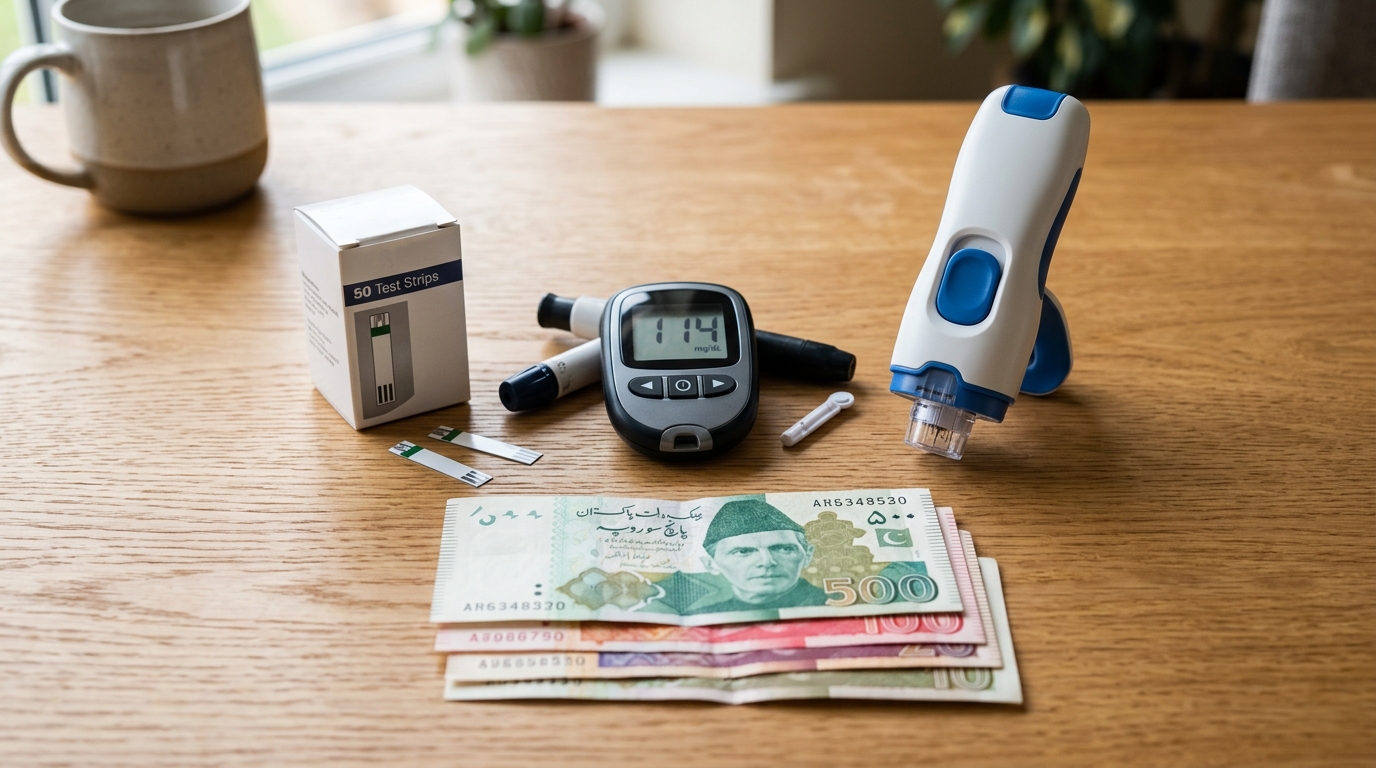
Think about how different this is from testing four or five times a day with a glucometer. With finger pricks, you only know what your sugar was doing at that one exact moment. You have no idea what happened an hour before, or what will happen an hour later. A CGM fills in all of that missing information, so you get a real picture instead of a few scattered dots.
The iCan i3 takes this a step further compared to older CGM models. Many earlier devices still needed you to scan the sensor with your phone to get a reading. The iCan i3 sends your glucose data straight to your phone on its own, roughly every three minutes, so you're never left guessing or forgetting to check.
How Does a CGM Actually Work Under the Skin
A CGM might sound complicated, but it really comes down to three simple parts working together.
The Sensor
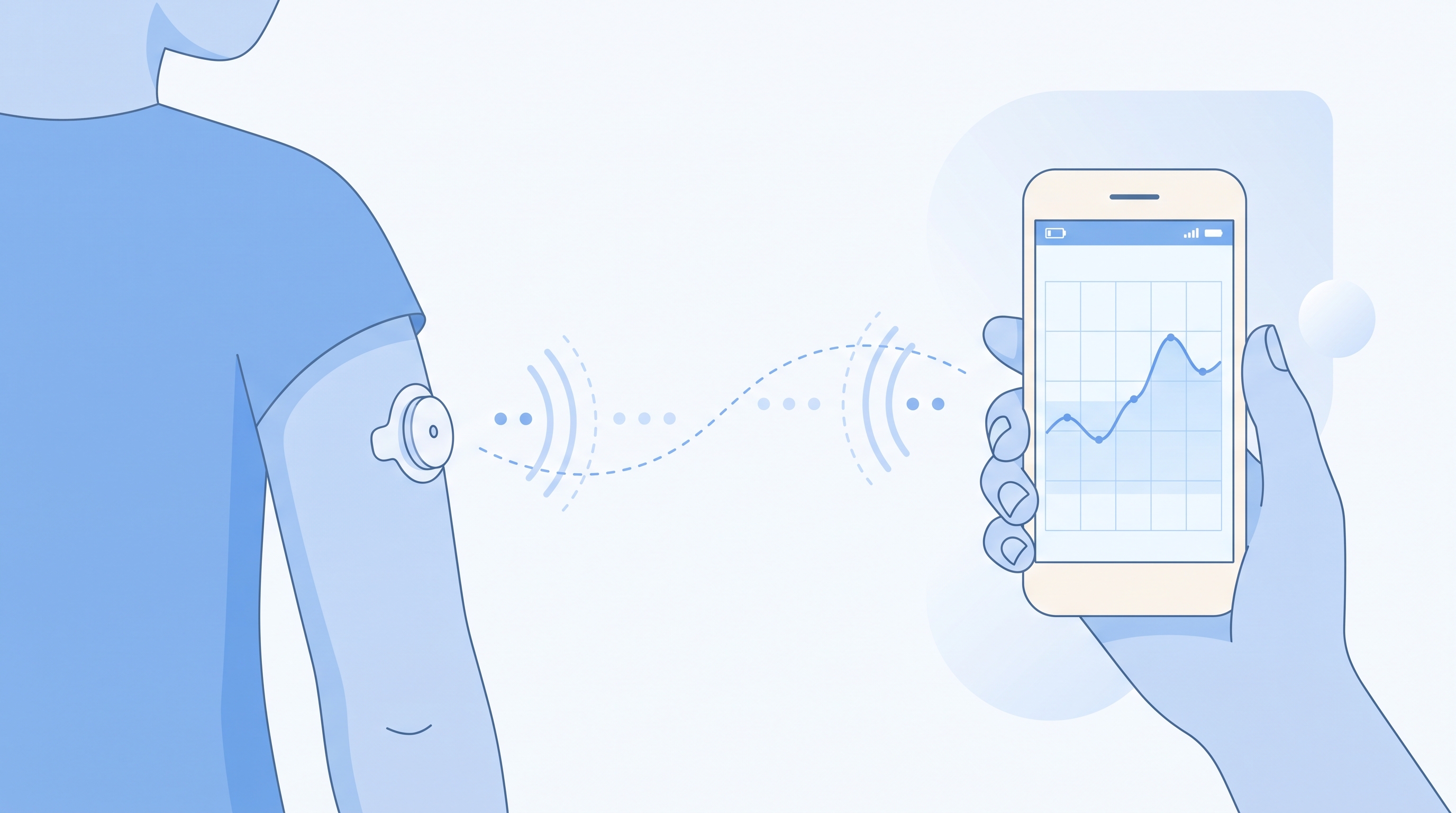
This is a tiny filament, thinner than a strand of hair, that sits just under your skin, usually on the back of the upper arm. It doesn't draw blood the way a lancet does. Instead, it measures glucose in the fluid that surrounds your tissue cells, known as interstitial fluid. This fluid closely mirrors your blood sugar levels, just with a small delay of a few minutes.
The Transmitter
Attached right to the sensor, the transmitter picks up the signal generated when the sensor detects glucose, turns it into a usable number, and sends it wirelessly through Bluetooth to your phone.
The App
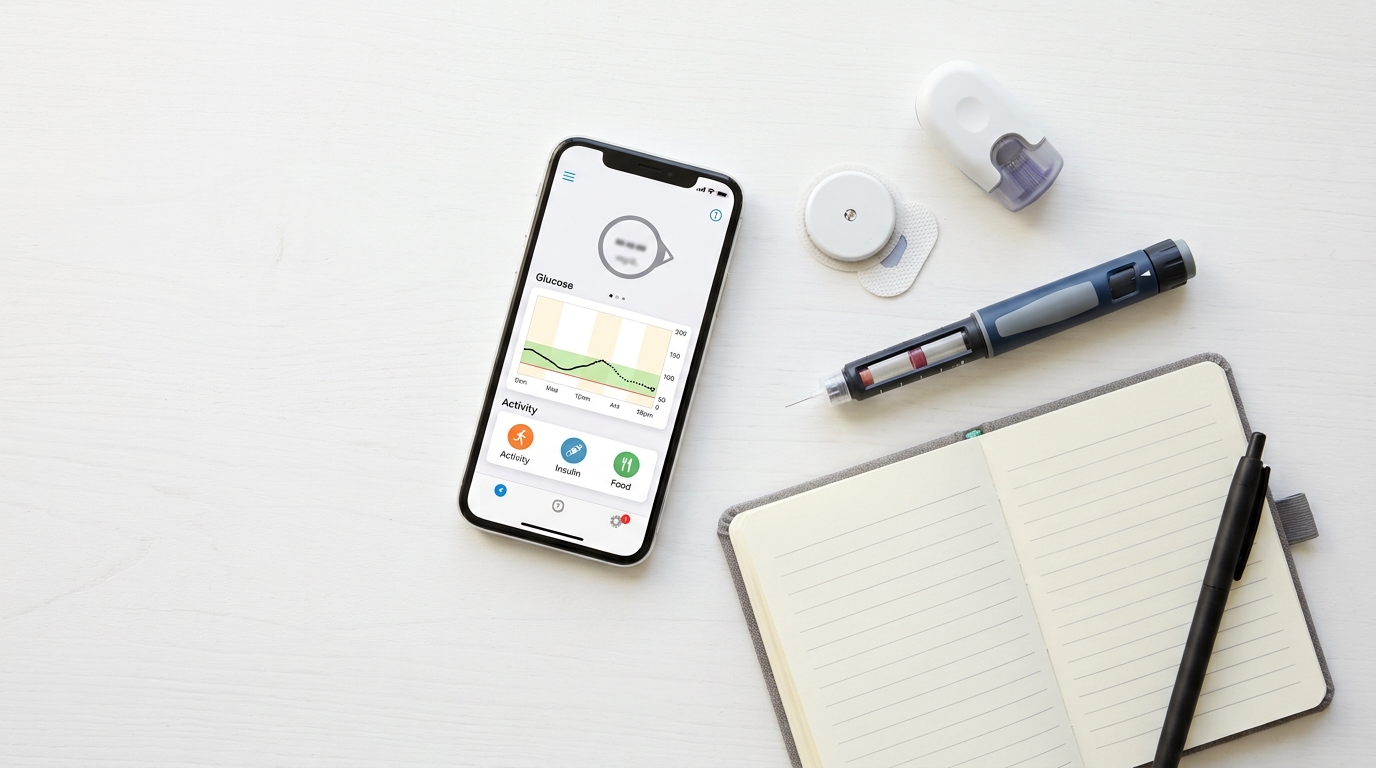
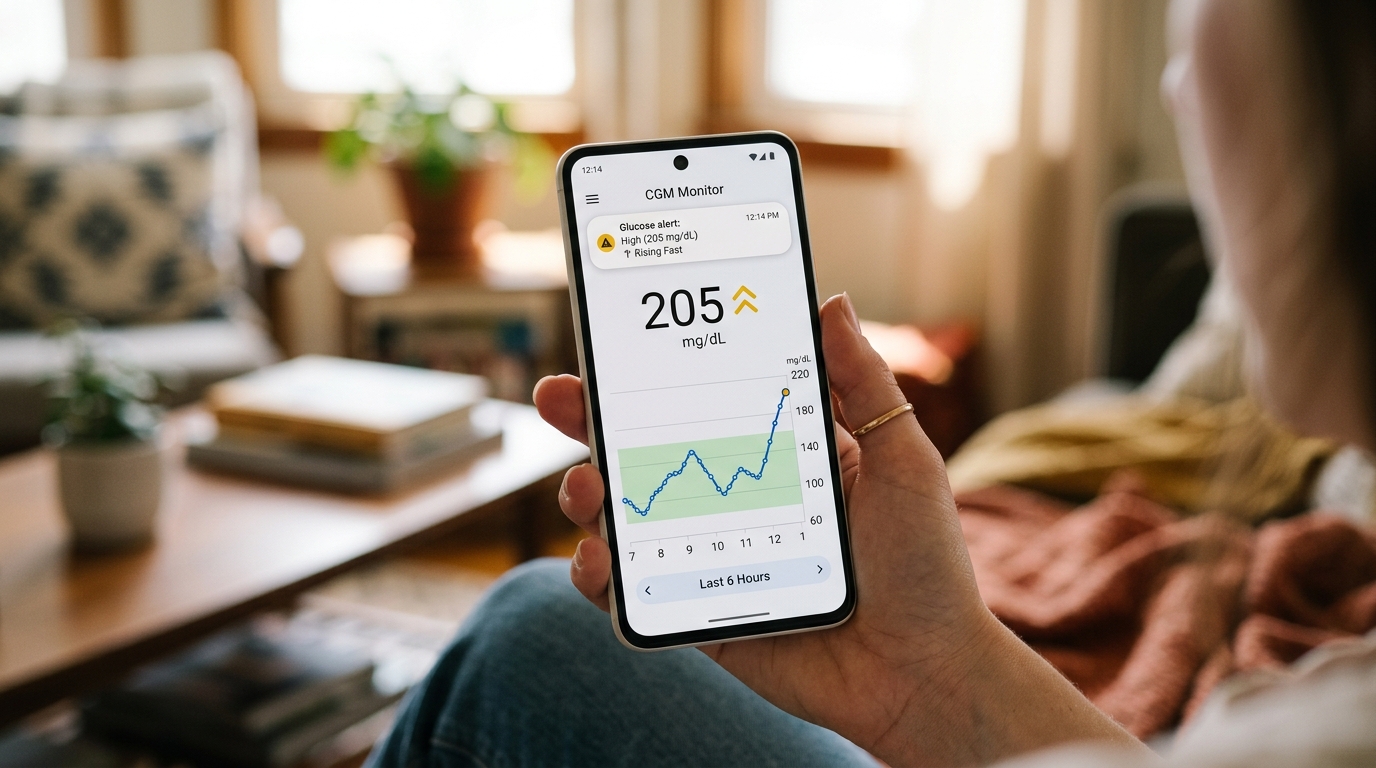
This is where everything comes together for you. The iCan CGM app shows your current glucose number, an arrow telling you whether your sugar is rising, dropping, or holding steady, and a graph covering the last several hours or days. You can also set your own alerts for highs and lows, so your phone lets you know the moment something needs attention, even if you're asleep.
There's also a second app worth knowing about called iCan Reach. This one lets a family member or caregiver check someone else's glucose readings remotely, right from their own phone. It's a genuinely useful feature for parents keeping an eye on a child with type 1 diabetes, or adult children who want to check in on an elderly parent without having to call every hour.
Why Real Time Data Actually Matters
Finger prick testing has one big limitation. It only tells you what's happening at that single second. It can't tell you whether your sugar is climbing fast or dropping fast. It can't tell you what happened while you were sleeping. It can't warn you about a low before you actually start feeling it.
A CGM closes all of these gaps because it's always working in the background. Many people are surprised the first time they wear one, discovering overnight lows they never knew were happening, or realizing that a meal they always thought was safe actually spikes their sugar far more than expected.
This kind of insight doesn't just help you day to day. It also gives your doctor much better information to work with when adjusting your medication or your daily routine.
Who Actually Benefits From Wearing a CGM
CGMs started out mainly for people with type 1 diabetes who need tight control over their insulin. That's changed a lot in recent years. Today, you'll find CGMs being used by:
People with type 1 diabetes who need close, ongoing monitoring to avoid dangerous highs and lows.
People with type 2 diabetes, whether or not they take insulin, who want to understand how their meals, activity, and medication actually affect them.
Pregnant women managing gestational diabetes, where careful monitoring matters for both mother and baby.
Family members and caregivers who want peace of mind checking on a loved one's glucose from a distance.
People who are simply curious about their metabolic health, even without a diabetes diagnosis, and want to see how different foods affect their body.
How Is This Different From Flash Glucose Monitoring
You might also hear the term flash glucose monitoring, or FGM. It sounds similar, but there's a key difference. FGM devices need you to actively scan the sensor with your phone every time you want a reading. The data doesn't come to you on its own.
A true CGM like the iCan i3 removes that step completely. There's no scanning required. Your glucose readings arrive automatically and continuously, and you get instant alerts whenever your levels move outside your set range.
What Wearing a CGM Actually Feels Like
This is one of the first things people want to know before trying it. Sensor insertion is done with a quick applicator, and most users say it feels like a brief pinch rather than a painful poke, much easier to handle than repeated finger pricks. Once it's on, the sensor sits flat against your arm, and most people say they forget it's even there after the first day or two.
Depending on the brand, a single sensor can last anywhere between ten and fifteen days before needing to be replaced. The iCan i3 is built to last a full fifteen days per sensor, one of the longest wear times on the market right now, which means fewer sensor changes, lower cost over time, and less interruption to your routine.
What This Means for Everyday Life in Pakistan
For a lot of people managing diabetes in Pakistan, the biggest challenges have always been the same. Finger pricking hurts and gets tiring. Test strips add up in cost month after month. And without enough data between doctor visits, it's hard to know what's really going on with your sugar day to day.
A CGM addresses each of these problems directly. It removes the need for routine finger pricks, though an occasional prick may still be needed to confirm an unusual reading. It cuts down the recurring cost of testing supplies since one sensor lasts up to two weeks. And it gives you and your doctor far more information to work with, whether that means adjusting your diet, timing your medication better, or catching a dangerous low before it turns into an emergency.
A Few Common Questions
Does putting the sensor on hurt?
Most people describe it as a quick pinch, nothing close to the discomfort of a lancet, and there's no ongoing pain once it's in place.
Can I shower or exercise while wearing it?
Yes. The iCan i3 has an IP28 water resistance rating, so showering, swimming, and sweating during a workout won't affect the sensor.
Do I still need to prick my finger sometimes?
Occasionally, yes, mainly to confirm a reading that seems unusual or to calibrate the device if needed, but this is a small fraction of what finger prick only testing requires.
How long does one sensor actually last?
The iCan i3 sensor lasts fifteen days, which means far fewer changes over the course of a year compared to many older devices.
Final Thoughts
A continuous glucose monitor changes diabetes management from a handful of painful guesses into a clear, constant picture of what's actually happening in your body. Instead of wondering what your sugar was doing between finger pricks, you get real numbers sent straight to your phone, with alerts that can warn you before a problem gets serious.
If you've been relying on traditional testing and wondering whether there's an easier way to stay on top of your diabetes, understanding how a CGM works is a good first step toward taking back control, without the constant pricking and without the guesswork.