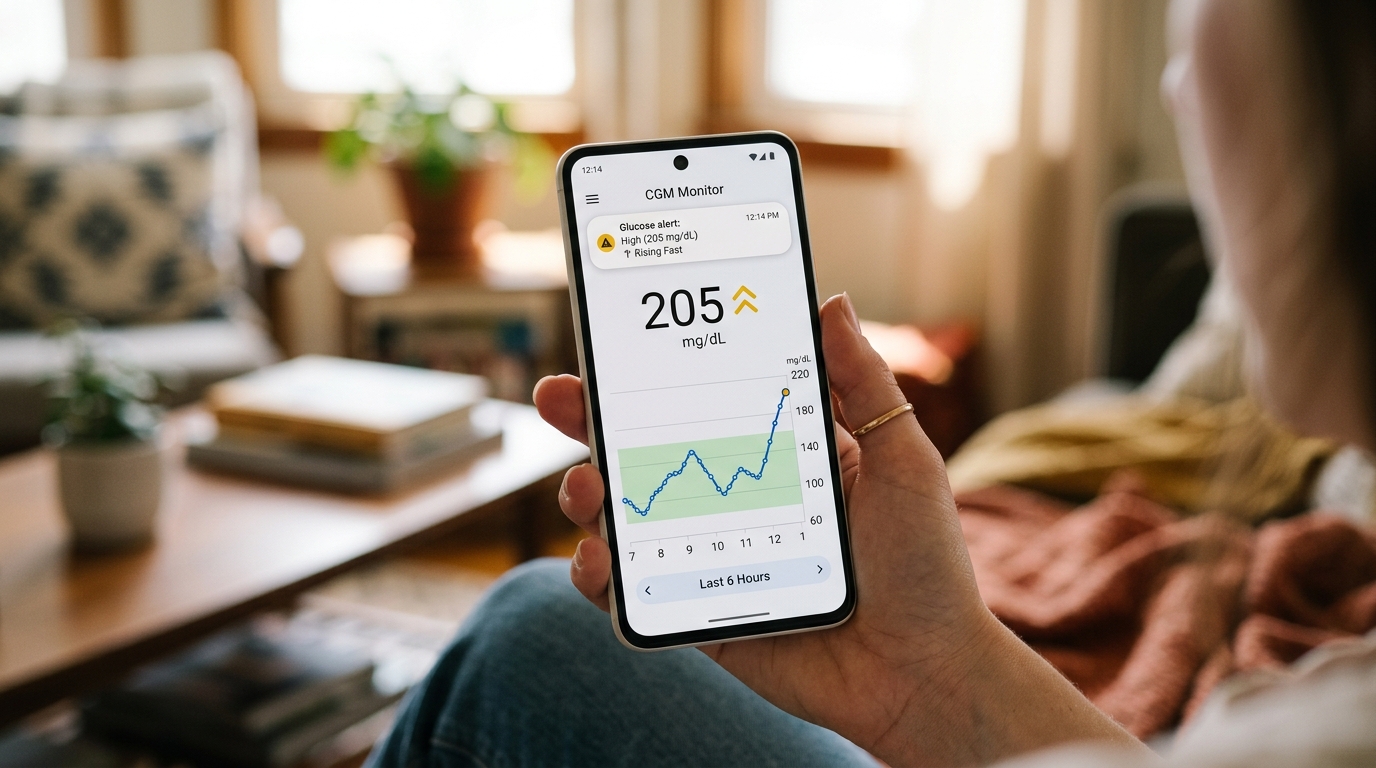
Anyone who has watched a continuous glucose monitor graph in real time has probably seen it happen. A steady, calm line suddenly climbs upward, sometimes for reasons that seem obvious and sometimes for reasons that are genuinely puzzling. Understanding what causes these spikes, and why they vary so much from person to person, is one of the most useful things CGM data can teach you.
This guide covers the most common triggers behind glucose spikes, including a few that often catch people by surprise.
What Actually Happens During a Glucose Spike
A glucose spike happens when blood sugar rises more quickly or more steeply than usual, typically followed by a decline back toward baseline as the body processes it. Some rise after meals is completely normal and expected. What matters is the size of the spike, how long it lasts, and how quickly it comes back down.
Frequent, large spikes over time are associated with greater strain on the body, which is part of why understanding and managing them matters, not just for people with diagnosed diabetes but for anyone paying closer attention to their metabolic health.
Food Related Triggers
Refined Carbohydrates and Added Sugars
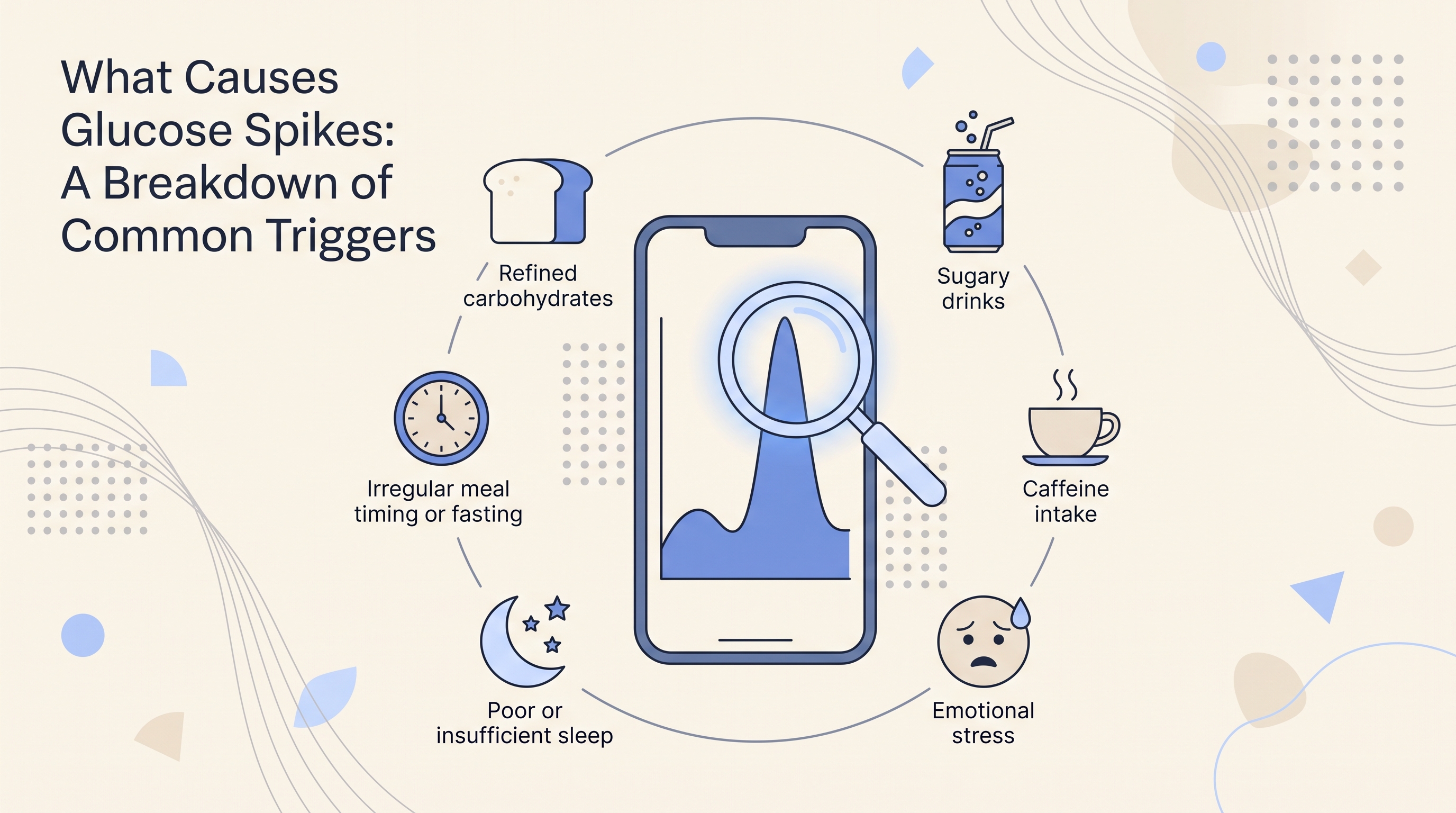
This is the most well known cause, and for good reason. Foods high in refined carbohydrates and added sugars, such as white bread, pastries, sugary drinks, and many packaged snacks, are broken down quickly into glucose, often causing a fast and noticeable rise.
Portion Size
Even relatively healthy foods can cause a spike if the portion is large enough. A large bowl of rice or pasta, for instance, can raise glucose significantly more than a smaller portion of the exact same food.
Meal Composition and Order
Meals eaten without much fat, fiber, or protein tend to be digested and absorbed faster, often leading to a sharper spike. Interestingly, some people notice that eating vegetables or protein before carbohydrates in the same meal can soften the resulting spike, since it slows the rate of digestion somewhat.
Liquid Calories
Drinks are often absorbed faster than solid food, which is why sugary beverages, including some fruit juices, tend to cause quicker and sometimes sharper spikes compared to eating the same amount of sugar in solid form.
Timing Related Triggers
Eating Late at Night
Many people notice that the same meal eaten late in the evening produces a different glucose response than it would earlier in the day, often related to the body's natural daily rhythms affecting insulin sensitivity.
Long Gaps Between Meals
Skipping meals or going long stretches without eating can sometimes lead to a larger spike at the next meal, as the body reacts more strongly after an extended period without food.
Stress and Emotional Triggers
Stress hormones such as cortisol and adrenaline can raise glucose levels independent of anything eaten. This is one of the most surprising things people notice when they start using a CGM. A stressful meeting, an argument, or even excitement about an upcoming event can sometimes cause a visible glucose rise on its own, with no food involved at all.
This connection works both ways too. Chronic stress over time can also make the body somewhat more resistant to insulin, which can contribute to larger spikes from food as well.
Sleep Related Triggers
Poor sleep, whether from a short night, disrupted sleep, or inconsistent sleep timing, is strongly linked to reduced insulin sensitivity the following day. This often shows up as bigger glucose spikes after meals eaten following a night of poor sleep, even if the meal itself is identical to one eaten on a well rested day.
Illness and Hormonal Triggers
Being Sick
The body's immune response to illness, even something as simple as a cold, often raises stress hormones and can lead to higher and less predictable glucose readings, sometimes even without eating more than usual.
Hormonal Cycles
Many people, particularly those who menstruate, notice glucose patterns shifting at different points in their hormonal cycle, related to natural fluctuations in hormone levels that affect insulin sensitivity throughout the month.
Physical Activity, in Both Directions
Exercise is often thought of only as something that lowers glucose, and moderate activity frequently does. But intense exercise, particularly short bursts of high intensity activity, can actually cause a temporary glucose spike, since the body releases stress hormones and glucose stores to fuel the effort. This is a normal physiological response and typically settles on its own shortly after activity ends.
Medication and Supplement Factors
Certain medications, including some steroids and other common prescriptions, can raise glucose levels as a side effect. Some supplements may have a similar, though usually smaller, effect. Anyone noticing unexplained spikes that coincide with starting a new medication should mention this to their healthcare provider.
How CGM Helps You Spot Your Own Personal Triggers
One of the most valuable aspects of continuous glucose monitoring is that it turns these general categories into personal, specific information. Two people can eat the exact same meal and see very different glucose responses, based on their individual biology, activity level, sleep, and stress that day.
By watching your own CGM data over time, patterns tend to emerge that are unique to you. Maybe your body handles rice better than bread. Maybe your glucose spikes more after a poor night's sleep than after a particularly rich meal. This kind of personal insight is difficult, if not impossible, to gain from occasional fingerstick testing alone.
Bringing It All Together
Glucose spikes rarely have a single simple cause. Food certainly plays a major role, but timing, stress, sleep, illness, hormones, and even intense exercise can all shape how your glucose behaves. Paying attention to these factors, rather than focusing only on what you ate, often reveals a much fuller and more useful picture of what is actually driving your glucose patterns day to day.
Frequently Asked Questions
Can stress alone cause a glucose spike without eating anything? Yes. Stress hormones can raise glucose levels independent of food intake, which is something many people first notice after starting continuous glucose monitoring.
Why does the same meal sometimes cause different glucose responses on different days? Factors like sleep quality, stress levels, activity, and hormonal changes can all influence how your body responds to the same food from one day to the next.
Is it normal for intense exercise to raise glucose instead of lowering it? Yes, this is a normal physiological response to intense physical exertion and typically resolves on its own shortly afterward.
Does eating food in a certain order really reduce glucose spikes? Some people notice a milder response when eating vegetables or protein before carbohydrates in the same meal, since this can slow the rate of digestion.
Should I be concerned about occasional glucose spikes? Occasional spikes are a normal part of everyday life. It is the frequency, size, and duration of spikes over time that matters most, and this is worth discussing with a healthcare provider if you have concerns.