
Everyone knows someone who can eat rice for lunch and feel fine, while another person crashes an hour later. Food responses are personal, and the numbers on a nutrition label only tell part of the story. Your iCan CGM lets you build a personal database of how your body reacts to specific foods, and that data is more useful than any generic diet plan.
Why Your Response Is Different
Genetics, gut bacteria, sleep, stress, hormones, and even hydration all shape how you process food. Two people can eat the exact same meal and record completely different glucose curves. This is why one person swears by oats for breakfast while another finds them impossible to handle.
Your CGM removes the guessing. Instead of trusting a food to be healthy just because a magazine said so, you get to see how your body actually responds to it in real time.
The Two Hour Window
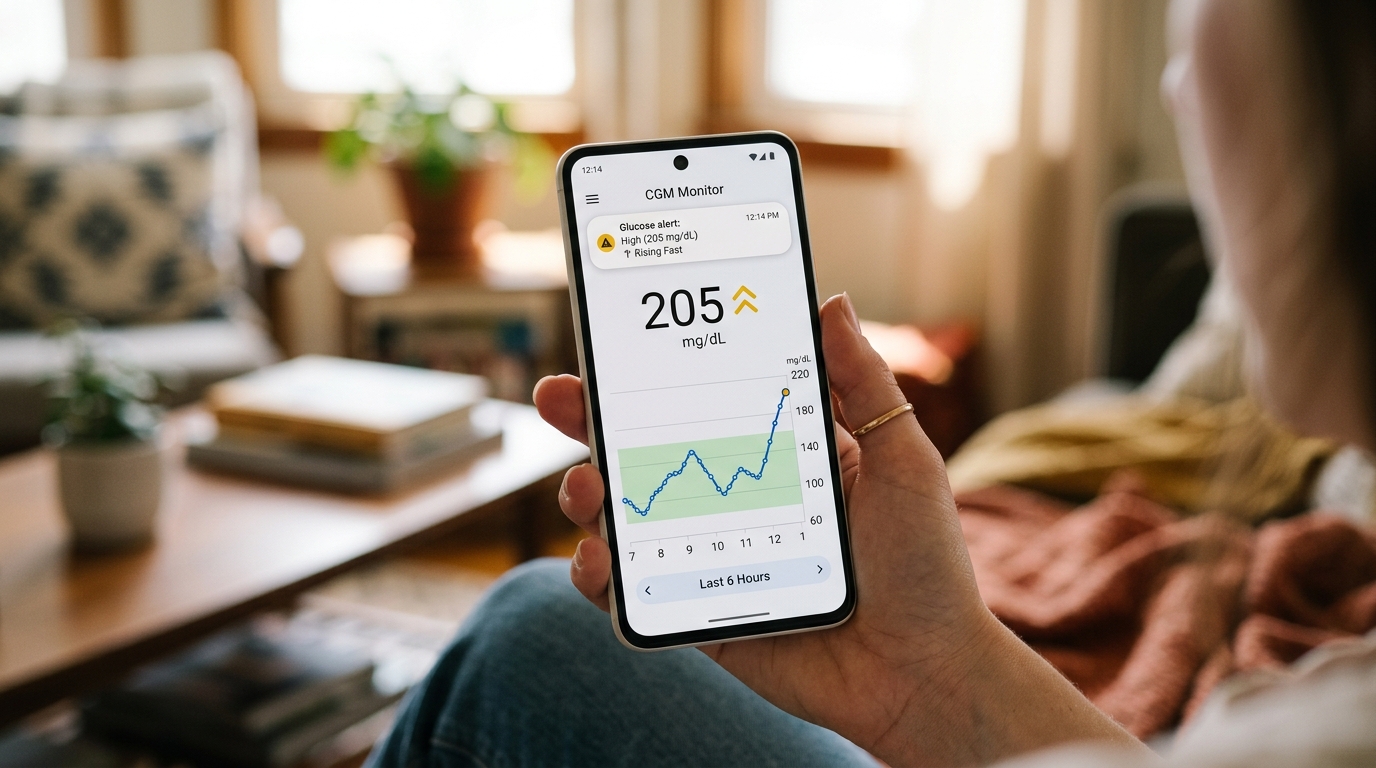
The most important number to watch is your two hour post meal reading. A healthy response usually returns close to baseline within two hours. If your iCan CGM still shows you above 140 mg/dL two hours after eating, that meal is likely a personal trigger.
Also pay attention to how high the peak climbs. A short rise to 130 mg/dL is very different from a fast climb to 180 mg/dL. Big spikes often lead to bigger crashes, and those crashes are what drive hunger, fatigue, and sugar cravings later in the day.
How to Test a Single Food
To really learn a food, test it in isolation. Eat a plain portion of the food on an empty stomach, then leave your CGM to record the response for two hours. Try to keep other factors the same. Do not test after a workout, during high stress, or after a poor night of sleep, because all of these change how your body handles glucose.
Test the same food two or three times on different days. If the pattern repeats, you have found a real signal. If the response is different each time, other factors are at play and the food itself may not be the issue.
Combining Foods Changes Everything
The same food behaves differently depending on what you eat with it. White rice on its own will spike most people. The same portion of rice served with chicken, salad, and yogurt often produces a smaller, rounder curve. Bread with butter or eggs will hit softer than bread with jam.
This is one of the most useful discoveries CGM users make. You do not always have to cut a food out. Sometimes you just have to pair it better.
Building Your Personal Food List
Keep a simple log for two to three weeks. Note what you ate, roughly what time, and your peak reading. Over time, patterns will emerge. You will notice which foods your body handles calmly, which ones spike you every time, and which ones only cause trouble in certain conditions.
Your iCan CGM data becomes a personalized guide that no diet book can replicate. Some people find they can enjoy foods they thought they had to avoid. Others realize a food they considered healthy is one of their biggest triggers.
What to Do With Your Trigger List
Once you know your triggers, you have options. You can cut the food out, eat it in smaller portions, pair it with protein and fiber, or save it for times of day when your body handles carbs best. You can also test whether a walk after eating flattens the response, because for many people, ten minutes of light movement can reduce a spike by 30 mg/dL or more.
The point of the exercise is not to build a list of forbidden foods. It is to build the confidence to eat what your body actually handles well, based on your own data rather than someone else's rules.