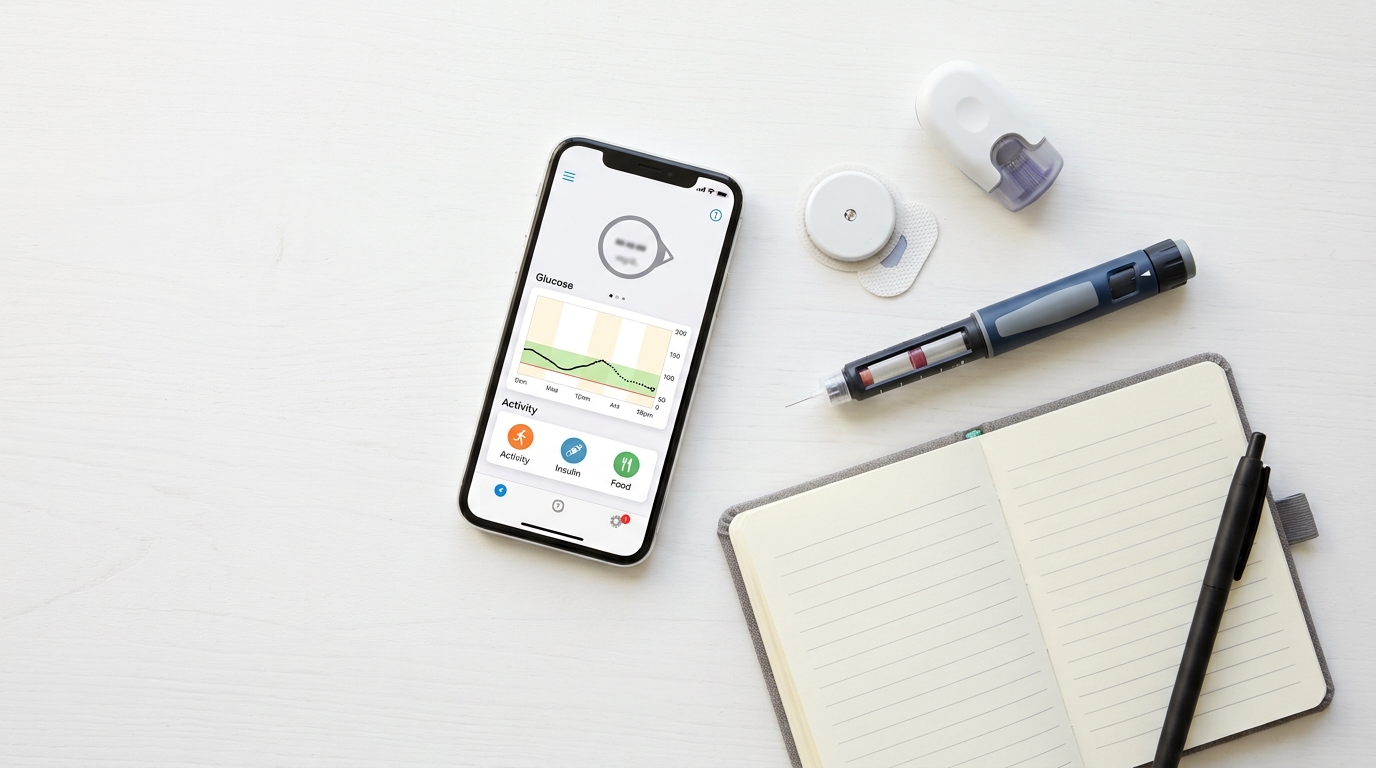
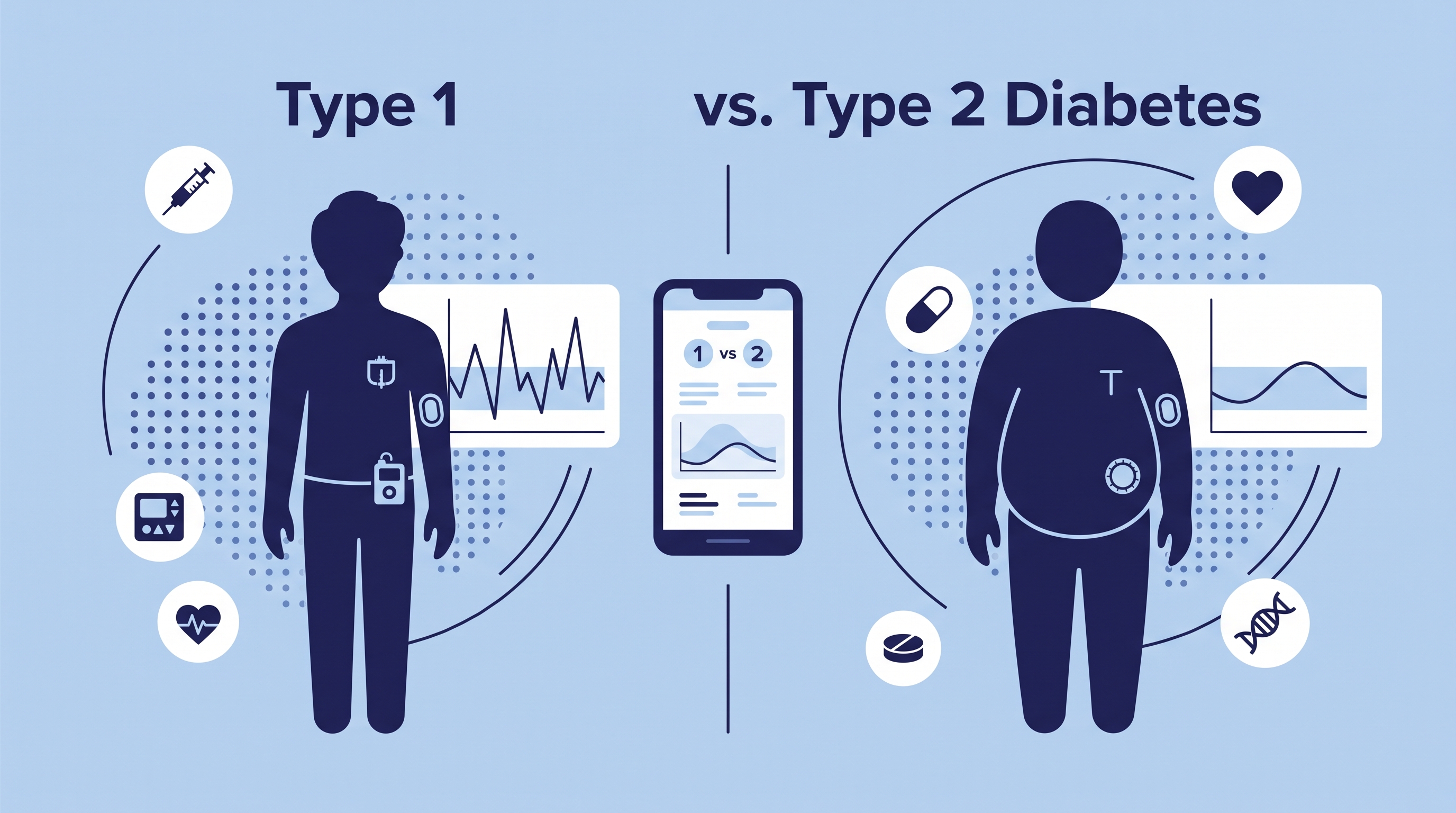
Continuous glucose monitoring has changed how people manage diabetes, but it does not work the same way for everyone. Someone living with Type 1 diabetes and someone living with Type 2 diabetes may both wear a CGM sensor, yet the reasons behind it, the patterns they are watching for, and the decisions they make from that data can look quite different.
Understanding these differences is useful whether you have just been diagnosed, are supporting a family member, or are simply trying to make sense of why your own monitoring routine looks different from someone else's.
A Quick Refresher on the Two Conditions
Type 1 diabetes is an autoimmune condition where the pancreas produces little to no insulin at all. People with Type 1 depend on external insulin, whether through injections or a pump, essentially around the clock to survive.
Type 2 diabetes typically develops when the body becomes resistant to insulin, or does not produce enough of it relative to what is needed, often over a longer period of time. Many people with Type 2 diabetes manage their condition through a mix of lifestyle changes, oral medications, and in some cases insulin as well.
Because the underlying biology is different, glucose behavior tends to look different too, and that shapes how CGM data gets used in each case.
Why Glucose Patterns Differ Between the Two
Type 1 Diabetes and Rapid Fluctuations
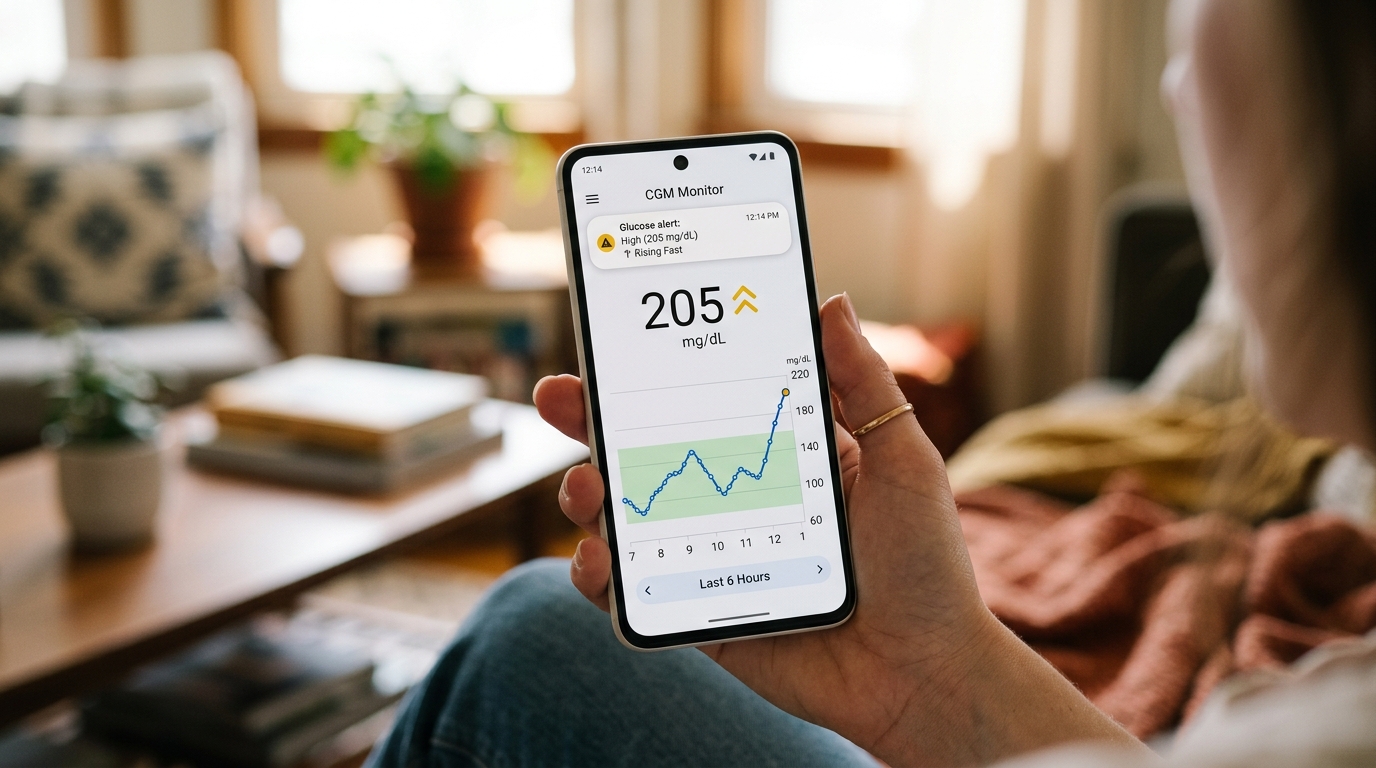
Since the body produces no insulin on its own in Type 1 diabetes, glucose levels can swing more quickly and more dramatically. A missed dose, an inaccurate carbohydrate estimate, or unexpected physical activity can send glucose levels up or down fast, sometimes within an hour or two.
This is part of why CGM has become such an important tool for Type 1 management specifically. Traditional fingerstick testing only shows a single moment in time, but Type 1 diabetes often requires seeing the direction and speed of a trend, not just a single number, to make safe insulin dosing decisions.
Type 2 Diabetes and Gradual Shifts
In Type 2 diabetes, especially in earlier stages, the body often still produces some insulin, which tends to smooth out glucose swings somewhat compared to Type 1. Changes are frequently more gradual, tied closely to meals, portion sizes, and overall lifestyle patterns over the course of weeks and months rather than sudden hour to hour shifts.
This does not mean Type 2 diabetes is less serious. It means the monitoring focus often shifts toward identifying patterns over time, such as which meals or habits consistently push glucose higher, rather than reacting moment to moment.
How CGM Use Differs in Practice
Frequency of Checking and Reacting
People with Type 1 diabetes often check their CGM readings many times throughout the day, using the data to make real time decisions about insulin dosing, meals, and activity. The stakes of getting this wrong can be immediate, since both very high and very low glucose levels can become dangerous quickly without insulin production to help self correct.
People with Type 2 diabetes, particularly those not on insulin, may check in with their CGM data less frequently throughout the day, instead reviewing trends at the end of the day or week to understand broader patterns and adjust habits accordingly.
What Each Group Is Typically Looking For
For Type 1 diabetes, key focus areas often include:
- Rate of change alerts that warn of rapid rises or drops
- Overnight patterns, since sleep removes the ability to react to symptoms quickly
- The relationship between insulin dosing and meals
- Managing exercise, which can affect glucose very differently depending on intensity and timing
For Type 2 diabetes, key focus areas often include:
- Post meal glucose patterns and which foods cause the biggest spikes
- Gradual trends over weeks, especially in response to lifestyle changes
- The effect of weight, activity, and stress on overall glucose stability
- Whether current medication or lifestyle approach is working as intended
Alerts and Alarms
Because rapid, dangerous glucose swings are more common in Type 1 diabetes, alert settings are often configured more sensitively, sometimes including alarms for both highs and lows throughout the day and night. In Type 2 diabetes, alerts might be set with a wider buffer, focused mainly on preventing sustained high glucose rather than catching every small fluctuation.
Why CGM Still Matters for Type 2 Diabetes
It is a common misconception that CGM is mainly a Type 1 tool. In reality, continuous monitoring has become increasingly valuable for Type 2 diabetes as well, particularly for people trying to understand how specific foods, stress, sleep, or exercise affect their glucose. Seeing this data in real time, rather than through occasional fingerstick checks, often makes the connection between lifestyle and glucose far more visible and motivating.
For some people with Type 2 diabetes, using CGM even temporarily, for a few weeks at a time, can reveal patterns that lead to lasting changes in habits, long after the sensor comes off.
What This Means for You
If you are living with Type 1 diabetes, your CGM routine is likely to involve closer, more frequent attention, tighter integration with insulin dosing, and a stronger emphasis on rate of change alerts. If you are living with Type 2 diabetes, your routine may focus more on longer term trends and lifestyle patterns, with monitoring serving as a tool for understanding rather than moment to moment decision making.
Either way, the value of continuous glucose monitoring comes from the same basic idea: replacing scattered snapshots of your glucose with a fuller picture of what is actually happening throughout your day and night.
Frequently Asked Questions
Do people with Type 2 diabetes need to check CGM data as often as people with Type 1? Not usually. Type 1 diabetes often requires more frequent, real time attention due to the need for insulin dosing decisions, while Type 2 monitoring often focuses more on reviewing broader trends.
Can CGM help someone with Type 2 diabetes avoid needing insulin later on? CGM itself does not prevent disease progression, but the insight it provides into how specific habits affect glucose can support lifestyle changes that may help manage the condition more effectively over time.
Is CGM equally accurate for both types of diabetes? Sensor accuracy is generally consistent regardless of diabetes type, since the sensor is measuring glucose levels in the body rather than the underlying cause of the condition.
Should alert settings be different for Type 1 versus Type 2 diabetes? Often yes, since the risk of rapid, dangerous swings is generally higher in Type 1 diabetes, which may call for more sensitive alert thresholds. Discussing appropriate settings with a healthcare provider is recommended.
Can someone with prediabetes use a CGM the same way as someone with Type 2 diabetes? Many of the same lifestyle focused insights apply, though prediabetes monitoring is often shorter term and aimed at prevention rather than ongoing disease management.