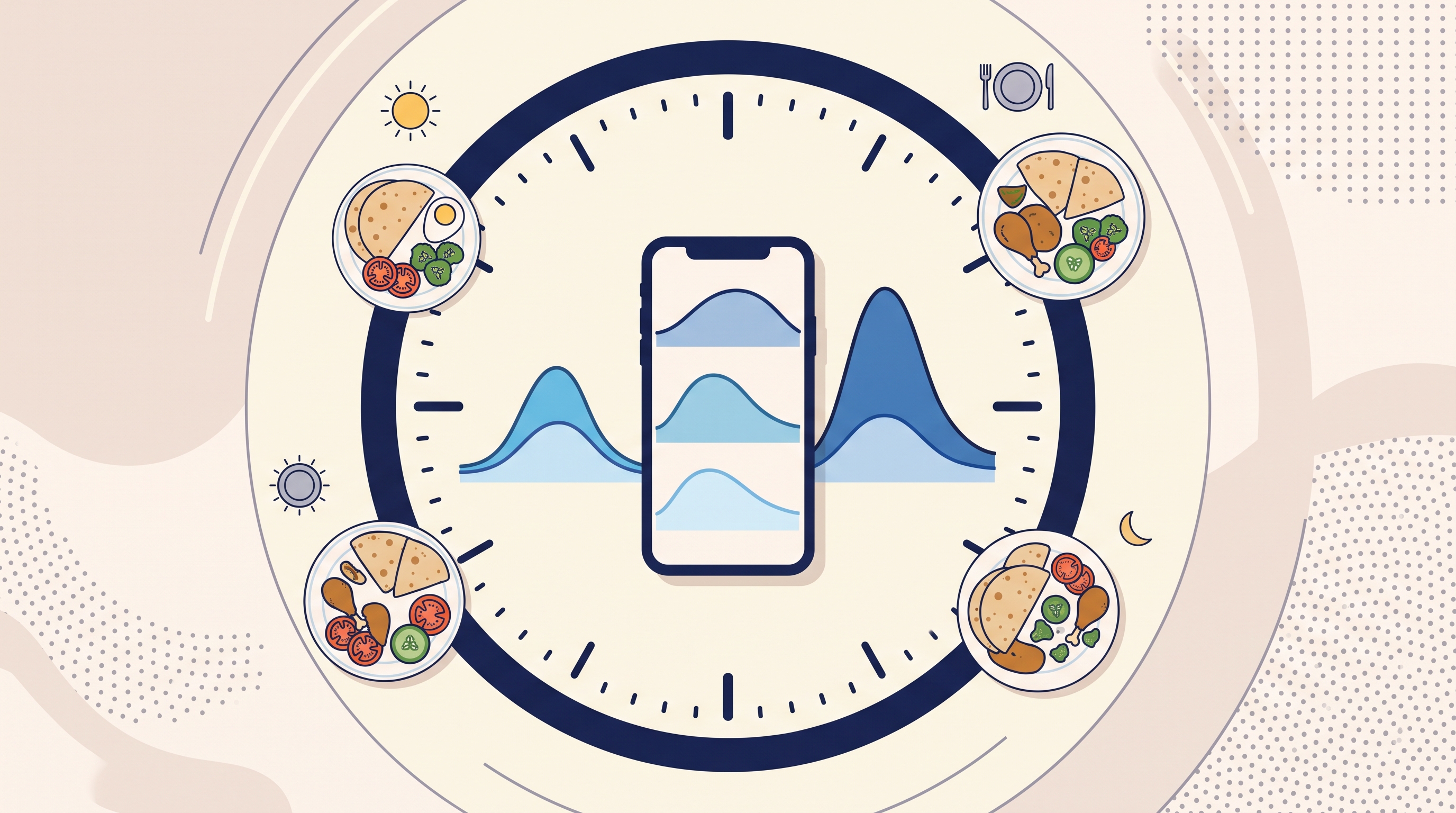
Most people focus on what they eat and forget about when they eat. Your iCan CGM shows just how much timing matters. The same meal at eight in the morning and at ten at night can produce two very different curves. Once you see this pattern in your own data, meal timing becomes a tool you can actually use.
Your Body Runs on a Clock
Your body has a natural rhythm called the circadian rhythm. Insulin sensitivity, digestion speed, and glucose tolerance all shift throughout the day. In simple terms, your body handles carbs better in the morning and early afternoon than late at night. This is not a rule for every person, but for most people it shows up clearly on their CGM data.
Eat a plate of pasta at one in the afternoon and you may see a gentle rise and a clean return to baseline. Eat the same plate at ten at night and the peak is often higher, the fall is slower, and the reading is still elevated when you go to bed.
The Late Night Snack Problem
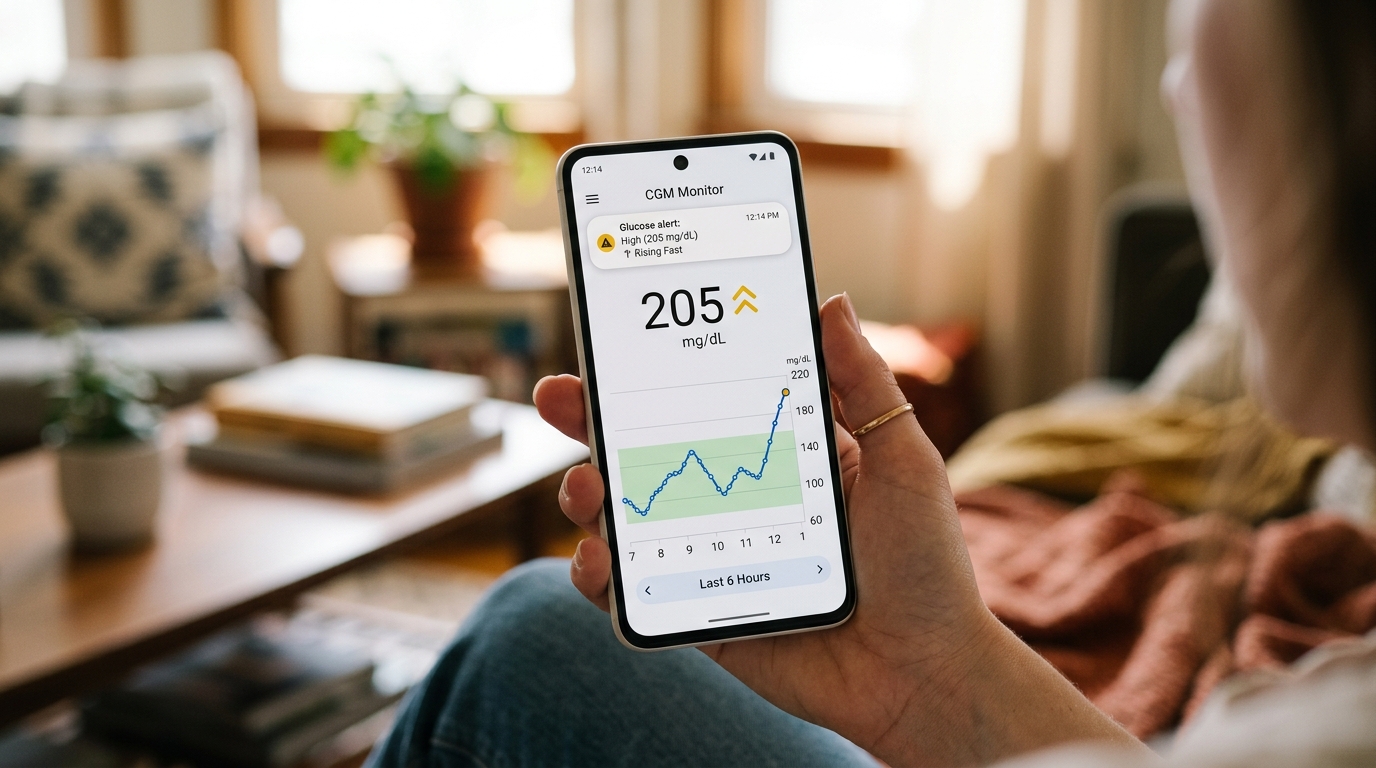
Late night eating is one of the most common reasons people see elevated overnight readings. When you eat close to bedtime, your body has less time to process the food before it settles into sleep mode. Your iCan CGM will often show a slow, steady climb through the first few hours of sleep, and a morning reading higher than expected.
If you have to eat late, keep the meal small and protein based. A bowl of yogurt, some paneer, or a boiled egg will have a much smaller effect on your overnight graph than a plate of rice or a slice of cake.
Meal Spacing Matters
Eating too often is another pattern the sensor exposes. If you snack every hour, your glucose graph never gets a chance to settle. The line keeps climbing and dipping in small waves, which can leave you feeling hungrier and more tired than usual.
Spacing meals three to four hours apart gives your body time to process one meal before starting the next. Most iCan CGM users find their calmest, most stable graphs on days when they eat three real meals with maybe one light snack in between.
Breakfast, Lunch, and Dinner Compared
Breakfast is where the biggest opportunity often sits. Many people start the day with sugary tea, jam on toast, or sweet cereal. Your CGM will show a fast climb and a mid morning crash that leaves you tired by eleven. Shift to eggs, chana, or yogurt with fruit and the same graph looks completely different.
Lunch is usually the safest window for carbs. Your body is active, insulin sensitivity is still high, and a plate of daal chawal or a chicken sandwich tends to produce a manageable curve.
Dinner is where portion control and timing pay off. Earlier dinners, ideally three hours before bed, help your body return to baseline before you sleep. Your morning fasting reading will usually reflect the choice.
Time Restricted Eating and CGM
Some CGM users experiment with narrower eating windows, such as eating between ten in the morning and six in the evening. The graphs during this approach often show longer flat lines and lower average readings. This works for some people and not for others, especially those with high physical demands, women who are pregnant, or anyone with a history of blood sugar issues. Your iCan CGM helps you decide if the approach fits your body.
Reading Your Own Timing Patterns
Look at your graph over one full week. Note when your calmest lines happen and when your worst spikes occur. You will often find that the same food behaves differently at different times of day. Once you learn your personal timing patterns, you can build a schedule that keeps your glucose steady without giving up the foods you love.