Ramadan holds deep meaning for millions of people across Pakistan and around the world, and for many people living with diabetes, the desire to participate in the fast is just as strong as it is for anyone else. At the same time, fasting from dawn until sunset introduces real changes to eating patterns, hydration, and daily routine, all of which can affect glucose levels in ways that need careful attention. A continuous glucose monitor can play a genuinely useful role during this month, giving people with diabetes a clearer, safer way to observe how their body responds to fasting without needing to break their fast for repeated finger pricks.
This article looks at how CGM technology fits into Ramadan, what patterns to watch for during fasting hours, and how devices like the iCan CGM can support a safer fasting experience for people managing diabetes.
Speaking With a Doctor Before Ramadan Begins
Before making any decisions about fasting with diabetes, a conversation with your doctor is an essential first step. Diabetes varies enormously from person to person, and factors like the type of diabetes, current medication or insulin regimen, and overall health all affect whether and how someone can fast safely. Many doctors work with patients in the weeks leading up to Ramadan to adjust medication timing or dosing specifically to help make fasting safer, and this kind of planning is far more effective when it happens well ahead of time rather than in the middle of the fasting month.
A CGM can actually support this pre Ramadan planning process, since a doctor reviewing several weeks of glucose data ahead of the fasting month has a much clearer picture of your baseline patterns, making it easier to anticipate how fasting hours might affect you and adjust treatment accordingly.
Why Fasting Changes the Glucose Picture
During Ramadan, the usual rhythm of meals shifts significantly. Instead of spreading food across the day, eating is concentrated into the hours before dawn, known as suhoor, and after sunset, known as iftar. This creates a long stretch, often well over twelve hours depending on the season and location, without any food or fluid intake. For someone with diabetes, this extended fasting window changes how glucose behaves compared to a normal day, and the effects can vary considerably from one person to another.
Some people find their glucose gradually declines throughout the fasting hours as the body relies on stored glucose and fat for energy. Others, particularly those with certain patterns of insulin resistance, may see glucose remain more stable or even rise slightly during the day. Because these responses are so individual, having continuous data through a CGM rather than relying on assumptions or general guidance becomes especially valuable during this month.
Monitoring Without Breaking the Fast
One of the clearest advantages of using a CGM during Ramadan is that checking glucose does not require breaking the fast, since there is no need for a finger prick. Traditional glucose monitoring during fasting can create a difficult tension for some people, who may hesitate to check their levels as often as they should simply because a finger prick feels like an interruption to their fast, even though checking glucose itself does not break a fast under most religious guidance.
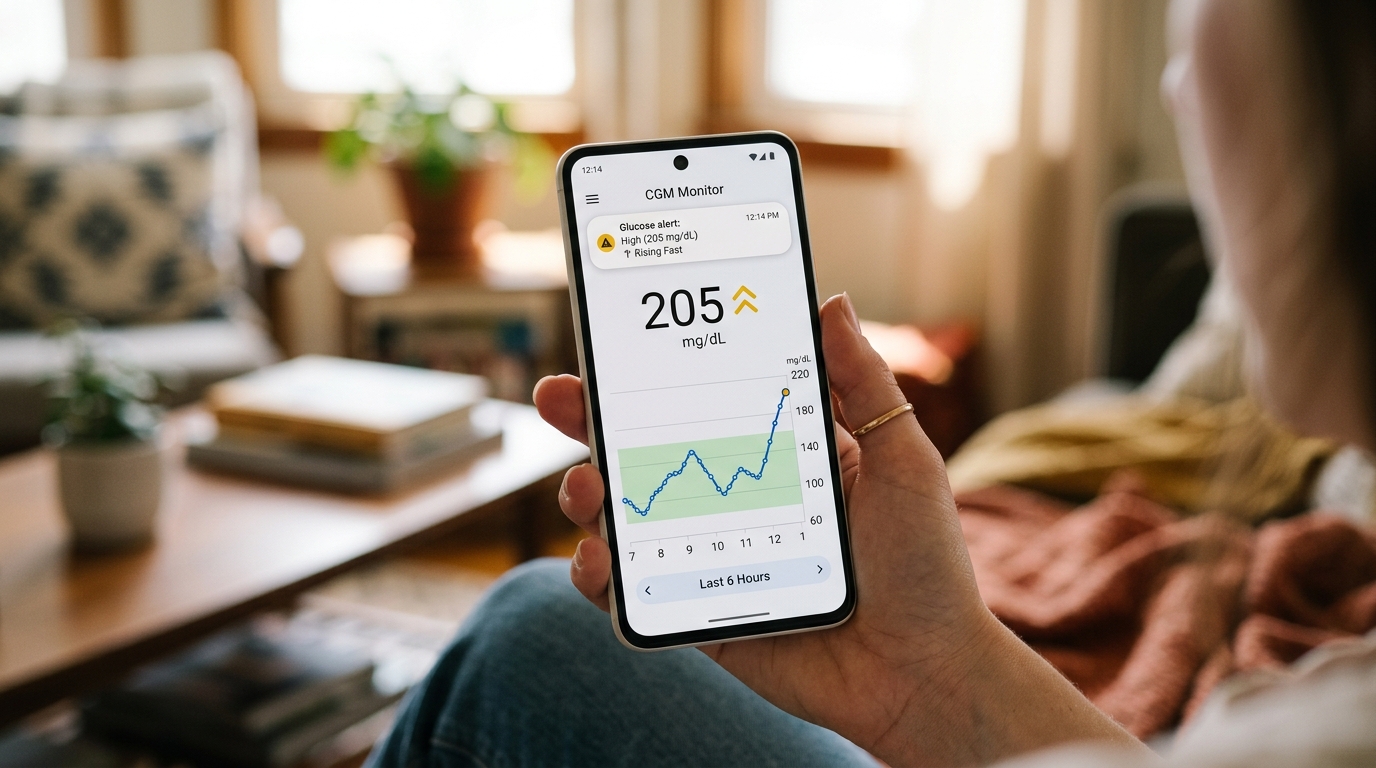
With the iCan CGM, glucose readings update automatically throughout the day, meaning you can glance at your phone at any point during fasting hours, whether at work, at prayer, or simply going about your day, without any additional action needed. This removes the hesitation some people feel around checking frequently, which in turn makes it much easier to catch a concerning trend early rather than waiting until symptoms appear.
Watching for Low Glucose During Fasting Hours
Low blood glucose, known as hypoglycemia, is one of the primary concerns for people with diabetes who fast during Ramadan, particularly for those on insulin or certain oral medications. Symptoms can include shakiness, sweating, confusion, or a general feeling of unwellness, and catching a downward trend early is far easier with continuous monitoring than with occasional checks.
If your CGM trend arrow shows glucose dropping steadily during the afternoon, this is valuable information that allows you to take appropriate action according to your doctor's guidance, which for many people means it is time to break the fast rather than risk a more serious low later in the day. Having this real time information available removes a lot of the guesswork that used to make fasting with diabetes feel riskier than it needed to be.
Watching for High Glucose After Iftar
The hours after sunset bring their own set of considerations, since iftar often involves a fuller, richer meal after a long period without food, sometimes followed by additional food throughout the evening leading up to suhoor. This pattern can lead to a noticeable rise in glucose after breaking the fast, particularly if the iftar meal is heavy in refined carbohydrates or sugary foods and drinks, which are common during this time of year.
Watching your CGM trend in the hour or two after iftar can offer useful insight into how your specific meal choices affect your glucose, information that can help guide adjustments to portion sizes, food choices, or medication timing in consultation with your doctor over the course of the month.
Suhoor and Preparing for the Day Ahead
The meal eaten before dawn, suhoor, plays an important role in how glucose behaves throughout the following fasting hours. A CGM can help you understand how different suhoor choices affect your glucose stability over the following twelve or more hours, since some foods provide a steadier release of energy while others lead to a quicker rise and fall that can leave glucose lower earlier in the day.
Over the course of a few days into Ramadan, reviewing your glucose patterns following different suhoor meals through the iCan CGM app can help identify which choices tend to support more stable glucose through the fasting hours, information that becomes genuinely useful for planning the rest of the month.
Hydration and Its Effect on Readings
Fasting also means going without fluids for the full duration of the fast, which can affect the body in ways that go beyond glucose alone. Dehydration can influence glucose readings and how the body manages fluid balance generally, so paying attention to hydration during the non fasting hours, particularly at suhoor and throughout the evening, supports both general wellbeing and more stable glucose patterns during the day.
Using Data to Have Better Conversations With Your Doctor
One of the most valuable aspects of wearing a CGM through Ramadan is the record it creates. Rather than trying to remember or estimate how fasting affected your glucose after the month has ended, you have a detailed, accurate picture available to review with your doctor. This can inform decisions for future Ramadans, helping refine medication timing, meal planning, or overall fasting approach based on real data rather than general assumptions.
A Safer Way to Observe Ramadan With Diabetes
Fasting during Ramadan is deeply meaningful for those who observe it, and having diabetes does not have to mean stepping back from that experience entirely, as long as it is approached thoughtfully and with proper medical guidance. Continuous glucose monitoring through a device like the iCan CGM offers a practical way to stay closely informed about your body's response to fasting without the friction of repeated finger pricks, making it easier to catch concerning trends early and adjust as needed.
If you are planning to fast this Ramadan and are considering using a CGM to support that process, reaching out to your doctor in advance remains the most important step, alongside getting familiar with your device and app so you feel fully prepared once the fasting month begins. The iCan CGM support team is also available through WhatsApp if you have questions about setting up your sensor or app ahead of Ramadan.