For years, the finger prick glucometer has been the go to tool for managing diabetes. It's familiar, it's easy to find, and it doesn't cost much up front. But continuous glucose monitors, or CGMs, have started changing the conversation, and a lot of people who switch say it completely changed how they manage their day to day sugar levels.
If you're trying to decide whether to stick with your glucometer or move to a CGM like the iCan i3, this guide walks through the real differences in accuracy, comfort, cost, and daily convenience so you can pick what actually fits your life.
How Each Device Works
Traditional Glucometer
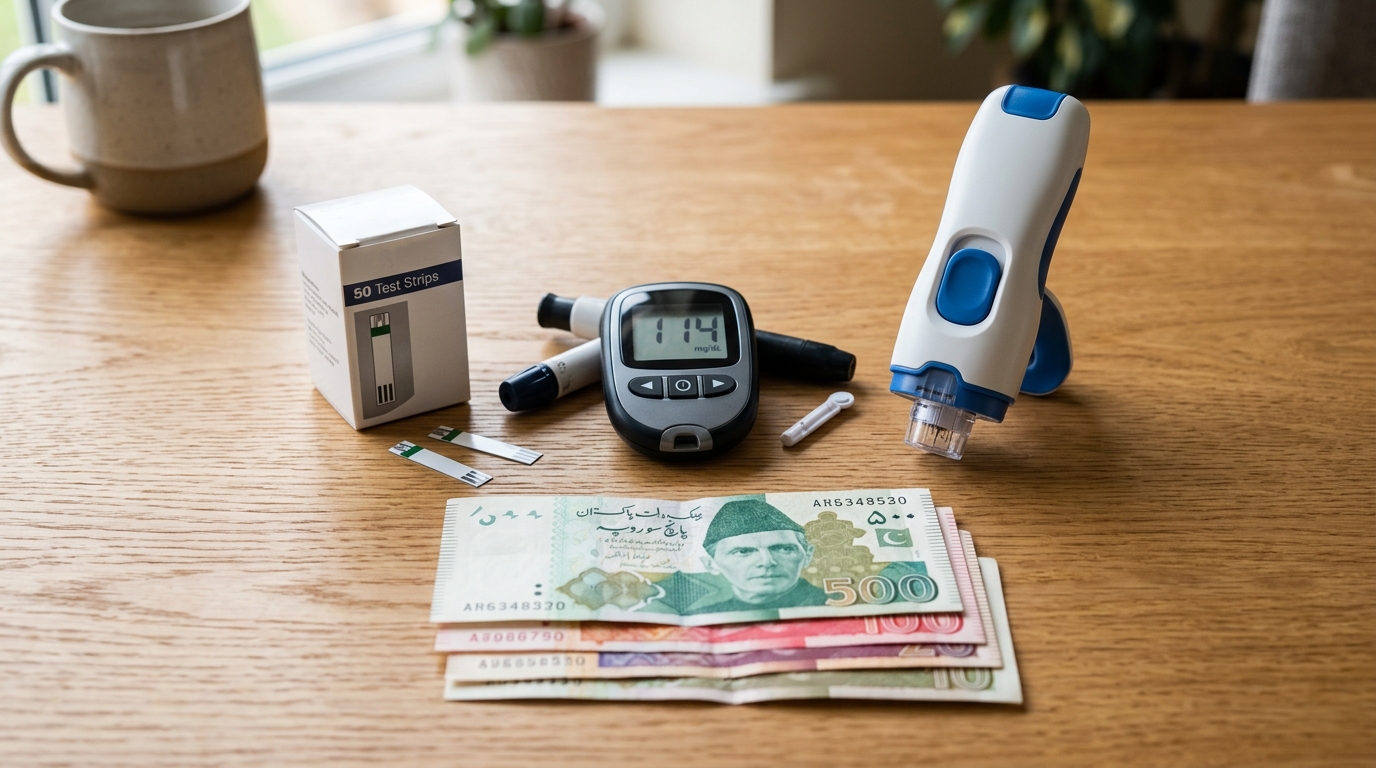
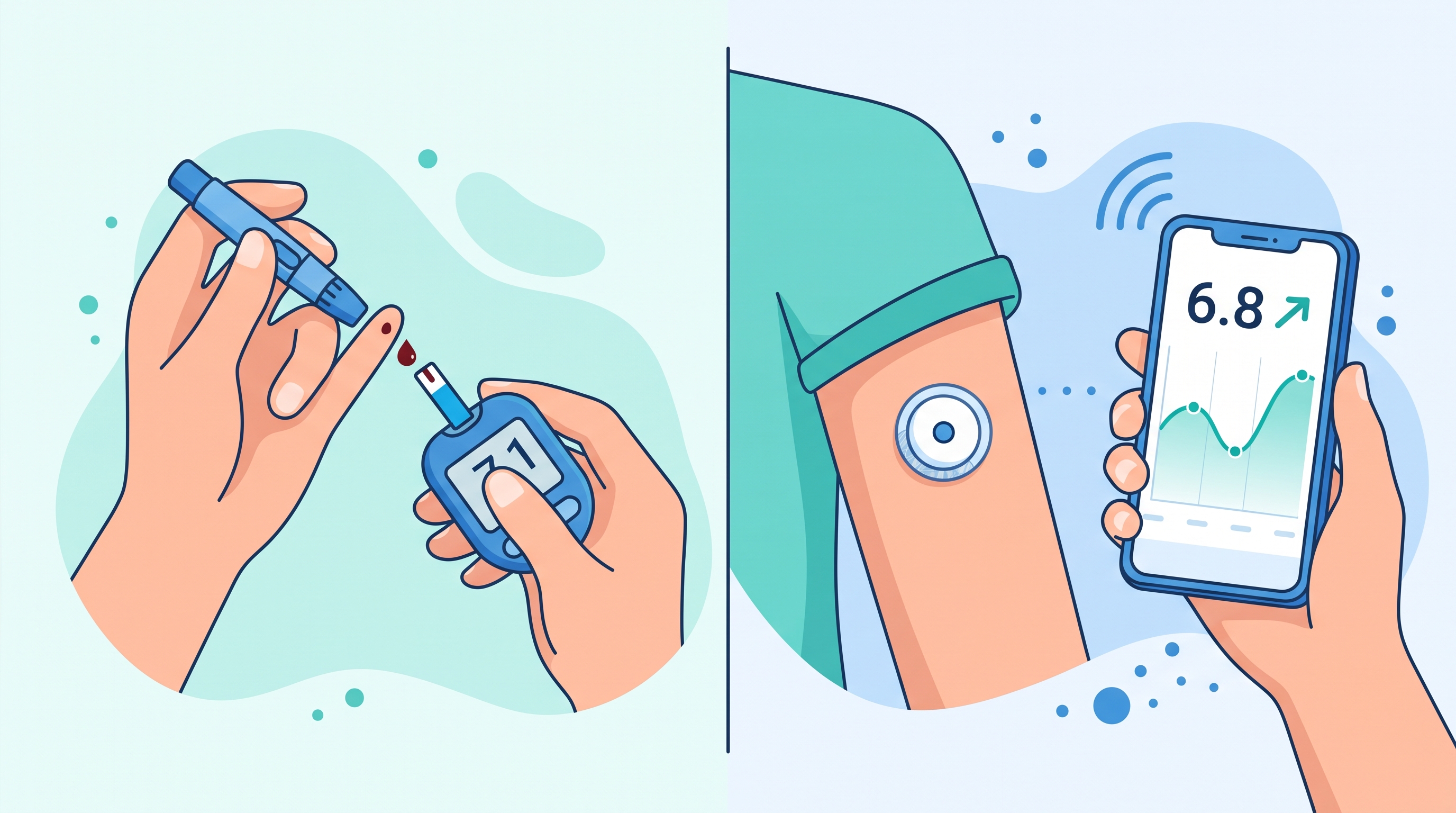
A glucometer reads a drop of blood, usually taken from your fingertip with a lancet, placed on a disposable test strip. The meter gives you one number at that one moment. To check again, you repeat the whole process with a new lancet and a new strip.
Continuous Glucose Monitor
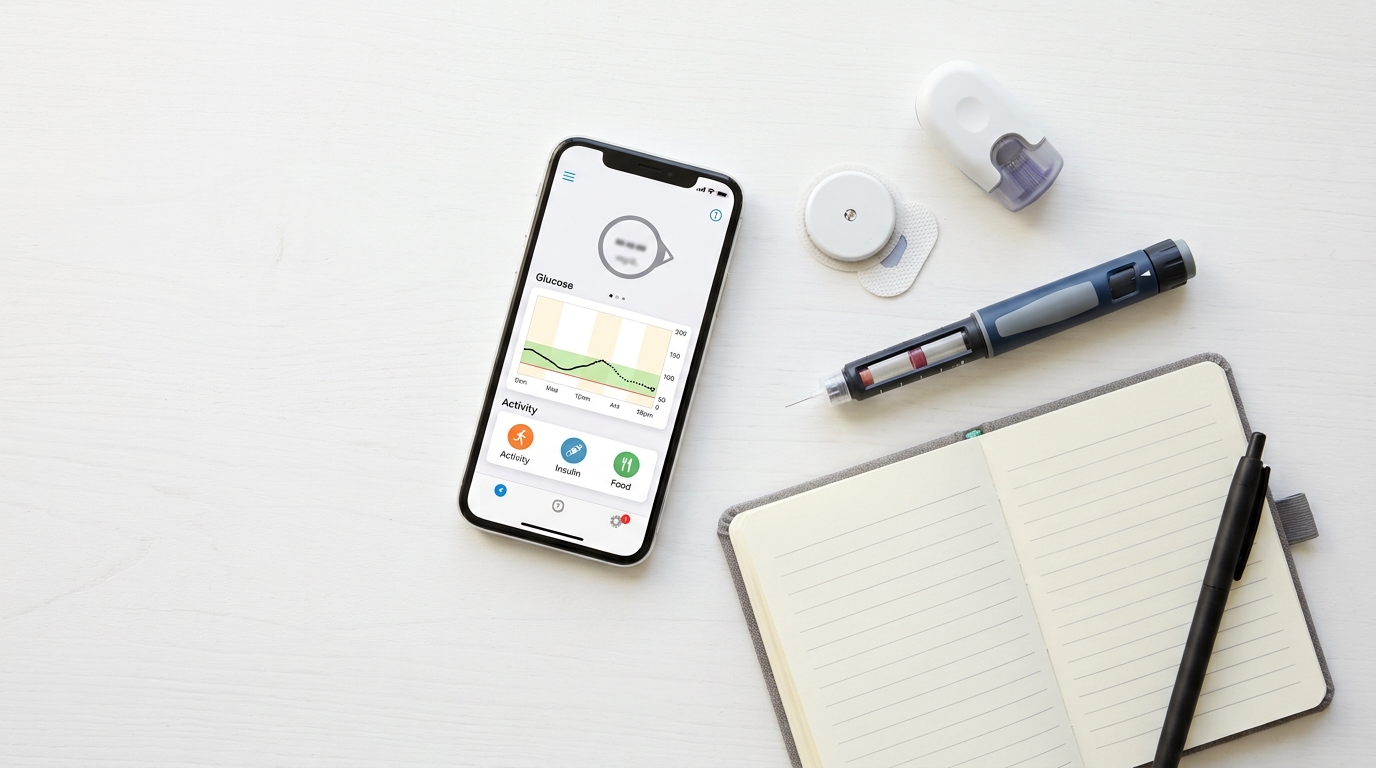
A CGM uses a small sensor filament placed just under the skin, typically on the arm, that keeps measuring glucose in the fluid around your tissue. It sends readings automatically, often every three to five minutes, to an app on your phone, building a running picture of your glucose all day and night. There's no repeated pricking involved once it's on, and a device like the iCan i3 keeps working for up to fifteen days per sensor.
How Do They Compare on Accuracy
This is usually the first question people ask, and it's a fair one to raise. A traditional glucometer, used properly with a clean sample and a fresh strip, is generally quite accurate for a single reading at that moment.
A CGM measures glucose in the fluid around your tissue rather than directly in your blood, so there's a small delay, usually just a few minutes, especially when your sugar is changing quickly, like right after eating or during exercise. That said, CGM technology has come a long way. The iCan i3 reports a MARD score of 8.71 percent, which is considered highly accurate and holds up well against many established brands.
It also helps to remember that a glucometer only gives you one data point at a time, while a CGM gives you hundreds of readings across the day. Many doctors now find the trend information from a CGM more useful clinically than a small handful of precise but isolated finger prick numbers.
Comfort and What Daily Life Actually Looks Like
This is where the two really pull apart from each other.
With a glucometer, every reading means another finger prick. For someone testing four to six times a day, that adds up to thousands of pricks a year, which becomes genuinely painful over time, especially for children. Fingertips can get sore, calloused, or bruised from constant testing.
A CGM only needs one sensor placed on your arm, and that single sensor keeps giving you data continuously for up to fifteen days. Most people describe the insertion as a quick pinch, far less uncomfortable than a routine finger prick, and after that there's no ongoing pain at all. You just glance at your phone.
For children with type 1 diabetes, older adults with sensitive skin, or anyone who has come to dread the routine of finger pricking, this difference alone often becomes the deciding factor.
Weighing the Cost
At first glance, a glucometer seems cheaper. The meter itself is a one time purchase, and individual strips don't look expensive. But the real comparison depends on how often you actually test.
If you're testing several times a day, every day, month after month, the ongoing cost of strips and lancets adds up quickly and never really stops. A CGM sensor is a single purchase that covers up to fifteen days of continuous data, giving you hundreds of readings compared to a handful with a glucometer. When you think about cost per data point rather than cost per device, CGMs often work out better for anyone testing frequently or wanting full coverage throughout the day and night.
There's also a cost that's harder to see on paper, which is missed information. A glucometer can't catch a low blood sugar episode at three in the morning, or show how sharply your sugar climbed after lunch. A CGM picks up all of it automatically, which can help avoid complications and hospital visits later on.
Snapshot Versus Full Story
A glucometer gives you a single number. A CGM gives you the whole story around it.
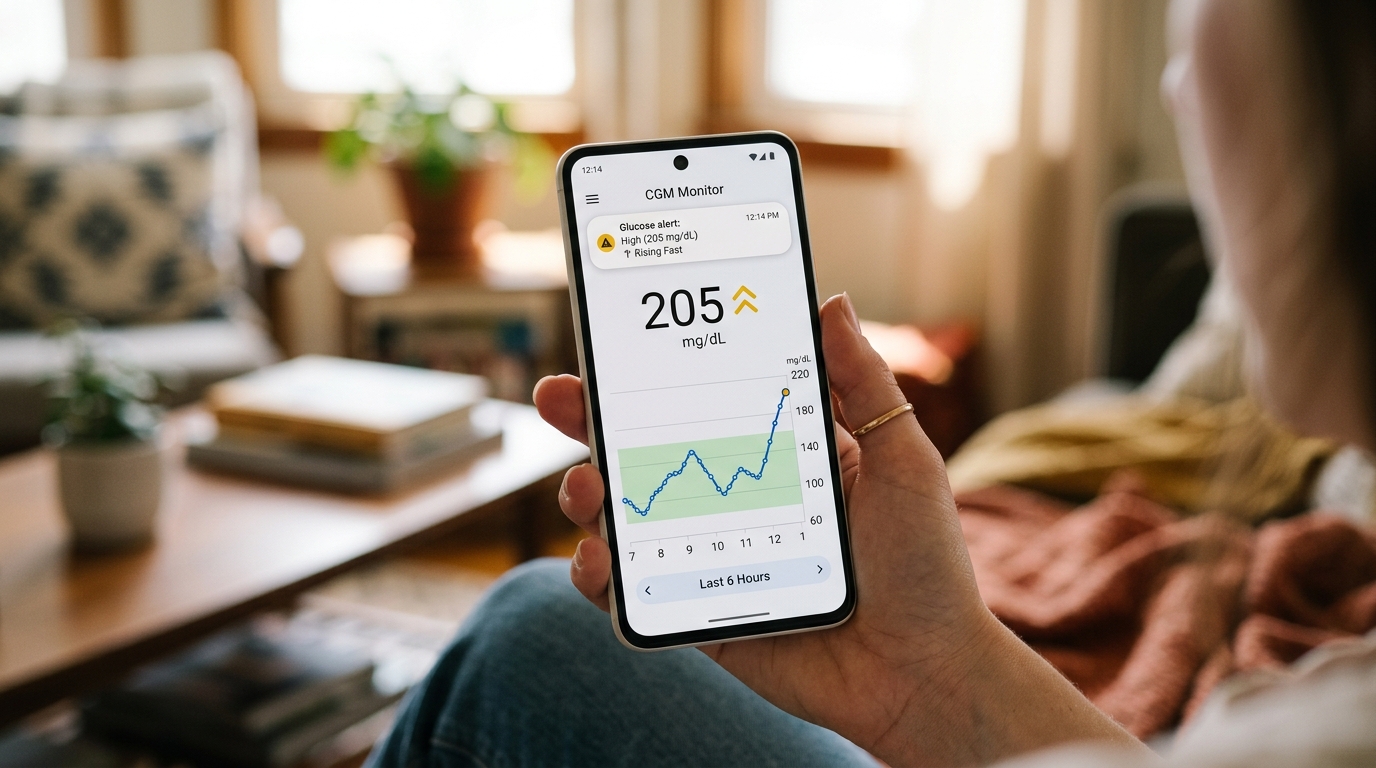
With a regular meter, you might see your sugar was 140 at nine in the morning. But you don't know if it was climbing toward 200 or dropping from 220, and those two situations call for very different responses. A CGM shows you the direction and speed of change through a trend arrow and a full graph, not just the number by itself.
This becomes especially useful when you sit down with your doctor. Instead of a logbook with a few scattered readings, a CGM report from an app like iCan CGM shows your complete glucose pattern over days or weeks, including overnight trends, spikes after meals, and how much time you spent in your target range. That gives your doctor a much stronger foundation for adjusting your treatment.
Alerts and Everyday Safety
One of the best things about a CGM is the ability to set real time alerts. You choose your own high and low thresholds, and your phone lets you know the moment you cross them, even while you're asleep. A glucometer simply can't do this since it only measures glucose the moment you decide to test.
For anyone prone to lows at night, or parents of children with type 1 diabetes, this one feature can genuinely be life changing, catching a dangerous drop before it turns into an emergency.
Some CGM setups, including the iCan i3 with its companion iCan Reach app, also let a trusted family member or caregiver receive these same alerts on their own phone, adding a real layer of safety and peace of mind for the whole family.
Can You Use Both Together
This doesn't have to be an either or decision. Many CGM makers, including the team behind the iCan i3, still recommend keeping a glucometer nearby even after switching to continuous monitoring, for a few good reasons.
If a CGM reading looks off and doesn't match how you're feeling, a quick finger prick can confirm whether it's accurate or whether something like sensor placement is affecting the result. Some CGM systems also ask for an occasional finger prick to fine tune accuracy, though newer devices are reducing this need. And during the day or two while a new sensor settles in after insertion, or if a sensor fails, a glucometer keeps you covered so you're never without a way to check.
Seen this way, a glucometer becomes more of a backup and confirmation tool, while the CGM does the daily heavy lifting.
Which One Should You Actually Pick
A traditional glucometer might still make sense if you test once a day or less, you're working with a tight budget and don't need continuous data, or your doctor has specifically recommended occasional spot checks only.
A CGM is likely the better fit if you currently test several times a day, you deal with unpredictable highs or lows, especially overnight, you want to know how specific meals or exercise affect your sugar, you or your child have type 1 diabetes and need close monitoring, you want a family member to be able to check on you remotely, or you simply want less pain and more convenience in your daily routine.
Making the Switch
If you decide to move from a glucometer only routine to a CGM, expect a short adjustment period, usually just a few days, while you get used to wearing the sensor and reading trend arrows instead of single numbers. Most people find checking their phone becomes second nature within the first week, and going back to routine finger pricking starts to feel unnecessary. Talking to your doctor during this transition can help you understand your new data properly and adjust your treatment plan as needed.
Final Thoughts
Both tools have their place, and for some people, using a CGM for daily tracking alongside occasional glucometer checks for confirmation gives the best of both worlds.
But if your goal is fewer finger pricks, a fuller picture of your glucose patterns, and the ability to catch dangerous highs or lows before they turn serious, a modern CGM like the iCan i3 offers a level of insight that a traditional glucometer just can't match on its own. The right choice really comes down to how much data you need, how much discomfort you want to avoid, and how closely you want to understand your body's daily rhythm.