CGM Sensor Placement: Finding the Best Spot for Accurate Readings
Getting accurate readings from a continuous glucose monitor depends on far more than just the quality of the device itself. Where and how the sensor is placed on the body plays a major role in determining whether the readings can be trusted throughout its entire wear cycle. Many new users in Pakistan focus heavily on choosing the right device but overlook the details of proper CGM sensor placement, only to end up with inconsistent readings, early sensor failure, or unnecessary skin irritation. This guide covers everything needed to get sensor placement right the first time.
Why Sensor Placement Matters More Than You Think
A continuous glucose monitor sensor measures glucose in the interstitial fluid just beneath the skin, which means the local tissue environment at the placement site directly affects the quality of the signal it picks up. Areas with poor circulation, excessive movement, or thick scar tissue can distort readings or cause the sensor to lose adhesion earlier than expected. Placement also affects comfort, since a poorly chosen spot can rub against clothing, get bumped during daily activity, or become itchy from sweat accumulation, all of which can shorten the effective life of an otherwise perfectly good sensor.
Manufacturers design and test each continuous glucose monitor for specific approved placement sites, and straying from these recommended areas is one of the most common reasons users report inaccurate or erratic readings.
Approved and Recommended Placement Sites
Back of the Upper Arm
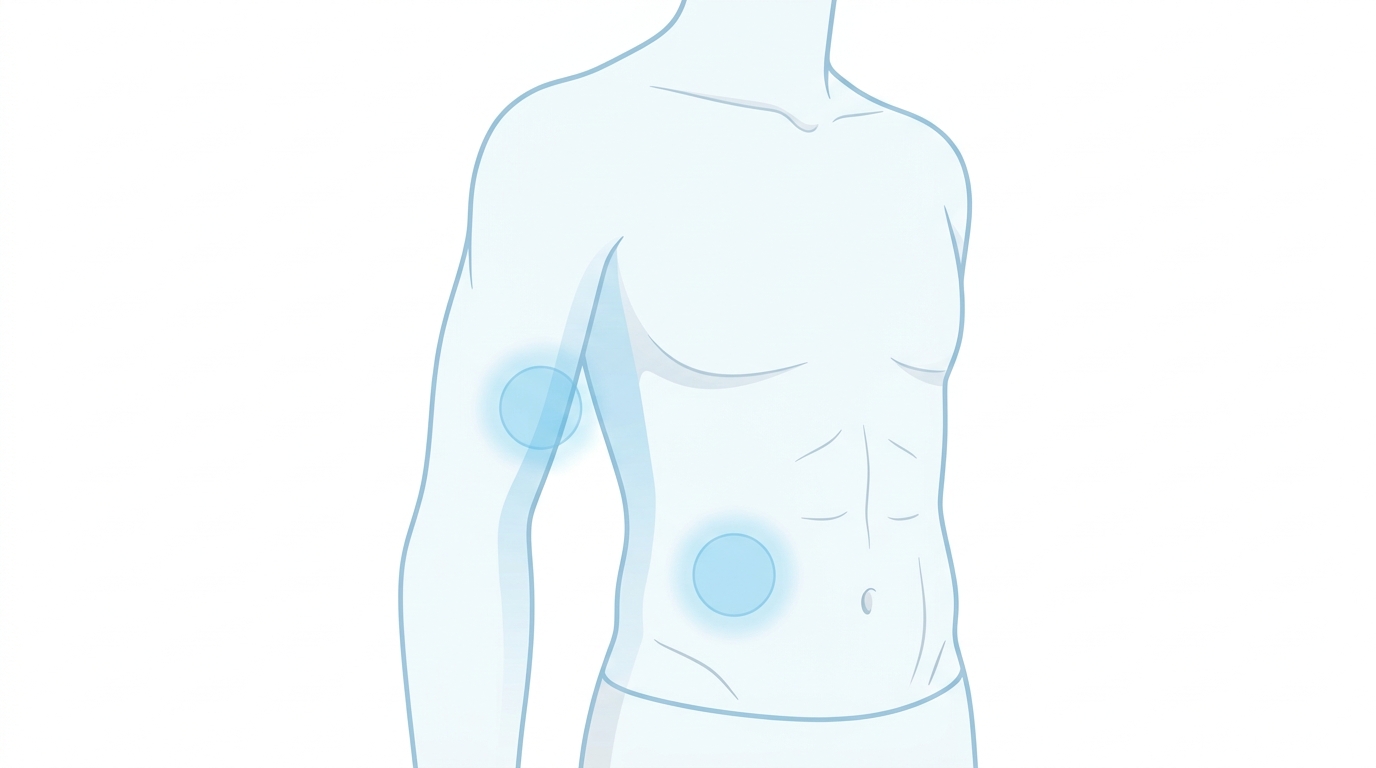
The back of the upper arm is the most commonly recommended site for many continuous glucose monitor systems, and for good reason. This area has relatively stable subcutaneous tissue, minimal movement compared to other body parts, and is easy to reach for application, even when applying the sensor alone. It also tends to have less exposure to friction from clothing waistbands, which is a common issue with abdominal placement.
Abdomen
The abdomen is another widely approved site, particularly for devices originally designed with this placement in mind. It offers a reasonably flat, stable surface with consistent subcutaneous fat, which supports reliable sensor readings. However, abdominal placement requires more care around clothing waistbands and belts, which can rub against the sensor and cause it to loosen prematurely if not positioned carefully.
Other Sites Depending on Device Type
Some newer continuous glucose monitor models have expanded approved placement to include areas such as the back of the upper buttock in children, or alternate arm positions for specific brands. It is important to always check the specific instructions that come with the particular device being used, since approved sites vary between manufacturers and even between different models from the same manufacturer.
Step-by-Step Guide to Placing Your CGM Sensor
Proper placement begins well before the sensor applicator is used. The chosen site should first be checked to ensure it is free from moles, scars, stretch marks, or areas of irritated skin, since these can interfere with both adhesion and signal accuracy. The skin should then be cleaned thoroughly with an alcohol wipe and allowed to fully air dry, since applying a sensor to damp or oily skin significantly increases the risk of early detachment.
Once the skin is prepared, the applicator should be positioned firmly and evenly against the site as instructed by the specific device's manual, then pressed to deploy the sensor filament beneath the skin. After application, most systems recommend allowing the site to settle for a short period before the sensor is activated or paired with the reader or smartphone app, giving the tissue a moment to adjust to the small filament now sitting beneath the skin's surface.
Common Placement Mistakes That Affect Accuracy
One frequent mistake is placing the sensor too close to the beltline or waistband, where constant friction from clothing gradually loosens the adhesive and can even dislodge the sensor entirely before its intended wear period ends. Another common error is choosing a site with significant muscle activity directly underneath, such as areas close to major joints, since repeated movement in these zones can cause the filament to shift slightly and produce noisier, less reliable readings.
Reusing the exact same spot for consecutive sensors is another mistake worth avoiding, since this does not give the skin enough time to recover and can lead to irritation, scarring, or reduced absorption over repeated use. Rotating sites systematically, even within the approved zone, helps preserve skin health and sensor performance over the long term.
Skin Preparation and Sensor Longevity
Good skin preparation is one of the simplest ways to extend how long a continuous glucose monitor sensor stays securely attached. Avoiding the application of lotions, oils, or sunscreen near the placement site in the hours before applying a new sensor helps the adhesive bond properly. Some users in Pakistan also find that applying an additional adhesive patch designed for CGM sensors helps extend wear time, particularly during hot and humid months when sweating is more likely to loosen the original adhesive.
Special Considerations for Placement in Pakistan's Climate
Pakistan's hot summers and high humidity in many regions create additional challenges for sensor adhesion that are worth planning around. Sweat accumulation under the sensor edge is one of the most common causes of early detachment during summer months, so choosing a placement site that experiences slightly less direct sweat exposure, and keeping the area as dry as possible before application, can make a meaningful difference. During outdoor activity or exercise in warm weather, an extra adhesive overlay can help keep the sensor firmly attached for its full intended duration, especially for users who lead an active lifestyle or work outdoors.
What to Do If Your Sensor Falls Off or Gives Inaccurate Readings
If a sensor detaches earlier than expected, it is important to check whether the placement site, skin preparation, or environmental factors such as excessive sweating contributed to the issue, so the next application can be adjusted accordingly. If readings seem inconsistent with how a person is feeling, particularly during symptoms of very high or very low glucose, a fingerstick check is generally recommended to confirm the value before making any treatment decisions, and the sensor manufacturer's support guidance should be followed for reporting a suspected faulty sensor.
How iCanCGM Supports You With the Right Sensor and Guidance
iCanCGM stocks continuous glucose monitor sensors alongside clear guidance to help new users get placement right from the very first application. Through icancgm.pk, customers in Pakistan can access genuine sensors along with practical support on choosing between available devices, understanding proper application technique, and getting the most reliable readings possible. For readers who are still deciding which device to start with, the site's detailed comparison of glucose monitoring device options and its overview of the benefits of continuous glucose monitoring offer helpful additional context before making a purchase.
FAQs
What is generally considered the best spot for CGM sensor placement? The back of the upper arm is the most commonly recommended site for many continuous glucose monitor systems, though the abdomen is also widely approved depending on the specific device.
Can a CGM sensor be placed on the thigh or leg? Most manufacturers do not approve leg placement, since movement and tissue characteristics in that area can affect signal accuracy, so it is best to stick to the sites listed in the specific device's instructions.
Why does my sensor keep falling off early? Early detachment is often caused by friction from clothing, sweat accumulation, or applying the sensor to skin that was not fully clean and dry before application.
Should the same spot be used for every new sensor? No, rotating placement sites within the approved zone helps the skin recover between applications and generally supports better long-term sensor performance.
Is it normal for the sensor site to be slightly itchy after application? Mild itchiness for a short period after application can be normal, but persistent irritation, redness, or discomfort should be discussed with a healthcare provider, since it may indicate a sensitivity to the adhesive.