Where you place your iCan CGM has a bigger effect on performance than most new users realize. A good spot gives you clean, accurate readings and a sensor that stays put for the full 14 day wear. A bad spot leads to false lows, adhesive failure, and readings that do not match how you actually feel. This guide covers the spots that work, the spots to avoid, and the small placement choices that make a real difference.
The Approved Placement
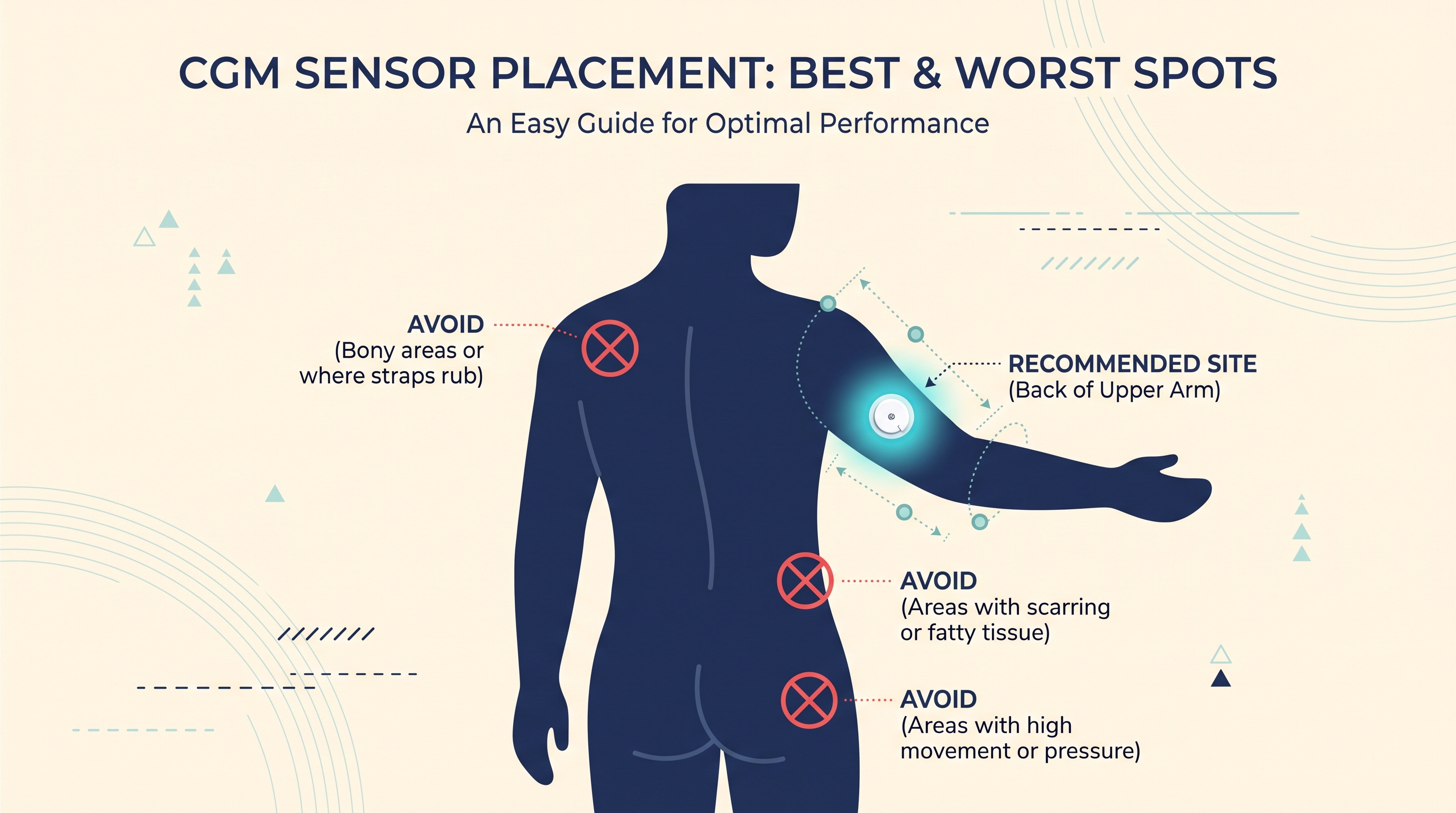
The iCan CGM is designed to sit on the back of the upper arm. This is the placement the sensor was tested for, and it is the location that produces the most reliable readings. The back of the arm has a good balance of fat, blood flow, and low physical friction, which is exactly what the sensor needs to work well.
Sticking with the recommended site is not just a suggestion. Placement outside the approved zone can produce readings that lag behind your actual glucose or trend inaccurately during exercise. If you want the data your sensor is capable of, keep it where the design calls for.
The Best Spot on Your Arm
Within the upper arm zone, the sweet spot is the fleshy area on the back of the arm, midway between your shoulder and your elbow. This section has enough tissue to protect the filament, sits away from major joints, and rarely gets pressed against surfaces during daily movement.
Aim slightly toward the outer edge of the arm rather than the inner edge. The inner arm rubs against the torso when you walk, sit, or lie down, and that friction loosens the adhesive faster than expected. The outer edge sits freer and holds longer.
Left Arm or Right Arm
Choose your non dominant arm if you can. If you write, use your phone, or do most tasks with your right hand, place the sensor on your left arm. Your non dominant side moves less through the day, which means less friction on the adhesive and less risk of bumping the sensor against door frames, gym equipment, or your car door.
If both arms are equally active, think about sleep position. If you sleep on your left side, use the right arm for the sensor. If you sleep on your right side, use the left. The arm that stays free during sleep will hold the sensor longer.
Spots to Avoid
Certain areas cause problems even if they look reasonable at first. Do not place the sensor over a muscle that flexes constantly, such as the biceps or the front of the shoulder. Repeated contraction pushes against the filament and can create false readings during workouts.
Avoid areas with scars, tattoos, moles, or skin that has recently been sunburnt. Scarred or damaged tissue does not read glucose the same way healthy skin does, and pigmented skin can affect the adhesive bond.
Do not use the abdomen, thighs, or lower back. These placements are common with other medical patches but were not part of the iCan CGM design testing. You may get readings, but they will not be as reliable as arm placement.
Placement for Active Lifestyles
If you play sports, lift weights, or work in a physical job, placement matters even more. Position the sensor away from areas where your shirt sleeve pulls tight or where a gym strap will cross. For weightlifters, avoid placing the sensor near the shoulder cap because barbells, straps, and bench pads press against that zone.
Runners and cyclists should aim slightly higher on the arm, closer to the shoulder, to keep the sensor away from arm swing friction. Swimmers should stick to the standard placement but use an extra overpatch before pool sessions.
Rotating Placement Sites
Do not apply the next sensor in the same exact spot as the last one. The skin needs time to recover after two weeks under an adhesive patch. Rotate between your left and right arms, and shift the position slightly up or down each time. This prevents skin irritation and helps every sensor bond fully to fresh, healthy skin.
Making Placement Work Long Term
Your iCan CGM can only be as accurate as the placement allows. A few minutes of thought before each application saves you the frustration of a sensor that falls off early or reads incorrectly. Once you find the spot that works best for your body and lifestyle, stick to a small rotation between two or three positions and let the sensor do its job.