
Exercise is one of the most useful tools for managing diabetes, but it also introduces a layer of complexity that anyone who has tried to balance a workout with glucose control understands well. Physical activity can send glucose levels down quickly, sometimes for hours after the activity has finished, and the exact effect varies depending on the type of exercise, how long it lasts, and what your glucose levels looked like before you started. A continuous glucose monitor takes a lot of the guesswork out of this process, giving you a live view of what is happening rather than relying on how you feel or an occasional finger prick before and after.
This article looks at how CGM data can be used during exercise, what patterns to expect from different types of activity, and some practical tips for staying safe while staying active.
Why Exercise Affects Glucose in Different Ways
Not all physical activity affects blood glucose the same way, and understanding the general categories helps explain why your CGM readings might behave differently from one workout to the next.
Aerobic exercise, like walking, jogging, cycling, or swimming, tends to lower glucose levels fairly steadily. During this kind of activity, muscles use up glucose for energy at an increased rate, which is why many people see their glucose trend downward on their CGM during and after a cardio session. This drop can continue for several hours after the activity ends, since muscles continue restocking their glycogen stores during recovery.
Resistance training, such as weightlifting, can behave differently. Short bursts of intense effort sometimes cause a temporary rise in glucose due to stress hormones like adrenaline being released, followed by a gradual decline later as the body recovers. This is why some people notice their glucose actually climbs a little during a heavy weight session before dropping in the hours afterward.
High intensity interval training and competitive sports often produce a mix of both patterns, with glucose fluctuating up and down depending on the intensity of each interval. Having a CGM during these kinds of activities is particularly useful, since the patterns can be harder to predict compared to steady state cardio.
Watching Trends Before You Start
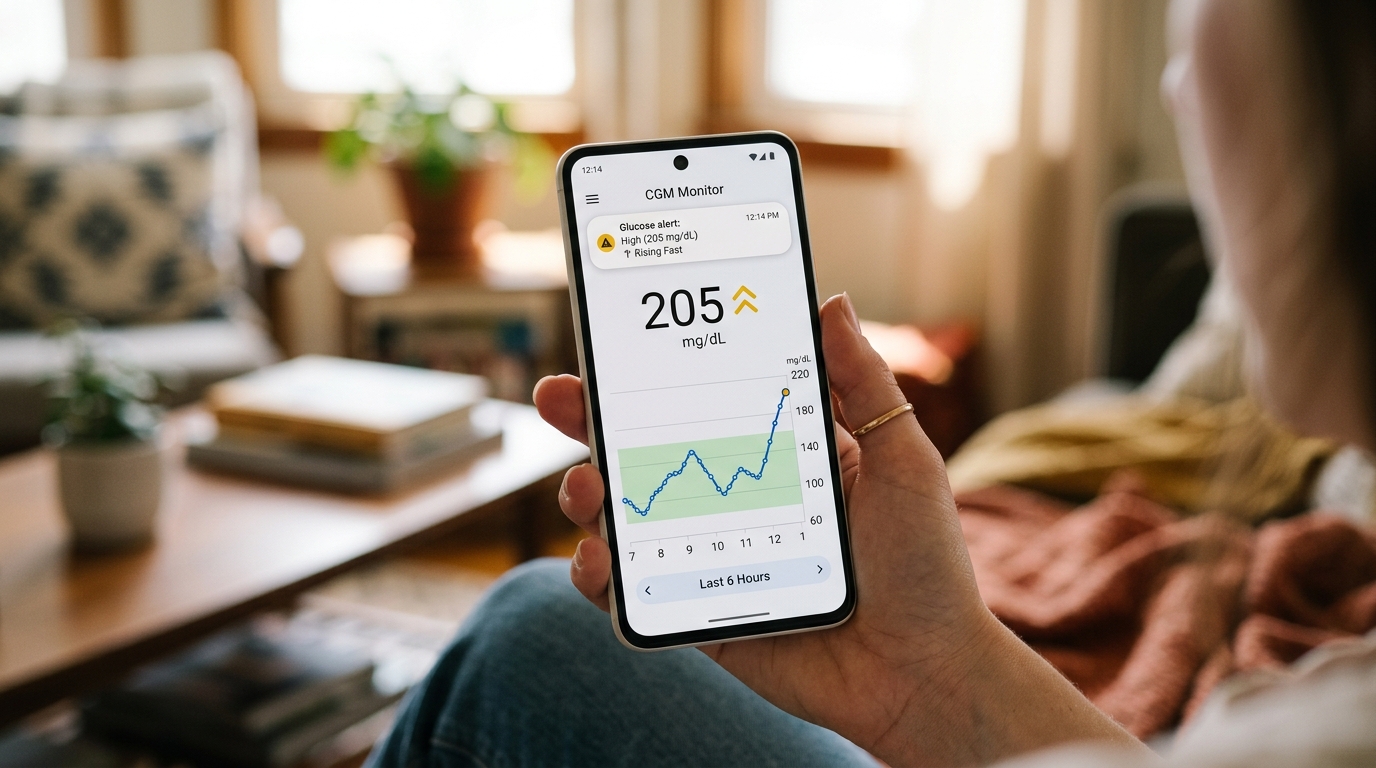
One of the most practical uses of a CGM around exercise is checking your trend arrow before you begin. If your glucose is already trending downward before a workout, starting a cardio session on top of that trend increases the chance of going low during or shortly after exercise. In this situation, many people find it helpful to have a small snack with some carbohydrate before starting, simply to give themselves a bit more buffer.
On the other hand, if your glucose is stable or trending slightly upward before you begin, you may be able to start your workout without needing extra preparation. Having this information visible on your phone or watch through the iCan CGM app, rather than needing to stop and do a finger prick, makes it much easier to make these small adjustments as part of your normal routine rather than an interruption to it.
Monitoring During the Workout
For many types of exercise, especially longer sessions like a run, a long bike ride, or a game of football, checking your CGM partway through can help you catch a downward trend before it becomes a problem. Because the iCan CGM updates readings automatically every few minutes without needing a scan, a quick glance at your phone or a connected smartwatch can tell you exactly where your glucose stands without breaking your stride or losing focus on what you are doing.
This is particularly valuable during activities where stopping to do a finger prick would be inconvenient or impractical, such as swimming, team sports, or long distance running. Since the iCan CGM sensor is waterproof, it can stay in place and continue tracking glucose even during a swim, which is not something every glucose monitoring method allows for.
If you notice your trend arrow pointing sharply downward during exercise, this is a good signal to pause and take in a small amount of fast acting carbohydrate before continuing, rather than waiting until you start to feel symptoms of low blood sugar. Catching the trend early, while you still feel fine, tends to make managing it far easier than waiting until symptoms appear.
The Hours After Exercise Matter Too
A common mistake is assuming that once a workout is finished, the effect on glucose is finished too. In reality, glucose levels can continue to drop for several hours after exercise, particularly after longer or more intense sessions, as muscles keep pulling in glucose to rebuild their energy stores. This delayed effect is sometimes responsible for lows that happen well after a workout has ended, even hours later during sleep.
Having continuous data available through your CGM in the hours following a workout, rather than just a single check right after finishing, allows you to catch this delayed drop as it happens. Some people find it helpful to keep a closer eye on their glucose trend for the rest of the day after a particularly intense or long session, especially if that workout happened later in the afternoon or evening.
Adjusting Your Approach Over Time
Everyone's body responds to exercise a little differently, and the exact glucose patterns you see will depend on factors like your fitness level, the type of diabetes you have, whether you use insulin, and even the time of day you exercise. This is where having a CGM becomes especially valuable, since it lets you build a personal picture over time rather than relying on general advice that might not apply to your specific situation.
Reviewing your glucose reports after a few weeks of regular exercise, available through the iCan CGM app, can reveal patterns you might not have noticed otherwise. Maybe you consistently drop faster during morning workouts compared to evening ones, or maybe a particular type of activity tends to cause a rise rather than a drop. Recognizing these personal patterns allows you to plan ahead more effectively, whether that means adjusting a snack, timing your workout differently, or simply knowing what to expect.
Staying Safe During Physical Activity
While a CGM provides valuable real time information, it is still worth keeping basic safety habits in place during exercise. Carrying a small source of fast acting carbohydrate, like glucose tablets or juice, is a good idea any time you are exercising, particularly for longer or more intense sessions. If you exercise with others, letting a friend or teammate know you have diabetes and what to do in case of a low can add an extra layer of safety, especially during activities where you might not notice symptoms right away, like swimming or intense competition.
If you are using the iCan Reach app to share your data with a family member or friend, this can also serve as an added safety net during exercise, since someone else can see your glucose trend in real time and reach out if something looks concerning, even if you are focused on the activity itself.
Bringing It All Together
Exercise remains one of the best things you can do for both general health and diabetes management, and a continuous glucose monitor like the iCan CGM makes it significantly easier to do safely and confidently. Rather than guessing how a workout might affect your glucose or interrupting your activity for a finger prick, real time data lets you make small, informed adjustments as you go, whether that means a quick snack before starting, a check partway through, or extra attention in the hours after you finish.
Over time, the patterns you notice through your CGM become a kind of personal playbook, helping you understand exactly how your body responds to different types of activity. That knowledge takes a lot of the anxiety out of exercising with diabetes and lets you focus on what actually matters, which is staying active, staying strong, and staying safe while doing it.