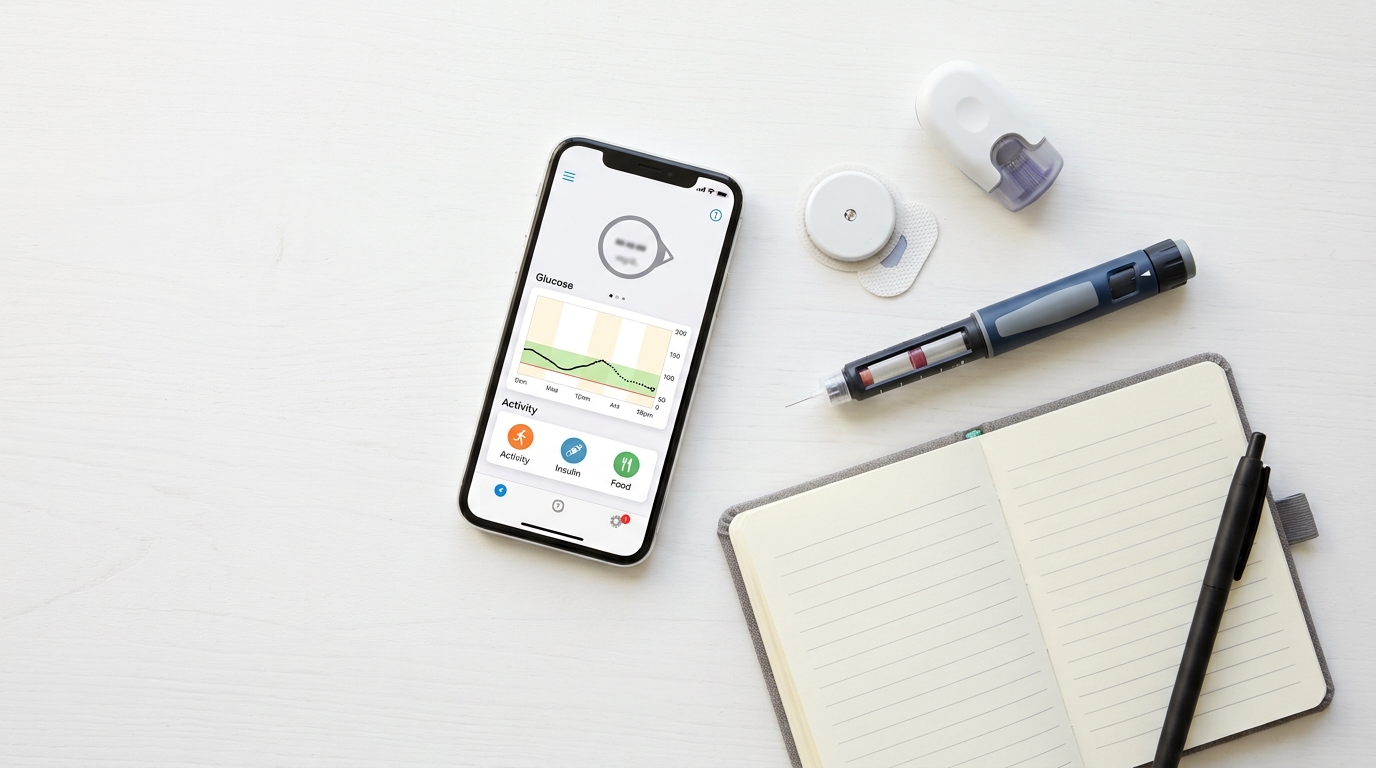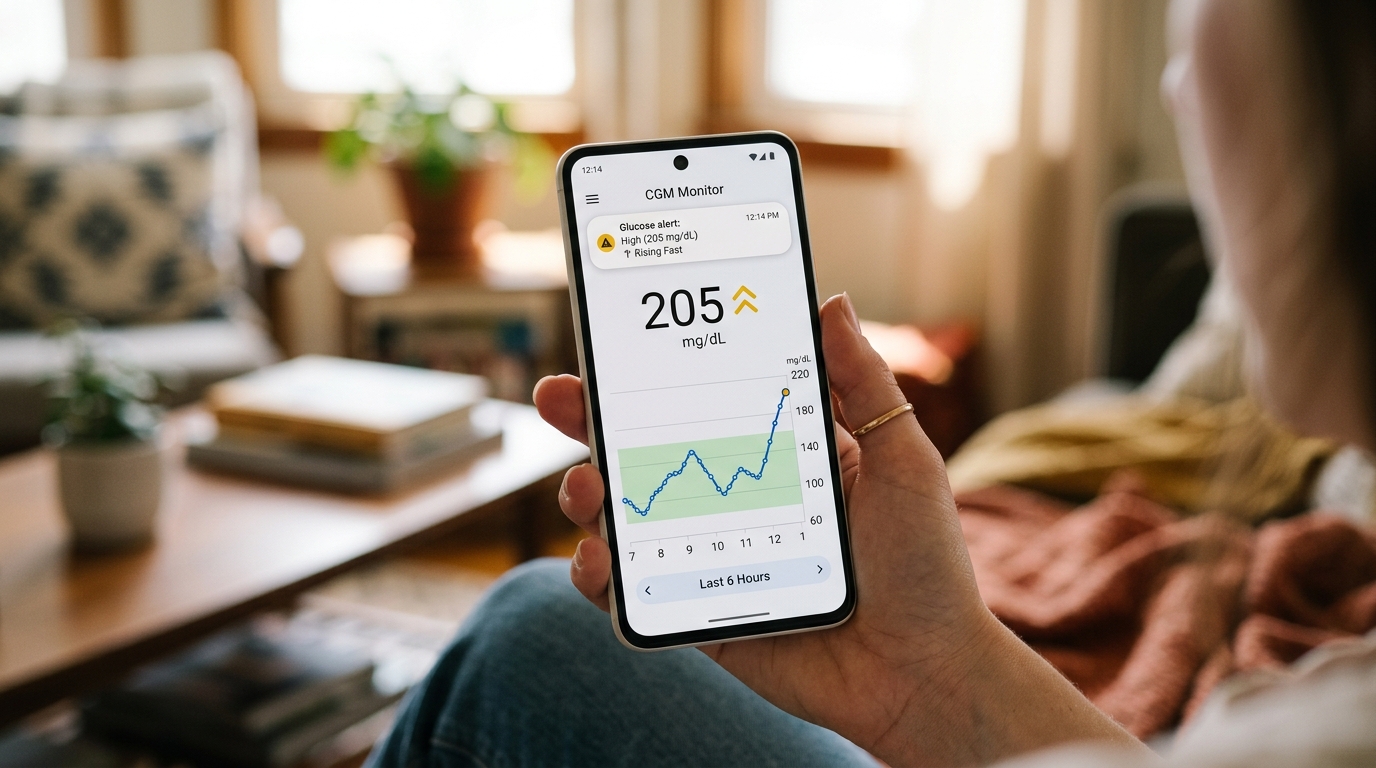
Pakistani cuisine has a reputation for being heavy on rice, oil, and sugar. That reputation is only partly fair. Traditional home cooking is actually built on ingredients that support stable glucose when they are combined and cooked well. The problem usually shows up in restaurant portions, deep fried snacks, and the sugar loaded desserts that arrive at every gathering. With an iCan CGM on your arm, you can finally see which local foods keep you steady and which ones set off a sharp spike.
Daal Is Your Best Friend
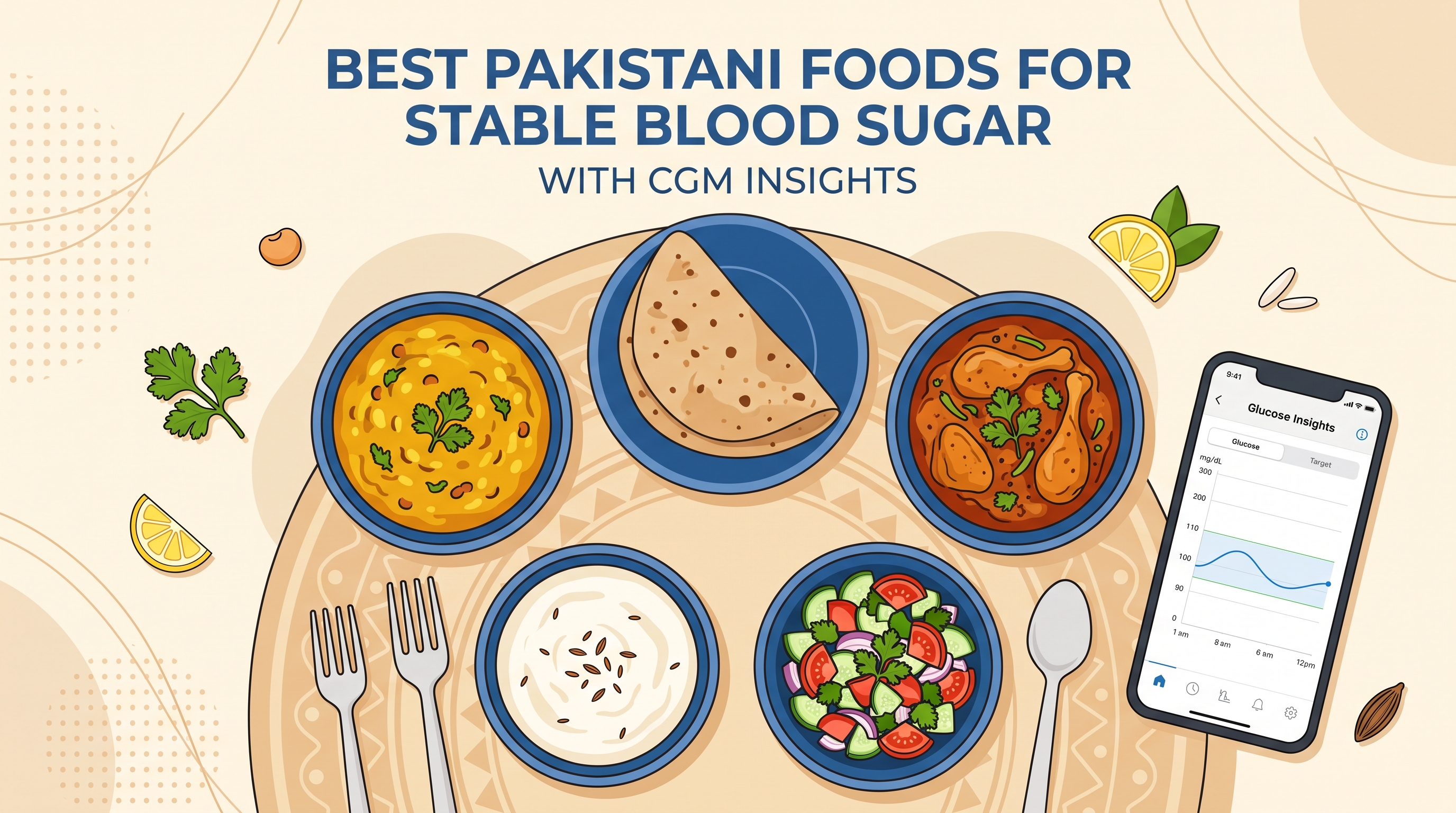
Lentils are one of the most CGM friendly foods you can eat. A bowl of daal chana, daal masoor, or daal maash produces a gentle curve for most people, because lentils are packed with fiber and slow digesting carbohydrates. Add a small portion of brown or basmati rice and pair with a fresh salad, and you have a plate that keeps your glucose stable for hours. Many iCan CGM users find their flattest post meal readings after a simple daal chawal lunch.
Roti vs Rice: What the Sensor Shows
Whole wheat roti generally causes a smaller spike than white rice, especially when eaten with vegetables and protein. Two medium rotis with sabzi and yogurt often produce a rounded curve that peaks near 130 mg/dL and returns to baseline within two hours. The same amount of white rice, eaten alone, can push you past 160 mg/dL. The trick with rice is portioning and pairing. A small serving alongside meat, daal, and salad behaves very differently than a large plate of biryani on its own.
Meat, Chicken, and Fish
Grilled or curry based meat dishes have very little direct effect on glucose. Chicken karahi, mutton nihari, and grilled fish will show almost no rise on your CGM if eaten without rice or naan. When the meat is served with roti or a small portion of rice, the response is shaped by the carb portion, not the protein. This is why kabab or grilled chicken with salad is one of the calmest meals you can eat as far as your glucose graph is concerned.
Sabzi and Vegetable Dishes
Bhindi, karela, palak, and lauki based curries are gentle on your CGM data. These vegetables are low in carbs and high in fiber, so they tend to produce a flat line even when eaten in large portions. Pair them with a small roti and some yogurt, and you have a plate that supports steady energy for the rest of the afternoon.
Watch the Breakfast Table
Breakfast is where many Pakistani households run into trouble. Halwa puri, aloo paratha with sugar heavy chai, and white bread with jam can produce some of the sharpest spikes you will ever see on your sensor. If mornings are your weak point, try switching to eggs with roti, chana chaat with lemon, or plain yogurt with fresh fruit. Your iCan CGM will show the difference within a single week.
Desserts and Sweets
Gulab jamun, jalebi, and barfi are among the hardest foods on your glucose graph. Even a small portion can push readings past 180 mg/dL and cause a crash an hour later. This does not mean sweets are off limits forever. It just means you should eat them mindfully, after a meal rather than on an empty stomach, and use your CGM to see how your body reacts.
Building a CGM Friendly Pakistani Plate
The rule is simple. Fill half your plate with vegetables or salad, one quarter with protein like chicken, fish, or lentils, and one quarter with a carb like roti or a small portion of rice. Add a bowl of plain yogurt on the side. Meals built this way tend to produce the flattest, most stable readings on the iCan CGM, no matter what the main dish happens to be.